No longer a pipe dream
MONTEGO BAY, St James — Plans by the Government to significantly reduce the water woes facing several communities in western Jamaica moved a step closer to reality on Wednesday with the arrival from overseas of potable water pipes and fittings in Freeport, St James.
The pipes are to be used for the planned Western Water Resilience Improvement Project-Phase 1 (WWRIP-1).
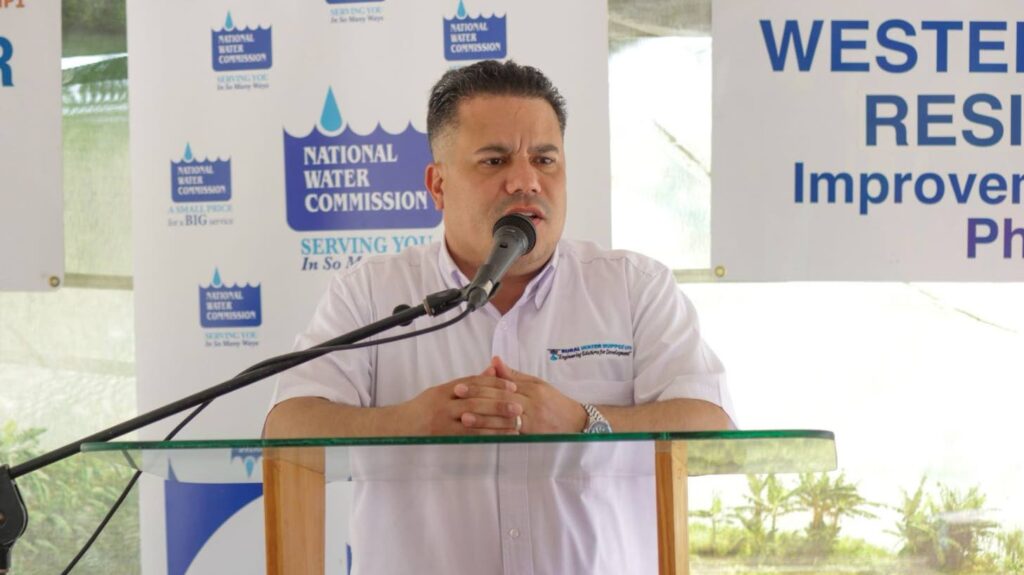
A beaming Minister of Water Matthew Samuda welcomed the latest development in the long-promised project despite criticisms from some about the time it has taken to finally get under way.
The WWRIP-1 was born out of a dual crisis two years ago — ageing infrastructure that had reached the end of its useful life and a historic climatic emergency with the worst drought recorded in Western Jamaica in more than 100 years.
It took two years for the pipes to arrive in Jamaica, despite the situation being declared a national emergency in April 2024, but Samuda argued that this was still “breakneck speed by Government standards globally”, given the legal and procurement hurdles involved in such a massive project.
According to Samuda, the arrival of the pipes, which range from 500 to 800 millimetres in diameter, represents a promise kept by the Government.
“I hope that citizens are seeing now — and will see with the size of the pipes and the heavy construction — that the country is in a space where political commitments don’t need to be viewed in the way that they were once viewed, with the deep level of scepticism,” said Samuda.
He argued that the two-year delay in getting the pipes underscores the need for faster action after declaring an emergency and seeing physical results as the old multi-layered accountability framework creates a layer that slows down critical work.
“Doing things the same way and expecting different results is the definition of madness,” stated Samuda.
He charged that the National Reconstruction and Resilience Authority (NaRRA), which was given the green light by the House of Representatives Wednesday morning, is designed to prevent the long delays in major infrastructure projects the country will need in the aftermath of Hurricane Melissa which devastated sections of the island last October.
“[NaRRA] is indeed the best structure available to us…to build some of the infrastructure we now need to build in 20 months,” said Samuda.
The minister added that without the executive strength contemplated by the NaRRA legislation, “We will fail our citizens and not put them back on a path to growth, [not help them achieve] their dreams, and [we will not] put the nation back firmly on its path to prosperity.”
The US$170-million WWRIP-1 involves the design and construction of approximately 65 kilometres of new ductile-iron potable water pipelines. The pipes are engineered to replace the weakest links in the western water transmission chain, addressing persistent challenges such as ageing infrastructure, high non-revenue water losses, and climate variability.
“This represents US$170 million of infrastructure investment, which is the budget for phase one of the Western Water Resilience Improvement Project. The total project will span some US$450 million,” said Samuda as he described the initiative as “a nation-building project and a generational investment that unlocks economic activity and creates social stability for longer than a generation”.
The scope of the WWRIP-1 encompasses a massive technical and logistical undertaking to secure the water future of western Jamaica.
It is designed to enhance interconnected hydraulics and storage, ensuring that the structural integrity of the infrastructure can support the rapid economic and tourism growth of the region.
As part of the design to minimise the environmental footprint and land acquisition requirements, the routes for the pipes to be laid are aligned with existing road corridors.
The project simultaneously targets three critical transmission corridors, to include the upgrades of the Martha Brae and Great River Water Treatment Plants and the development of a new water treatment plant in Roaring River in Westmoreland.
Some of the pipes which arrived in the island on Wednesday to be used for phase 1 of the planned Western Water Resilience Improvement Project – Phase 1 (WWRIP-1).
Minister of Water Matthew Samuda (left) in discussions in Freeport, Montego Bay on Wednesday, during the arrival ceremony for the pipes which will be used in the Western Water Resilience Improvment Project.
Syndicated from Jamaica Observer · originally published .