Keynote Address
by
Dr. the Most Honourable Andrew Holness ON, PC, MP
Prime Minister of Jamaica
at the
Opening of the Nightingale Grove Spring Village Bridge
on
June 12, 2026
__________________________________________________
This is the second bridge we’re opening in as many weeks. Last week I was in Troy on the border of Manchester and Trelawny, where I was in the presence of some very happy Jamaicans. Absolutely happy that their bridge, which was built 100 odd years ago, was being restored. They felt so much pride, so much dignity. They felt that they were being acknowledged and respected by their government. I felt so good within myself as their Prime Minister to have the opportunity to open and hand over to them this wonderful piece of infrastructure.
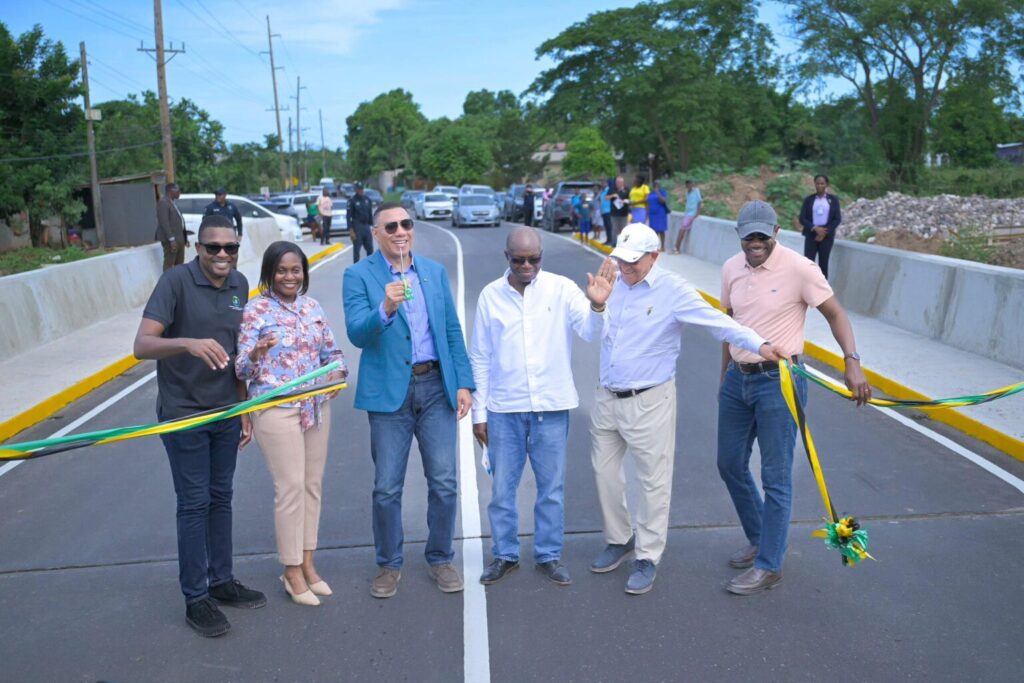
It gives me also great pleasure today to be here with the people of Spring Village and adjoining communities to celebrate the opening of another wonderful piece of infrastructure. Now this bridge, I believe it is called the Nightingale Grove Bridge, was built in the early 1900s. Yes, so this bridge is over 150 years old. It was washed away, that was really washed away, but it was compromised by heavy flows should come as no surprise. As I look at the faces of the people gathered here, when we think of infrastructure, bridges and roads, they must last forever yes, that’s what we think of it. It must last forever but as we all know, nothing lasts forever.
Mind you, some things last for a very long time if they are well-built and if they are well-maintained, and as a spiritual person like myself, if God smiles on them, meaning if they have the blessings of the Lord, it will last a long time but when it comes to a bridge, roadway, 150 years is a long time and especially 150 years when we can all agree it wasn’t always well-maintained. That it has lasted so long, it would have meant that the bridge was well-built regardless of how well-used it was because obviously that bridge was built for a time when it was buggy and donkey cart that was passing it. Nowadays, my good friend Robert Levy has some very heavy trucks passing on that bridge carrying the chicken that we all eat, the Best Dressed Chicken. And the workers who go to that factory and go home use that bridge. The children who go to school in this area use that bridge. 150 years ago nobody was thinking about the Best Dressed chicken, the schools that are here, or the many housing schemes that are here. That is the reality.
But there’s one other contemplation that our forebears who built the bridge 150 years ago would not have thought about, and that is the issue of climate change. Our climate, my friends, is changing in ways that are creating more frequent and more intense weather events but not only is the climate changing, the way in which we use our environment is impacting how the environment behaves, if you want to use a term like that. I want all of you to stop and think: every slab roof or zinc roof that you put up, every mile of road that you pave, every tree that you cut down to create a field leaves water to run off to somewhere. Where is it going to go? Is it going to run on the roads where it ends up anywhere? Does it go into drains where it is guided into a stream or a river? Or is it going to percolate naturally into the soil. Well, as we expand our use of lands to build houses and factories and schools and hospitals and roadways, and as the climate is getting hotter and we are getting rainfalls that we would describe as unseasonal, super phenomenal, and intense, infrastructure that wasn’t built to account for that will come under heavy strain.
That is what happened to the bridge. So, it wasn’t just the more intense use of heavy trucks and much more traffic. One weather event created heavy flow of water which undermined the abutments and the approaches. The bridge exhibited some cracks, and eventually the engineers at the NWA decided that it was no longer safe to traverse the bridge and so in September 2022, the bridge was closed. That’s almost what? Four years ago. Now, after many articles and protests and complaints, the government was finally able to mount a response to the closure of the bridge and let me put some things into context.
It was not that we did not have the funds to fix the bridge. I don’t want anybody to get any ideas that the government is awash in cash because one of the factors which led the government to make the allocation was the partnership offered by Jamaica Broilers, and I want to commend Jamaica Broilers for their good intentions, but the real obstacles to a quick response to the bridge would be first and foremost the process to determine whether or not this public investment was worthy to be made. I want you to understand those words that I have said. There was a time in Jamaica when the decision to spend on capital works was largely made by a process that was highly subjective. Which minister had more influence? Which constituency had more influence? In other words, a high level of political consideration would have determined capital expenditure. Now, at the highest level, there is nothing wrong with it in terms of having capital expenditure responding to political imperatives. It happens all the time, but you want to be sure that with limited resources, if I have 10 bridges that need repair, the one that gets repaired should be done on an objective basis and not on the basis of who has the greater political influence. If you understand what I’m saying because then you could end up having infrastructure being done only in constituencies that are supportive of the government. You could have critical infrastructure being done by virtue of who knows the minister. Or usually, you could have infrastructure repaired by who demonstrates the loudest, who burns the most road, or who blocks the most road. None of those should drive a country’s capital investment program.
What should drive a country’s capital investment program? First of all is which investment is going to deliver the greatest economic return for capital investment. That must be how all Jamaicans begin to think about how their government uses their tax dollars. Now mind you, I’m about to say something that may not be immediately popular, but every day I’m faced with demands. The road in front of my house is filled with potholes for the last 50 years that this scheme was built. This bridge that was built 150 years ago has broken down; children have to use it to go to school. You know, a major industrial operation that provides the country with much-needed protein uses this bridge, and if they have to divert, it adds a little bit more cost to their output, a couple more cents and what do you think going to happen? Eventually it’s going to get passed into the price: great inconvenience. So, governments have to scratch their head though and say, “How do I balance everybody calling into the radio station about the road in front of their home and key critical infrastructure that is not necessarily in front of your home. There must be a national understanding, right? As to how we’re going to develop as a people. If we take all the money and fix the roads in front of your house, and leave the other infrastructure that literally generates the revenues which we can then take to fix the road in front of your house, what will happen?
Now, politics does not pay attention to this, you know, because when you go to vote, you’re not voting that the Spring Village bridge was fixed. You’re going to vote that the road in front of your house was fixed. You see how you cannot allow politics to determine the expenditure of your capital budget? There’s a saying, that says “not everything that the public is interested in is in the public’s interest”. It is the reality that I face as your Prime Minister: balancing the local, personal, political needs versus the national needs, and it is a tricky balance. I will not have the opportunity always to explain to people in this way why we must do the things that we do and there are those who, as we say in Jamaica, have it up with them craw, that you wait till election and so it goes. We, as a government, have to do what is in the national interest all the time. So, this is a project that we consider to be of national interest because $250 million spent here could have been spent on roads in several other communities. I toured this bridge in June 2024, and I toured all the communities with your wonderful member of Parliament, and he made sure to take the opportunity to carry me into all the nook and crannies and show me the roads, because that’s what the MPs do. When they get a hold of me, they make sure to stand with their constituents and say, “See it, I show it to the Prime Minister, I told the Prime Minister.” And so he did show me all the other roads that need attention, and in balancing the response to road infrastructure, we came up with a program called the SPARK programme.
SPARK programme, we have billed it as the response, but it’s much more than resurfacing roads. The road problem that we have in Jamaica is not just one of maintenance neglect. It is an absence of strategic management of our roads and other infrastructure. The programme was developed the former Minister of Finance, Minister Clarke, at a meeting we had, he was accosted by MPs and ministers about the conditions of roads, and we said, “Listen, we have to make a special allocation out of the budget to deal with roads, because no matter how we try to reason with the people, them nah take no talk.” So, we have to make a special allocation for roads” but given the framework that we have put in place where every spending decision must be objectively done, we had to create an entire system around how we’re going to manage, as Minister Morgan pointed out, $45 billion of road repairs. What did we do? Came up with a program called SPARK, and Mr. EG Hunter, the Executive Director of the National Works Agency, was very instrumental, himself and Minister Clark, in coming up with a name and designing the program.
I must say here that EG has announced that like everything, there is a time and a season. Mr. Hunter served this country well as the Executive Director. Well, he was first president of the NWC and then served for many years as the chief engineer of Jamaica, as the CEO of the NWA, the National Works Agency and I recall having many discussions with him about how we are going to navigate the new system of objective allocation of the country’s capital budget, which is called the Public Investment Management System. So, what that does is that any investment at all that is considered capital in nature, meaning it is going to make a substantial change to existing infrastructure or build new infrastructure, so it’s not repeating every year, that that go through a competitive process and what’s the nature of that competitive process? First of all, everything has to be assessed. So, we want environmental studies. We want to see whether or not it makes economic sense, so we look at the internal rate of return of the investment, and then we look at what is called in economics the opportunity cost. If we spend the money on project X, will we get more impact than if we spent it on project Y? and we look at all kinds of other variables to make sure that the investment decision is a wise decision, so that your tax dollars for capital resources, capital allocation, is not at the mercy of subjective decisions.
Mr. Hunter came up with a good strategy to approach the public investment process, and we were able to maneuver through the process very quickly, in fact, extraordinarily quickly. It took us seven months. Ordinarily, to go through this process of public investment would take sometimes two to three years. The average time should be maybe a year, but sometimes it goes over, as was the case with the Troy Bridge. Now, we have to be smart about setting smart objectives. You can’t just set objectives which are inflexible and which do not contemplate events and considerations that have impacts greater than the benefit of strictly following the objective and the policy. For example, would the government contemplate not rebuilding the Troy Bridge? The people in Troy would not stand for that. So, in a sense there is no need to do an economic assessment on the bridge. In a sense, there is no need to look at the internal rate of return. Yes, you want to do the environmental impact assessment, but it can never be a question that we are not going to rebuild the Troy Bridge because if you’re not rebuilding the Troy Bridge, then the other decision must be, are you going to move the people elsewhere? You see the challenge? So, if we are going to take two years to make a decision, that is obviously a decision that we have to make. Make no sense. Why? To comply with process but hear me now. When the people of Troy are walking across the river on the log trying to get to the other side, they are not thinking about process. When you have to take off your shoes and wrap up your foot in plastic bag to walk across when this bridge was closed, which I know many people had to do, or you had to take the footbridge, you wereN.T thinking about process.
You are not giving the governments any point when I say that we are going through a process. What you want is the result. So, you want a bridge and so we have to take a second look at the public investment appraisal process that we have put in place. It’s a critical process. As I’ve said, it is important, but it needs to be smarter. It needs to consider materiality. For example, is $250 million material to the $60 billion or the $100 billion that we are going to spend on infrastructure? If it is not material, then it doesn’t have to go through all of the process. If it is a decision that has significant national implications politically, then it is not a decision that has to go through the process because you have already made the decision; you have to do this. Not all projects have to go through the extensive process. Now, there are some listening to me who will say, “But nuh you make the law.”
Yes, we cannot deny. We are the ones who put in the law, but that’s the beauty of it, that as you see how the law operates, you can make adjustments to get a better law, a more effective law, one that accounts for some of the considerations that were not accounted for when the policy and the law was made, but we don’t just get up one day and say we’re going to change the law. We go through a very extensive process, again, of explaining to the people why we have to change the law. We do it here at the podium when we speak to audiences like this, we do it in the parliament, and we do it at our press conferences. That’s how we engage, then we go through, again, other processes, a long process until the law is changed. We definitely have to revise the public investment appraisal system to ensure that, yes, there is objective use of the capital budget, but that it is smart enough to acknowledge projects that are not material to the overall budget to create a problem, acknowledge issues that have national importance, that are decided by, again, yes, the Cabinet, by political considerations which may be necessary, and have those dealt with on a special tract or an alternative so, that has to be done.
The other contemplation which affected the project, because if you looked at the timeline, you would see the bridge was closed in September 2022. I toured it in June 2024, approved it a couple months after that, and then we are here now in June 2026. The two-year process from startup works to construction, some of that had to do with, first of all very few contractors wanted to take on this project. Why? Because the project required specialized equipment, piling equipment that had to drive piles 100 and odd feet into the ground to make sure that the foundation of the bridge is stable. Some of our contractors don’t have that equipment. So, this was put out to tender about two or three times until eventually we found a contractor who had access to that kind of equipment. Minister Morgan pointed out how important the contractors are. The contractors are critical partners in the efficient expenditure of the capital budget.
So, you could have the money, but if you don’t have the contractor who has the competence and the equipment to do it, the money won’t be spent, and this bridge suffered from that. Eventually, we found a contractor who has done an excellent job. Mr. Woodbine, please, take a bow. You have delivered the two bridges. I haven’t been told whether it is on time and in budget, but the Cabinet approved 250 million, and I see that the bridge cost 250 million. So, I suspect it came in on time and on budget. So, we commend you. Now, that having been, done then there is the issue of labor. Believe it or not, the contractors and this contractor pointed out that they had problems with having labor, both skilled and unskilled. I know when I say this, many of you sitting in there, you say, “What? And my son deh a yard nah do nothing?” As I go around the country, I see a whole heap of young men sitting down, “Boss, we don’t have no work.” I was at the Jamaica Chamber of Commerce awards dinner last night, and that was a part of the conversation. We don’t have enough skilled labor. Yes, my friends, labor is a constraint on our growth. Every young person that decides that I am not going to work, I am going to stay home and stay on the corner because they do not pay me enough. We lose productivity. Now, I understand the problem. I can’t tell somebody to go to work for what can’t pay their bus fare to get back home and send their children to school. I understand that I want you to know I understand that which is why every year we try to inch up as much as possible the minimum wage to set the baseline, the threshold, so that employers will increase their wages to you, because we are now, believe it or not, we are now at full employment. At 3% unemployment, that’s basically full employment, but I can tell you that with the construction projects that we now have, and the construction projects that I see coming across my table, we do not have the labor to fulfill it. It is not that the bodies aren’t here, it is that they are not willing to work.
It is not for me as your Prime Minister to only lament about the problem. I have to do something about it. So, we did put in some programs when we became government. We put in the HOPE Program, and that program was such a success. We brought in 20,000 youngsters, we trained them, and all of them are now in the labor force. We estimate that there are about 50,000 persons out there who are unemployed. The problem is to get them skilled, but the bigger problem is attitude. That’s the, the bigger problem is the attitude. So, we are in dialogue now. We are speaking with, with the HEART Trust, and we are thinking what kind of strategy, what kind of program can we put in to attract those people who have decided that they’re not offering their labor to the labor force, and to get them into the right attitude where they see that labor is not a bad thing, that service is not servitude, because that, that’s a big view. Labor is not slavery. We have to get them into a mindset, into a work ethic. So, I want to assure Jamaica that the government is cognizant of the problem, and we will be launching a program very soon to address it, but a part of that also means that as our economy is expanding and we’re doing infrastructure projects like this, and we have a capital budget that we need to spend and spend quickly, that we have to get our Jamaicans into the labor force quickly, working with our contractors quickly, but where necessary, we may have to bring in skills to augment and support the local resources that we have. It is a contemplation that we have tried to avoid, but at this point, at this stage, we definitely have to look at bringing in labor to supplement and augment, especially as we move into the rapid reconstruction and rebuilding of Jamaica under the NaRRA project.
So, I’m taking this opportunity to appeal to all our youngsters, all the people out there who are not working. If you don’t have a skill, contact the HEART Trust NSTA. The Government will find ways to get you into the workforce. We will train you. We need you. We need all our young unemployed men and women who are not working. Jamaica needs your labor and your talent to ensure that the growth of the country can be realized. So yes, this project faced some delays, not so much with not having the labor, but not having the labor that would stick to plan, that would turn up every day. Right, Mr. contractor? You set a schedule, and you’re waiting on the mason to turn up, and you hear him go somewhere else. So your project that you have to wait until the next mason you can get him or the same mason comes back. These are problems being experienced right across Jamaica, and it adds to the delay of projects. So, I think I’ve spoken quite a bit, and I think based upon the eyes of the audience that there is a deeper understanding of some of the issues that I have raised, and what I want to do now is to ask you to become, ambassadors for the arguments that you have heard here today. When you get back into your church, into your school, into your bars, and you hear some of the conversations, which are reasonable conversations, but they don’t have the depth of understanding as to why we face the situation that we face, that maybe you will be able to add a different dimension and a different understanding to the problem so that the Jamaican conversation can be edified and meaningful.
Ladies and gentlemen, it is indeed my great pleasure to say that this bridge is now officially open and handed over to the people of this area. May it be for the benefit and prosperity of the people of Jamaica. God bless you and thank you.