Rose Heights Land Titles Await Survey For 150 St James Central Residents
Approximately 150 people living in Rose Heights, St James Central, are in line to get land titles after a planned survey confirms the boundaries for the lots they now occupy.
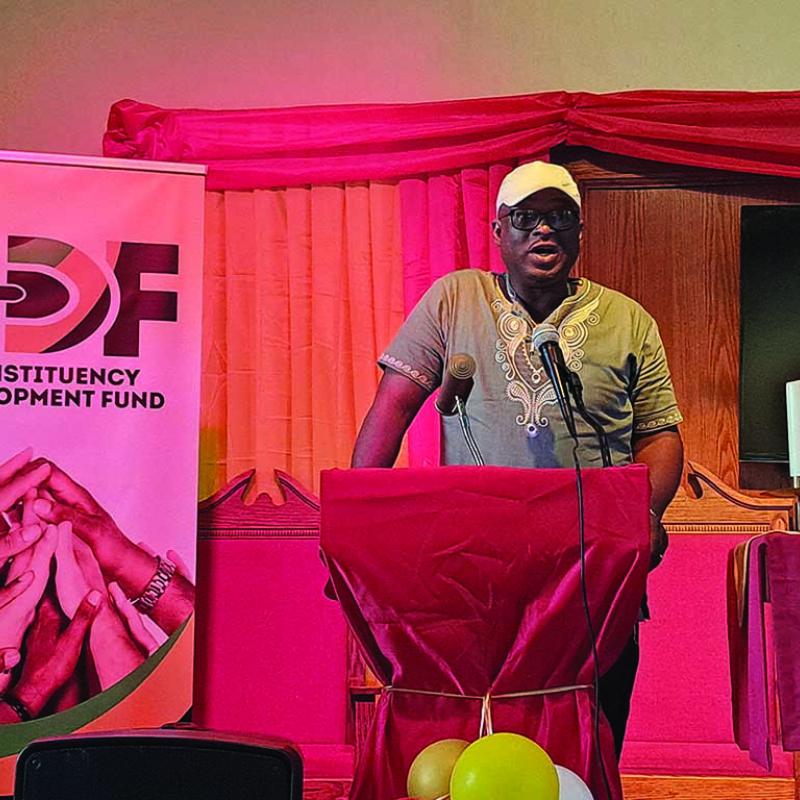
Heroy Clarke, the member of parliament for the constituency, shared the update last Thursday during a Constituency Development Fund consultation at Cornwall College in Montego Bay.
Clarke said Robert Montague, minister without portfolio in the Ministry of Economic Growth and Job Creation, advised him that survey teams would be going into Rose Heights shortly. He said no specific date was provided.
“It was in the middle of the night, last night [May 27], that I got a call from the Minister, Honourable Robert Montague, saying that he has 150 titles for which he will be sending persons to Rose Heights, and nowhere else,” Clarke said.
According to Clarke, Montague also asked him to name someone who knows the area well to work alongside the surveyors and help the exercise run properly.
The MP said an earlier effort to issue titles had to be paused after problems were found with some property lines.
“We had previously started handing out some titles, and we had to stop because we found that for one of ‘John Brown’s’ pegs for his land, you would have to go into ‘James Barrett’s’ bathroom to put down the peg,” Clarke said.
He said the response was to use an “as is” survey approach, under which lots are measured from the fences, zinc and barbed wire already marking where residents have been occupying land.
“We came up with the ‘as is’ survey, meaning, wherever the people have their zinc or barbed wire, you just jam the peg there and do the measurement.”
Clarke added that while the process has been moving ahead, some residents have resisted adjustments where space has to be tightened.
Rose Heights was part of a group of western Jamaica communities that benefited from 52 land titles issued by the Housing Agency of Jamaica in 2024. The other communities named were Norwood, Retirement, Pitfour and Flanker in St James; Galloway, Whitehouse and Whitehall in Westmoreland; and Fisherman’s Village in Hanover.
Beyond the land-title matter, Rose Heights and neighbouring sections of St James Central have continued to deal with infrastructure problems, among them bad roads and inconsistent water service.
Clarke told the consultation that the $20 million provided through the CDF to each of Jamaica’s 63 constituencies is not enough to cover the scale of work communities need.
“Each constituency will tell you that they want a different sum, so no two constituencies are the same. The $20 million that we get from the CDF is to give to the MP a bargaining chip, but remember now that there are other works to be done, and if you want a road for $200 million dollars, then anything over $40 million has to go to Cabinet, and the time it takes to say that you want a $40 million road, up to when you actually see the workmen doing the road, is anywhere between 18 to 24 months,” Clarke said.
He said his approach has been to seek funding for smaller road jobs, which can be started much faster than major projects.
“I go for the $10 million, $15 million, and $20 million dollar roads, which just take four weeks to be implemented,” Clarke said. “I don't tell them about one road; I tell them six or seven roads.”
Using Flower Hill Road in St James Central as an example, Clarke said the latest planned work would be the third time his team was addressing that roadway, though two previously repaired sections would not need to be redone.
“The $20 million [from the CDF] is never enough, but that is just something in hand,” he added.
Syndicated from Jamaica Gleaner · originally published .
Legal context · powered by Jurifi
Get the legal angle on this story. Pick a prompt and Jurifi's AI will explain it using Jamaican law.
AI replies are based on Jamaican law via Jurifi. Not legal advice.