
Plea talks collapse in Leoda Bradshaw double murder case
Leoda Bradshaw, who is accused of arranging the killings of politician Phillip Paulwell’s 10-month-old daughter, Saraya, and the child’s mother, Sashina Patterson, is scheduled to return to court on June 24 for a plea and case management hearing after attempted plea discussions ended without an agreement.
At Thursday’s hearing, lawyers for Bradshaw told the court she was prepared to enter a guilty plea. Bradshaw, a former United States Navy officer, is before the court with her cousin, Rolanda Balfour, and alleged gunman David Smith. The charges include kidnapping and two counts of capital murder.
Director of Public Prosecutions Claudette Thompson raised concerns about the basis on which any reduced plea would be considered, indicating that the prosecution was restricted in what it could properly accept.
Defence attorney Debra Martin said the case first came before the court in October 2023. She told the court that, in December 2024, Bradshaw instructed her to begin plea discussions with the Crown, leaving it to prosecutors to decide whether any arrangement was possible.
Martin said the Crown later indicated that Bradshaw’s version of events did not align with accounts given by other witnesses, and that discussions would only continue in relation to a possible plea. In April, prosecutors prepared a document setting out both the defence position and the Crown’s case, after which the defence filed supporting material.
Martin also said she contacted the Crown on Wednesday for clarity. She argued that the first two counts on the indictment contain details at the heart of the dispute between the defence and the prosecution, and that Bradshaw could not plead guilty to a charge while rejecting the particulars attached to it.
Chief Justice Bryan Sykes observed that murder cases fall into different categories and cannot all be approached in the same way. He said that, depending on the facts, someone who was an accessory before or after an offence could be just as culpable, or even more culpable, than a person who was physically present at the scene.
Syndicated from Television Jamaica (Video) · originally published .
Legal context · powered by Jurifi
Get the legal angle on this story. Pick a prompt and Jurifi's AI will explain it using Jamaican law.
AI replies are based on Jamaican law via Jurifi. Not legal advice.
Other coverage
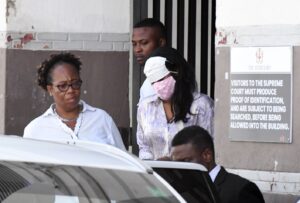
Trial looms for Leoda Bradshaw after plea discussions crumble
Jamaica Observer
Bittersweet Mom returns home with former conjoined twins … One full of life and the other dead
Jamaica Star
Got my NIS benefits at last, thank you Observer!
Jamaica Observer
Marriage rescue ends in romance Female pastor falls for married apostle as his union crumbles
Jamaica Star
Police Officer's Nine-Night Investigated | Jamaica News Update
Realnews YtWatch