

‘NO WITCH-HUNT’ - Malahoo Forte defends public hearings for MPs; committee chair stresses ethics, not embarrassment
For years, Parliament’s Ethics Committee has largely operated outside the public eye, quietly examining matters ranging from conflicts of interest to allegations of misconduct involving legislators.
Marlene Malahoo Forte wants Jamaicans to see that work for themselves.
The former attorney general and minister of legal and constitutional affairs, who now chairs the joint committee drawn from both the House of Representatives and the Senate, has opened its proceedings to the public, arguing that transparency is critical to maintaining confidence in Parliament.
In an interview with The Sunday Gleaner, Malahoo Forte stressed that while the committee has an important oversight role, it is not intended to target or embarrass members of parliament.
“The work of Parliament is primarily law, and ethical conduct. That is the parliamentary cabinet system model. And of course, the extent to which committees function will depend on the seriousness that members - committee members - take the approach, their attendance, their preparation for committee work,” she said.
She was equally clear about the approach she intends to take as chair, noting that the committee has no witch-hunting mandate, and it will never adopt that posture in reality or by perception under her watch.
For Malahoo Forte, one of the challenges is that Jamaicans often equate ethics with criminality.
“But, the remit of ethics is quite broad because ethical conduct is not the same as criminal conduct. And we have had a tendency to focus on criminal conduct. So if a matter does not rise to the level of criminal conduct, culturally, things are dismissed. However, within all of that are ethical underpinnings.”
That philosophy, she said, informed her decision to make the committee’s proceedings public.
“I had to look at the operations myself because the decision to open it to the public came at a time when concerns about conflicts of interest were rife. ... What sets apart public office is really that private considerations cannot take privacy. And if there are private considerations, they have to be disclosed and managed. And that is how you maintain confidence in a public system and public interest,” she said.
The committee’s most recent public sitting focused on St Andrew East Central Member of Parliament Dennis Gordon and questions surrounding his business relationship with the University Hospital of the West Indies (UHWI).
The matter has its genesis in investigations involving the UHWI and JACDEN, a service company headed by Gordon. Following investigations by the Auditor General’s Department, JACDEN was identified as one of four firms that benefited from the misuse of tax exemptions by the hospital.
Proceedings initially began in camera, with Gordon responding to a request for clarification on comments he had made regarding his circumstances. They later switched to public viewing as Gordon argued that the committee did not have the authority to summon him without the support of the House of Representatives, which had approved the exemption motion.
Gordon maintained that he sought and received the appropriate exemption, via resolution from the House.
For Malahoo Forte, the Gordon matter highlights why Parliament’s conflict-of-interest rules are so important.
Conflict of interest
“The issue of conflict of interest and disclosure of the conflict of interest is fundamental. The Constitution provides that if you are in contract with the public service, ... you have to vacate the seat unless that the nature of the business is disclosed and enquired into by the Parliament, through the Ethics Committee. And that’s how the process of exemption comes in.”
Exemption requests reach the committee by way of resolutions passed by the House of Representatives.
“The committee does the work of hearing from the member of the nature of the contract and based on what it has heard, if it is just to recommend that the member be exempt from vacating his or her seat, then that recommendation is made in a report back to the House,” she explained.
An examination by The Sunday Gleaner of exemption resolutions found that the highest number of requests typically comes during the first few months after a new Parliament is formed. Following the December 2011 general election, 16 requests were approved by September 2012. Between the February 2016 election and June 2019, another 20 applications were considered, with some members seeking duplicate exemptions. Exemptions expire with each parliamentary term.
Malahoo Forte believes the process can be strengthened further and said she will recommend the establishment of a register of interests.
“That means when the committee grants the exemption, the record of that forms part of the House’s history, parliamentary record ... . The committee does the work ... then that recommendation is made in a report back to the House.”
She also believes committee reports deserve fuller consideration by Parliament instead of simply passing as a procedural formality.
Opening committee meetings, she said, is ultimately about serving the public interest.
Public interest
“I think it’s more that it’s a public interest test. Is it in the public interest for a matter to be heard?... As chairman I am not witch-hunting anyone, or embarrassing anyone. It’s to just see whether standards are met. I think culturally there are just so many things that are bad and wrong and we have to determine if rules are there, then individuals must abide by them. If standards are set, then you have to ensure and examine whether those standards are met or they are breached.”
She acknowledged that the committee is charting relatively new territory.
“We are kind of in uncharted water because when committees don’t function, there is not much to be guided...”
She also urged members of parliament to provide complete and accurate information to the committee and encouraged members of the public to bring forward concerns they believe warrant investigation.
The committee’s mandate extends beyond referrals from Parliament.
“Any member of the public may write to the committee or write to the Parliament asking involving allegations of conflicts of interest be investigated and reported on. Such an inquiry may include requests for investigations and reporting on any allegations of impropriety in respect of funds allocated to members for constituency purposes. And then receiving and investigating any report of civil or criminal proceedings being instituted against any member and making appropriate recommendations to the Speaker of the House...”
Attention is now expected to turn to the case involving Government Minister without Portfolio in the Office of the Prime Minister Dr Andrew Wheatley.
The Integrity Commission has ruled that Wheatley be charged for failing to explain $164 million in wealth gained over a specified period following years of investigation. Wheatley has sought judicial review of the process.
Malahoo Forte confirmed that the committee has not yet considered the matter.
Criminal proceedings
“We have not had a meeting of the committee since Wheatley’s matter has come in. But it is a matter that could be before the committee in respect of criminal proceedings being instituted. Again, it’s uncharted waters. Other matters are before the courts or sub judice rules. But it certainly is the remit of the duty of the committee to receive and investigate reports of civil or criminal proceedings and make appropriate recommendations.”
She returned repeatedly to one theme throughout the interview: accountability must be accompanied by fairness.
“I think maybe because I spent so much time on the Bench [as a judge] in the past, I have a deep appreciation of the importance of even-handedness. Your decisions must not only be fair, but they must also have the appearance of fairness. So, people will disagree with you, but show the path to your decision and that is how you help to build public confidence in the offices and in the institutions.”
For applied economist and management consultant Joseph Cox, who also served as CARICOM’s assistant secretary-general, ethics and public confidence are inseparable.
“You cannot function at a business level without an ethical consideration. Every decision, every project has to have an ethical underpinning. We’re not Machiavellian. We have a framework that is structured by rules, and the rules have to be governed by ethical behavior,” he told The Sunday Gleaner.
Cox argued that restoring trust requires more than simply avoiding wrongdoing.
“If you look at public confidence, through the eyes of what’s happening in Parliament ... the reality of public confidence in a political directorate is not merely the absence of misconduct, but there must be at the very least a perception that the misconduct will be examined impartially.”
At the same time, he warned against allowing the pursuit of accountability to become unfair.
“We have to be also be careful that in our quest to strive for perfection as it were, that we don’t end up tarnishing people and tarnishing institutions unfairly. For me, the whole thing has to be grounded in impartiality but with the goal in mind that you are engendering public confidence.”
He believes Jamaica’s wider challenge extends beyond Parliament, pointing to what he described as a general breakdown of morals and ethics across society that has contributed to declining public confidence in institutions.
[email protected]
Syndicated from Jamaica Gleaner · originally published .
Legal context · powered by Jurifi
Get the legal angle on this story. Pick a prompt and Jurifi's AI will explain it using Jamaican law.
AI replies are based on Jamaican law via Jurifi. Not legal advice.
Other coverage

Internal & External Affairs Committee: Reactive or Proactive?| News at 7 PM | @CVMTVNews
CVM TV News (Video)Watch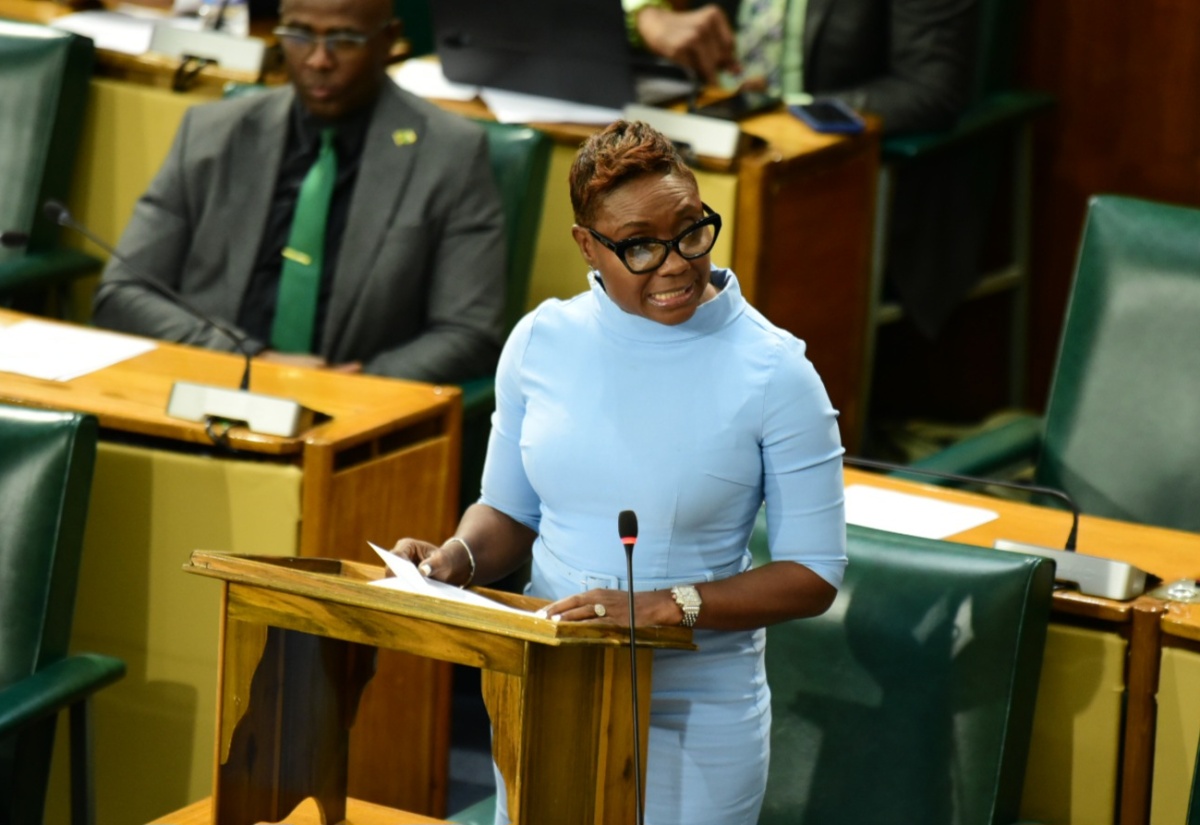
Internal & External Affairs Committee: Reactive or Proactive?
CVM TV
Administrator General’s Department Wins 2026 Public Sector Debate Competition
Jamaica Information Service
Small hands, big heart
Jamaica Observer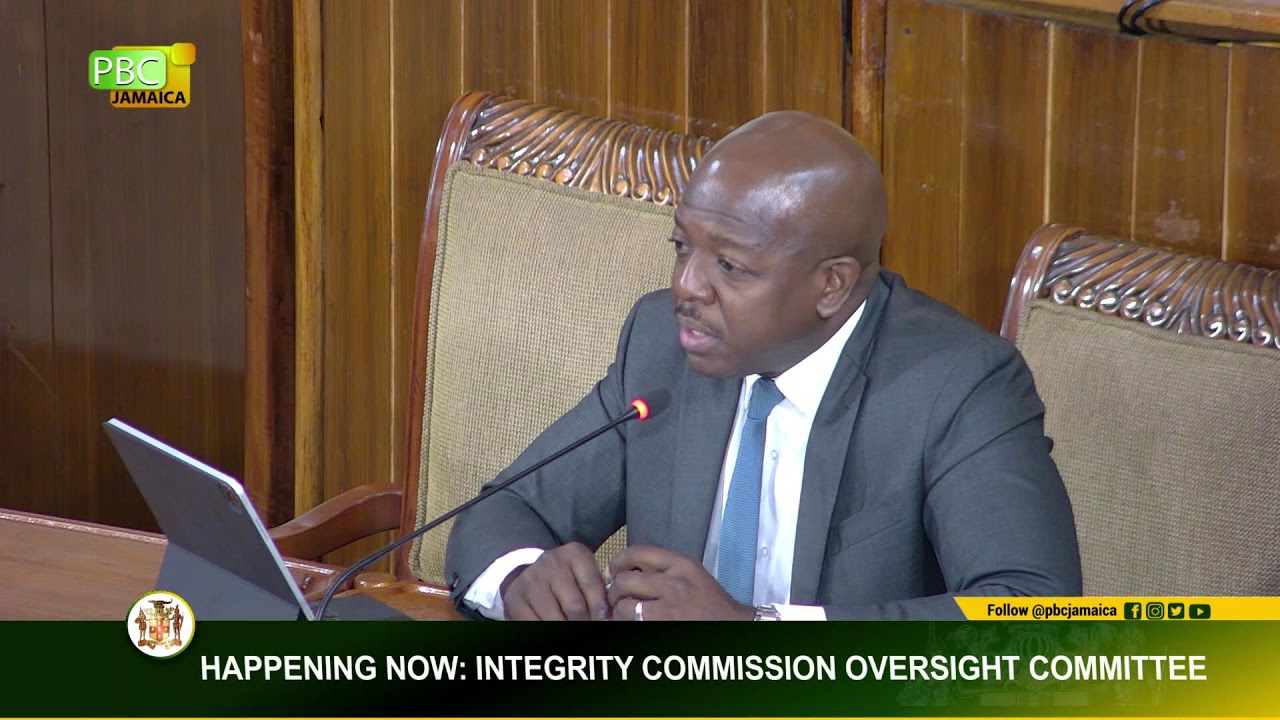
Integrity Commission Oversight Committee
PBC Jamaica (Video)Watch