
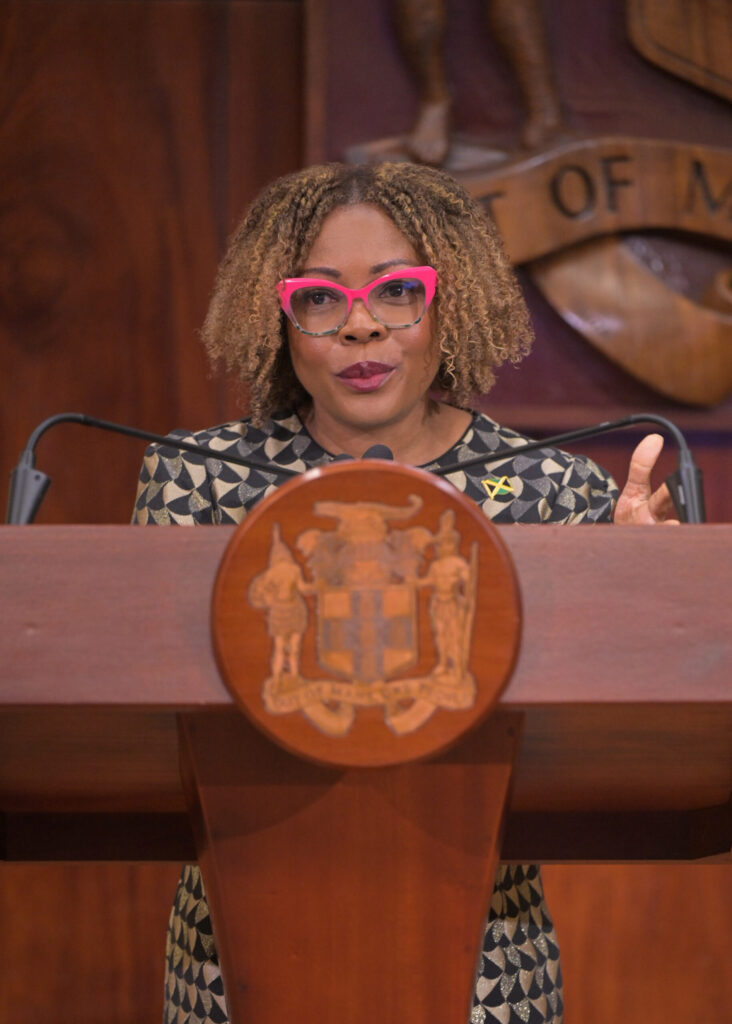
Public schools get 55% boost in operational funding — Morris Dixon
The Ministry of Education (MOE) has increased operational funding to all public schools by an average of 55 per cent this year, injecting an additional $755 million into the sector, with primary and special needs institutions receiving the largest boost.
As a part of a drive to strengthen early education in Jamaica, portfolio Minister Senator Dr Dana Morris Dixon said that the ministry revamped its budget to provide additional funding for the day-to-day operations of schools.
“We say we’re gonna do something and we do it,” said Morris Dixon, who was speaking at a post-cabinet briefing at Jamaica House in St Andrew on Wednesday.
“We’ve said early childhood is a priority, and that is the reason why we have prioritised those schools. So what we’ve done is we had a lot of little grants, and it was hard for us to really say how much money a school gets for its operational expenses. So we had an ICT (Information and Communication Technology) grant, we had a STEAM (Science, Technology, Engineering, Arts, and Mathematics) grant, we had a maintenance grant, we had a social premium grant, and you also have your regular tuition grants. So what we’ve done is to consolidate all those grants into one operational grant, and then increase it on top of it,” she said.
The minister explained that the funding is intended to support operational expenses and new initiatives, while the ministry continues to pay teachers’ salaries, utilities and major maintenance costs separately.
Morris Dixon further noted that the increases are particularly significant for smaller schools, noting that one institution’s annual operational allocation rose from $800,000 to $3 million.
“So we’ve prioritised the increase for the primary schools and the special needs schools. But every public institution has received an increase. But the quantum is different. So at the bottom, it is a bigger increase. And I think the schools are actually quite happy about it,” she said.
Under the new framework, schools are expected to allocate about 30 per cent of the grant to teaching and learning, 25 per cent to administration, 20 per cent to repairs and maintenance, 15 per cent to STEAM and technical and vocational education, as well as 10 per cent to student welfare. Morris Dixon said that while the framework exists, principals are able to exercise autonomy in using the funds to address their school’s most urgent needs.
According to Morris Dixon, the first payment has already been made since the second week of June, with additional disbursements scheduled for September and December. It is expected that by the end of the first school term, institutions will have received 65 per cent of their annual operational allocation.
“Every public school in the second week of June would have gotten their first tranche, and the first tranche is 30 per cent. So this increase is not something that I’m saying is going to come in a fictitious future. It has already started. So the first tranche went out in the second week in June, and then the second tranche goes out the first week in September, and then the third tranche goes out in December,” she said.
“So they get 30 per cent in June, 15 per cent in September, and 20 per cent in December. What that means is that 65 per cent of the yearly allocation to schools for operations they get all of that before the end of the first term. So you notice we are putting the funds in place, giving the schools early enough during the summer so that whatever is necessary can be done,” she explained.
The minister also announced a new funding opportunity for schools with challenged students seeking support for targeted interventions. Institutions will be required to submit proposals outlining expected outcomes before receiving additional resources and will later report on the results achieved.
“What we have done is to have that pool of funds available and the schools can do a proposal. ‘I want to do literacy intervention in my school. It is going to cost this amount and these are the outcomes that I expect’, and they send that to the ministry and we give them an additional allocation for that.
“We are not dictating from the ministry what to do because we understand that we have leaders in our schools and the dynamics of every school is different. And so we are allowing our schools to look at what they have in place and to then say to the ministry, ‘I think an intervention of this sort can work for my school’ and we approve it,” she said.
Morris Dixon underscored that the initiative aims to ensure that students and their environments are prioritised by granting educators greater autonomy to try new and creative approaches to boost learning outcomes.
“Be creative, don’t worry about it failing. We have to do these things for our children; we just have to try things. And so they were quite on board with that and I look forward to seeing the great innovations that will come from our schools,” she said.
Syndicated from Jamaica Observer · originally published .
Legal context · powered by Jurifi
Get the legal angle on this story. Pick a prompt and Jurifi's AI will explain it using Jamaican law.
AI replies are based on Jamaican law via Jurifi. Not legal advice.
Other coverage

Teachers worried about students cheating with AI... but survey suggests the deeper issue is learning
Jamaica Gleaner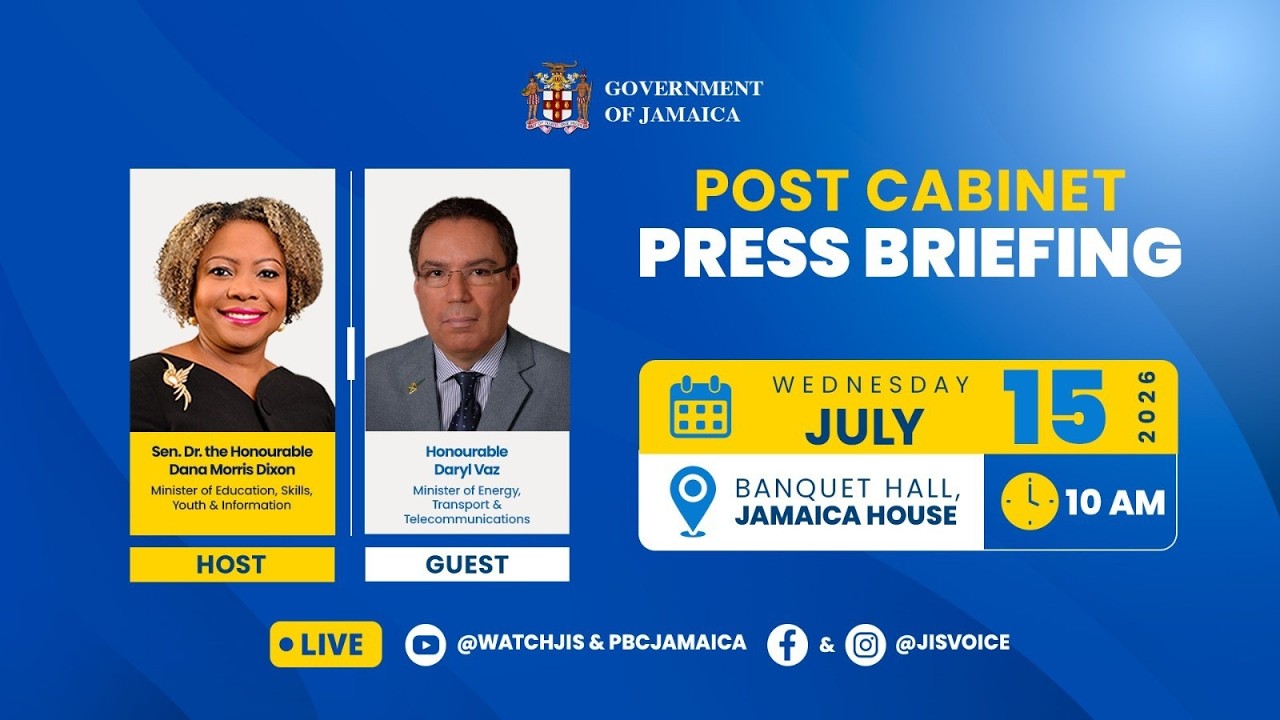
Post Cabinet Press Briefing || July 15, 2026
PBC Jamaica (Video)Watch
We Stand by our Data! MOE Breaks Silence on PEP Criticism by Damion Crawford | TVJ News
Television Jamaica (Video)Watch
Education Ministry to Begin Publishing Hurricane School Repair Updates
Jamaica Information Service
Rural School Bus Programme Attains 100% Satisfaction from Students and Parents
Jamaica Information Service