
JAMAICANS hoping for cooler weather at the end of the year may be in for disappointment as climate services manager at the Meteorological Service of Jamaica (Met Service) Jacqueline Spence Hemmings is warning that the strengthening El Niño phenomenon is expected to keep temperatures well above normal for the remainder of the year, and into early spring next year.
The climate pattern, which has already pushed the island into prolonged periods of extreme heat, is forecast to peak between October and December, and could continue influencing weather well into early 2027 before the system starts weakening later that year, but there is no indication as to how quickly it will wane.
Addressing a Jamaica Observer Press Club at the newspaper’s headquarters in St Andrew last Friday, Spence Hemmings urged Jamaicans to brace for the heat.
Manager of weather services at the Meteorological Service of Jamaica, Rohan Brown. (Photos: Naphtali Junior)
“El Niño has strengthened further. The most recent update we got [last Thursday], it is now at 1.2 degrees Celsius. It is strengthening pretty rapidly and, here in Jamaica we are seeing the impacts in terms of heat,” said the climate services manager.
She noted that Sangster International Airport has been experiencing a 10-day warm spell since June 30, while Norman Manley International Airport experienced an even more severe hot day spell between July 6 and 9, followed by a very hot day classification — the highest category used by forecasters.
Spence Hemmings said heat events are classified using location-specific temperature thresholds based on historical percentiles.
“You have a warm spell where we are using the 85th percentile, and the thresholds are location-specific, so 85th percentile for the warm day spell, and if that occurs for three days, maximum and minimum temperatures are both monitored. The 90th percentile is for the hot day spell, and the very hot day is the 95th percentile — and that’s the worst-case scenario,” she told Observer reporters and editors.
Compounding the discomfort is a persistent influx of Saharan dust drifting across the Caribbean every four to five days.
“Depending on the density, you may or may not see the hazy conditions that’s usually associated with it, and with the dense plumes that would contribute to persons’ complaining that it is feeling a little warmer than normal or, in this case, hotter than normal, so, of course, [with] all of these combined right now, the situation is looking pretty dry and pretty hot,” she said.
The climate expert further noted that Jamaica has received limited rainfall in recent months, with projections indicating dry conditions and, in some areas, drought, for several parishes. Forecasts for the first week of August point to below-normal rainfall and above-normal temperatures.
She added that, while weather systems might develop off the coast of Africa, it is not certain that they will carry rain.
SPENCE HEMMINGS…El Niño has strengthened further
“We’re not saying it’s not possible for you to get rainfall, and that’s why we don’t want persons to get too complacent because we are in hurricane season so it is possible that we could get rainfall,” she said.
Adding to the conversation, manager of weather services at the Met Service, Rohan Brown agreed that, though seemingly unlikely at the moment, rainfall is possible throughout the hurricane season. But for now, he said temperatures and the Saharan dust are the significant hazards.
“Every four to five days you have plumes of the Saharan dust coming from Africa, coming into the Caribbean…we’re having the frontal edge of a plume that is coming into our area, and that plume, of course, you’ll see a reduction in visibility for some areas. Some areas you’ll see milky skies, and unfortunately for those persons with asthma or allergies or other respiratory conditions you may have to be concerned or exercise caution, because when those Saharan dust plumes come across the Caribbean they do carry significant dust particles,” said Brown.
The strengthening El Niño phenomenon is expected to keep temperatures well above normal for the remainder of the year.
In a press release issued in June the Ministry of Health and Wellness warned that excessive exposure to dust particles can have severe health effects, including increased risk of respiratory and related illnesses such as asthma, chronic obstructive pulmonary disorder, respiratory infection, and allergies.
Members of the public, especially those already prone to respiratory illnesses, were urged to exercise great care by staying indoors, wearing face masks and long-sleeved clothing, and protecting their eyes.
Additionally, members of the public were urged to wash hands regularly and avoid touching their eyes, ensure harvested water is treated, and cover water used for domestic purposes.
Syndicated from Jamaica Observer · originally published .
Legal context · powered by Jurifi
Get the legal angle on this story. Pick a prompt and Jurifi's AI will explain it using Jamaican law.
AI replies are based on Jamaican law via Jurifi. Not legal advice.
Other coverage

Jamaica Magazine-12.07.2026
Jamaica Information Service (Video)Watch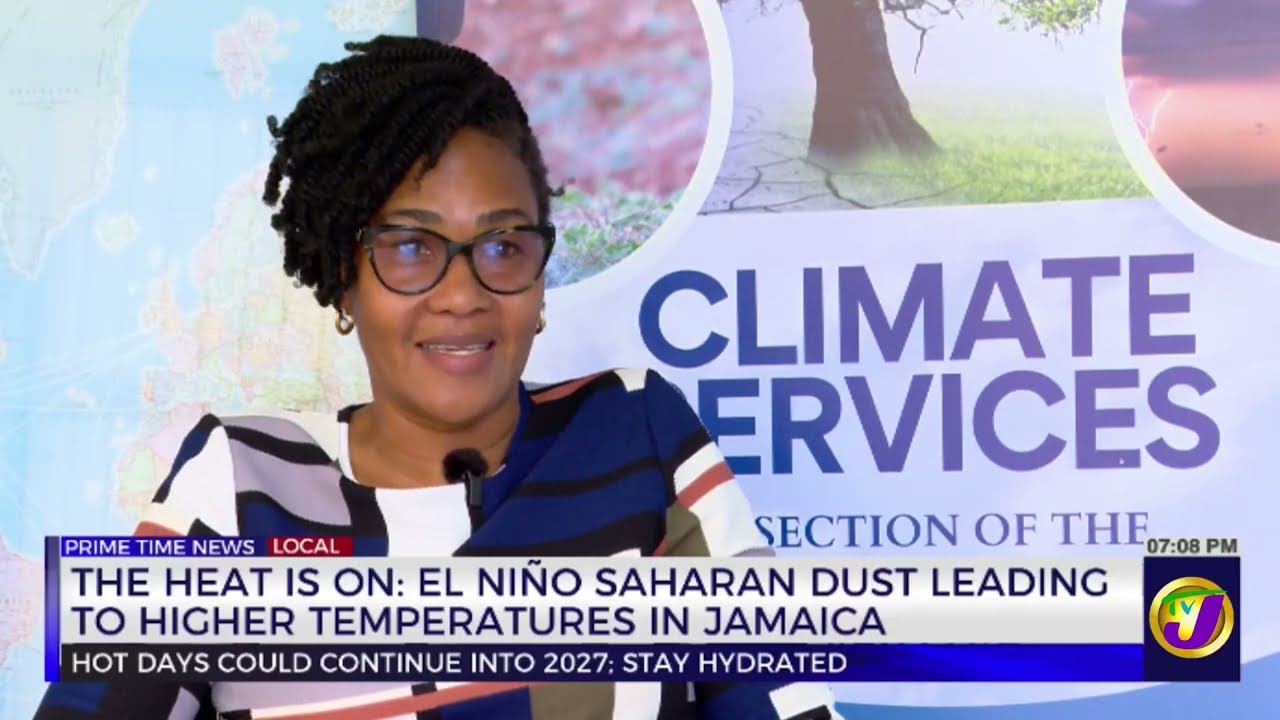
The Heat is On: El Niño Saharan Dust Leading to Higher Temperatures in Jamaica | TVJ News
Television Jamaica (Video)Watch
Jamaicans Urged to Take Precautions Because of Rising Heat in Jamaica| News at 7 PM | @CVMTVNews
CVM TV News (Video)Watch
Farmers urged to check on livestock as temperatures rise
Jamaica Star
France heatwave has Jamaican missing home
Jamaica Star