
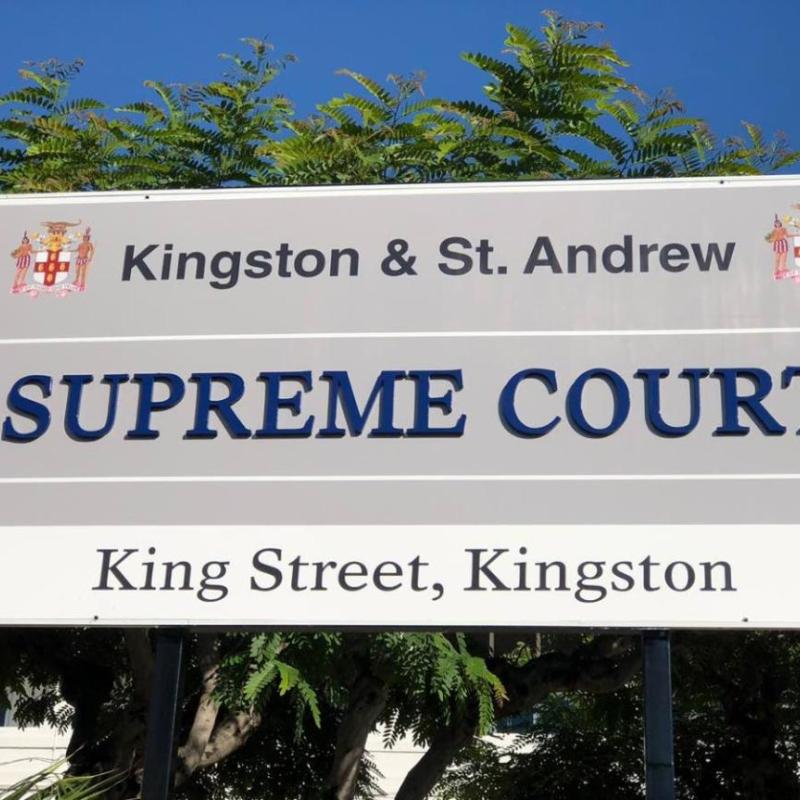
A St Ann couple has failed to secure more money for land taken by the State, after the Supreme Court confirmed a $12-million compensation figure linked to property acquired for Phase 2A of the Highway 2000 development.
Morvick Hyde and Sheridene Drummond-Hyde had challenged the award, arguing that their Phoenix Park property should have been valued at about $16.48 million.
Justice Kirk Anderson, ruling last month, found that the couple did not put forward admissible material to prove the property was worth substantially above the compensation already assessed. The case was brought by the Commissioner of Lands for the court to settle the amount payable.
The tribunal, which included Mervyn Down and Norma Breakenridge, said: “Monetary sums being sought as compensation from the Government arising from a land acquisition of private property should not be expected to be awarded if seemingly plucked out of a hat. To expect otherwise is nothing more than a futile hope.”
The matter involved a 0.535-acre residential parcel in St Ann that was taken compulsorily for the Government’s highway works, a programme intended to strengthen transport infrastructure and improve links across Jamaica.
The Hydes bought the property in January 2012 for $6.5 million. When the Government acquired it, the land had a completed chicken coop, a pig pen still under construction, and an unfinished split-level house.
A survey by Allison Pitter & Company showed that the semi-basement section of the house had two bedrooms, a bathroom, kitchen, living room and dining space, but several parts of the building were unfinished. The outer walls were neither rendered nor painted, some flooring was only concrete screed, the kitchen fittings were temporary, and the roof apex had not been completed.
The homeowners objected under sections 17 and 18 of the Land Acquisition Act. They relied on a valuation by surveyor Theo Dixon, who estimated the property at roughly $16.48 million.
Anderson, however, identified major problems with that report, including that it carried no date and was not backed by sworn evidence. The court therefore found it could not properly use the document to determine market value.
The court instead accepted valuation evidence submitted for the Commissioner of Lands by a chartered valuation surveyor who inspected the property in June and July 2013.
That report, dated February 25, 2020, placed the value between $8 million and $8.5 million, taking account of the state of the property and market conditions at the time it was acquired.
Anderson described the valuation as thorough and reliable, and held that it properly represented the market value on October 15, 2013, the date relevant to the compensation assessment.
Along with their bid for a higher property value, the homeowners sought payment for future legal costs, present legal expenses, and lost business income.
Those claims were also refused. The court found they were either not among the types of compensation allowed by the Land Acquisition Act or were not proven by evidence.
Anderson said future legal fees are not a recognised head of compensation under the law. He also found that the business-income claim could not stand because the land was zoned only for residential purposes and any commercial use there was unauthorised.
The judge further cautioned against double recovery, where a claimant seeks payment for losses already accounted for in the property’s market value.
In his decision, Anderson underlined that parties objecting to compensation awards under the Land Acquisition Act must follow the statute closely, present evidence, and keep their claims within categories recognised by law.
The judgment also raised concern about the payment available to assessors who assist the court in land acquisition cases.
Anderson noted that the law limits assessors’ fees to no more than $20 per day. He called that sum “wholly inadequate” and said urgent legislative reform was needed.
The court recorded that the assessors in this matter gave up their right to those fees, a step the judge acknowledged with appreciation.
Having considered the evidence and arguments from both sides, the Supreme Court ruled that the $12-million award was fair compensation for the compulsory taking of the property and dismissed the challenge.
Kristina Jones and Karessian Gray, instructed by the Director of State Proceedings, appeared for the Commissioner of Lands. Everton Dewar, instructed by Brydson Campbell, represented the homeowners.
Syndicated from Jamaica Gleaner · originally published .
Legal context · powered by Jurifi
Get the legal angle on this story. Pick a prompt and Jurifi's AI will explain it using Jamaican law.
AI replies are based on Jamaican law via Jurifi. Not legal advice.
Other coverage

AGD Reports Surge in Small Estate Applications Up to $1.5M
Jamaica Information Service
Gov’t moving to stop land grabs
Jamaica Observer
Enough!
Jamaica Observer
Ambraee Houslin | In defence of the NHT drawdown: the unglamorous arithmetic of building back
Our Today
Bank Fee Battle Continues: Fitz Jackson Granted Right to Appeal
CVM TV