Stop interfering!
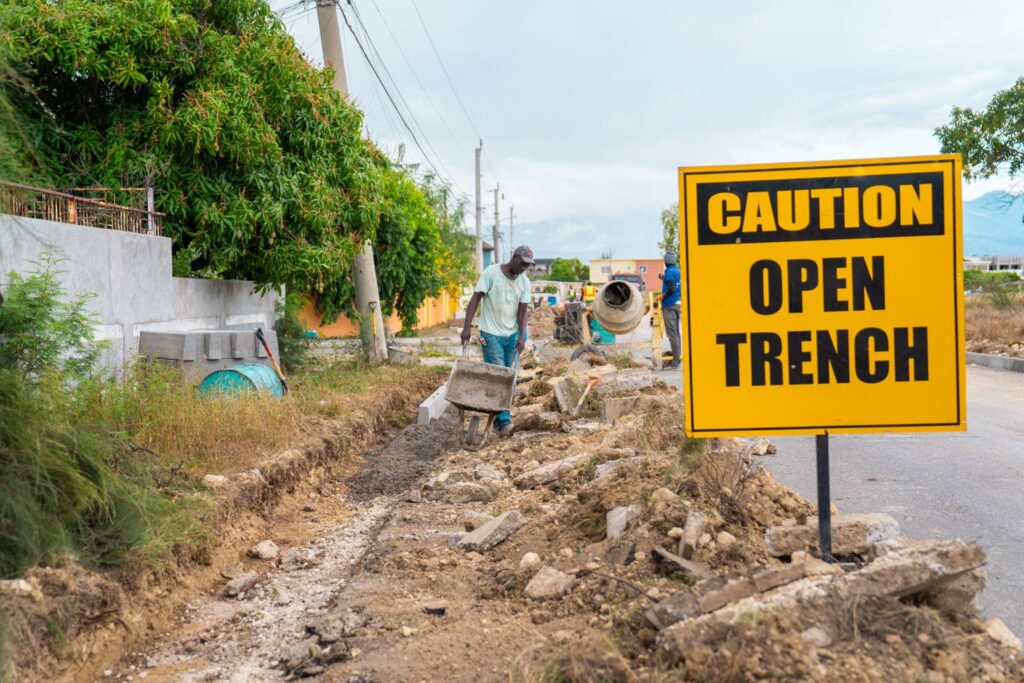
National Works Agency (NWA) Chief Executive Officer EG Hunter has warned that the continued interference by politicians and other people on major Government worksites has the potential to cause delays and increase costs.
Hunter gave the warning during last week’s meeting of Parliament’s Public Administration and Appropriations Committee (PAAC) during which he provided an overview of the Shared Prosperity through Accelerated Improvement to our Road Network (SPARK) programme.
Hunter shared correspondence from the largest contractor on road works in Jamaica, China Harbour Engineering Company (CHEC), about the ongoing problem. CHEC is the lead contractor on SPARK; there are 27 sub-contractors.
“When we start a new road, from time to time we got obstructions from political sides — either from local residents or MPs (Members of Parliament) themselves about the road, or section of the road not desirable for them. These often cause months of delay,” CHEC said in its letter to Hunter.
Hunter told the PAAC that, “These observations will invariably be translated into a claim for additional monies, and that is why we have to be really, really circumspect in terms of the relationship between the different parties and the contractor”.
“For legal purposes and good order, the client (Government) sticks with the main contractor,” Hunter added.
When asked by PAAC Chairman Peter Bunting who an MP should report to if there’s an issue, Hunter said such matters should first be raised with the liaison officer “and to the best of my knowledge, each MP was written to asking the MP to nominate a liaison officer. So your first recourse should be your liaison officer and then the next recourse would be the engineer or the engineer’s staff, me,” said Hunter, who is the chief engineer on the SPARK programme.
When contacted for comment, Minister of Works Robert Morgan said the Government had “tabled a Ministry Paper in Parliament about third parties interfering in road contracts because it is becoming a big problem”.
Morgan cited as a form of interference, efforts by newly elected Opposition MPs who have requested changes to roads that were selected via public consultations under the SPARK programme.
“Every one of them wanted to change SPARK and it’s creating a conflict between the contractor and the Government, because the contractor has signed a contract to say you have to do x, y and z at x price, and when the politicians interfere in the contract, and politicians are not parties to the contract or parties to procurement [that creates a problem]”.
“The Government has taken a serious position that third parties have to engage in projects under a particular process and that is where the Ministry Paper comes in,” Morgan explained.
For MPs who claim they are unaware of the existence of the Ministry Paper, Morgan commented that it showed they were not paying attention in Parliament.
“I stood as Deputy Leader of Government Business in the House and referred them to the fact that a very important Ministry Paper was tabled in the Parliament but they did not pay attention to it,” he said. “So a lot of them have been going around engaging with the contractor outside of the framework and putting the Government at risk.”
The Ministry Paper is titled ‘Guidelines governing the involvement of third parties in the implementation of road infrastructure projects’.
It states that: “The engagement of third parties in the implementation of national and local road infrastructure projects is expected to adhere to established Government of Jamaica laws and procedures to promote transparency, prevent political interference and safeguard the integrity of project implementation.”
Third parties include MPs, contractors, councillors, civil society groups, community residents, private sector organisations/business community.
According to the Ministry Paper, during the implementation of national projects, the involvement of third parties should be based on the following guidelines:
• Third parties may participate in meetings convened to sensitise the public about relevant projects, make representations on behalf of their constituents regarding community needs and infrastructure priorities and identify issues affecting projection implementation.
• MPs must be notified of all contractual engagements that are to be executed in their constituencies. Where road infrastructure projects affect multiple constituencies, the relevant MPs should be notified.
• Third parties must not participate in any stage of the procurement process or contract administration.
• Third parties must not attempt to influence the award of contracts or otherwise interfere in the procurement process as such actions, direct or indirect, may constitute breaches of the procurement standards and offences under the Integrity Commission Act.
• Procurement-related decisions are the responsibility of the heads of procuring entities, accounting officers, Public Procurement Committee and Cabinet, as applicable.
• Third parties should not handle, manage, or exercise oversight over project funds, including the signing of contracts, approval of payments, or general financial administration.
HUNTER… we have to be really, really circumspect in terms of the relationship between the different parties and the contractor
Syndicated from Jamaica Observer · originally published .
Legal context · powered by Jurifi
Get the legal angle on this story. Pick a prompt and Jurifi's AI will explain it using Jamaican law.
AI replies are based on Jamaican law via Jurifi. Not legal advice.