

Sunday Sips with HG Helps | Police killings should surprise no one, Courtney Walsh statue well-deserved, too many children running barefooted, and no one like Aggrey Irons

Why are people so surprised about St James killing?
The brutal death of Latoya Bulgin by a policeman in St James on May 17, should surprise or shock no one.
This is a regular occurrence by operatives of the Jamaica Constabulary Force – they kill innocent people, eliminate those whom they suspect to be dirty, and some are even paid good money to get rid of others who are deemed to be menacing to the society.
The rapid rise in police killings over the last year and a half continues to fool the majority of the people of Jamaica that crime is going down, murders in particular, and the island paradise that is Jamaica, is making rapid strides to have the place safer than it was in the 1940s.
What hogwash!
Does anyone know about a certain suggestion that was offered by a particular individual, aimed at police personnel for them to avoid taking in suspects alive, if they do not have to? Check it out. It is for real.

So, the virtual murder (that’s what it amounts to) of Ms Bulgin in front of thousands of viewers on the daytime show ‘How to Get Killed by the Police’ – an entire scene that was smartly videotaped in Granville, St James, without even a ‘prips’ of ‘viewer discretion is advised’, tells you the full story of how police personnel function in Jamaica.
The excitement surfaced after Tjey Edwardson, aged 17, was killed by the police five days earlier, and people gathered in the street, including Ms Bulgin, to protest that use of force.
The sour part is that the policeman who fired one round that landed into Ms Bulgin’s chest, was the first to yank her from the vehicle, treating her like a hog that Jamaican-American poet Festus Claudius ‘Claude’ McKay was referring to in his piece … If We Must Die
These lines from McKay’s ‘If We Must Die’ relate to aspects of what transpired in Montego Bay that fateful Sunday:
‘If we must die, let it not be like hogs
Hunted and penned in an inglorious spot,
While round us bark the mad and hungry dogs,
Making their mock at our accursed lot.
If we must die, O let us nobly die,
So that our precious blood may not be shed’
That policeman should not just be taken off ‘frontline duty’ as often happens when similar events occur. He should be thrown into a lockup until the Director of Public Prosecutions recommends that charges should be laid.
It matters not that Latoya Bulgin was a ‘Labourite’ as many people have been suggesting; nor a shotta, a deportee, a rogue taxi operator and the 141 other ways in which she has been described.
It matters that she is a Jamaican who was not given the chance to be saved by a national security and justice system that says it offers hope and fairness to everyone.
The continued slaughter of people in their homeland by those entrusted as law enforcers cannot continue in a country that is loved, admired and adored by so many global states, but never by its own people.
If the minister of national security and the commissioner of police cannot control their false-breed dogs, then they should look elsewhere to convince people that they are in charge of a policy and operations apparatus that is meant to serve, protect and reassure.
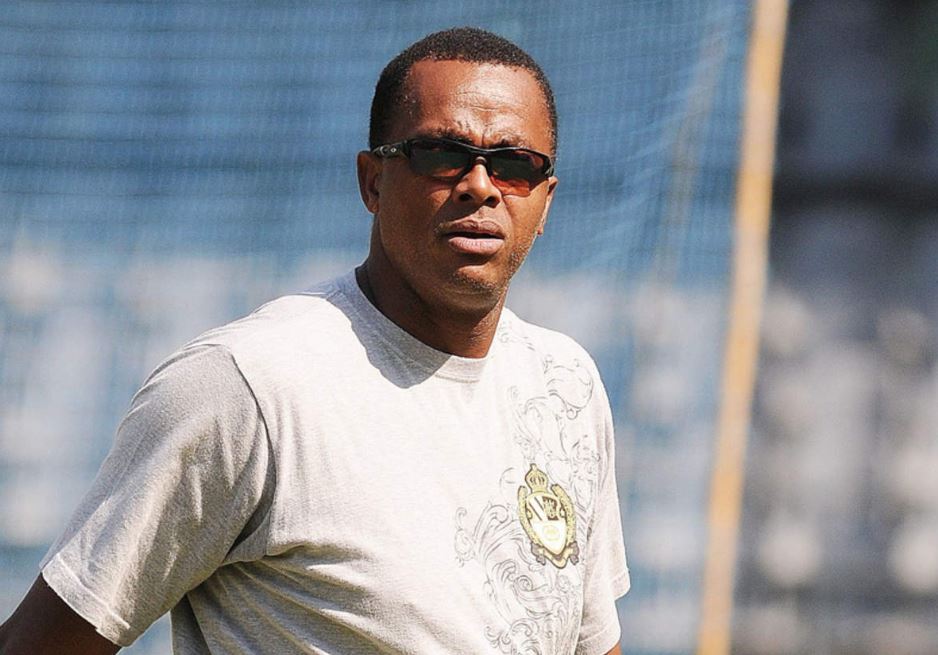
Courtney Walsh statue at Sabina well deserved
Legendary Jamaica and West Indies cricketer Courtney Walsh remains the only man to send me to prison without even a trial.
It was he who, as head of the Courtney Walsh Foundation instructed me to be part of a small team of foundation members and officers to implement a programme that would take cricket into Jamaican prisons as a way of rehabilitating some who were serving relatively short sentences, and giving hope to those having to contend with life sentences, that understanding the game could at least make some of them better.
Few knew about Walsh’s work in that regard. And while most of his historical work may be locked away in cricket’s halls of greatness, he has a humanitarian side that is equally commendable.
It has now emerged that cricket authorities have agreed to mount a statue of the great man, outside of Jamaica’s foremost venue for cricket – Sabina Park – named after a defiant slave woman, and that would be one of the most fitting honours for the outstanding Jamaican.
Oh yes, Walsh left the Test match cricket scene with 519 wickets, though the number of runs scored by him, and the zeros that served to keep scorers lazy, are not important in telling the tales of history.
Whether it is playing for Excelsior High School, Melbourne Cricket Club, Gloucestershire County in England, Jamaica, or the West Indies, Walsh is truly deserving of the honour at Sabina for not only cricket, but his contribution to life.
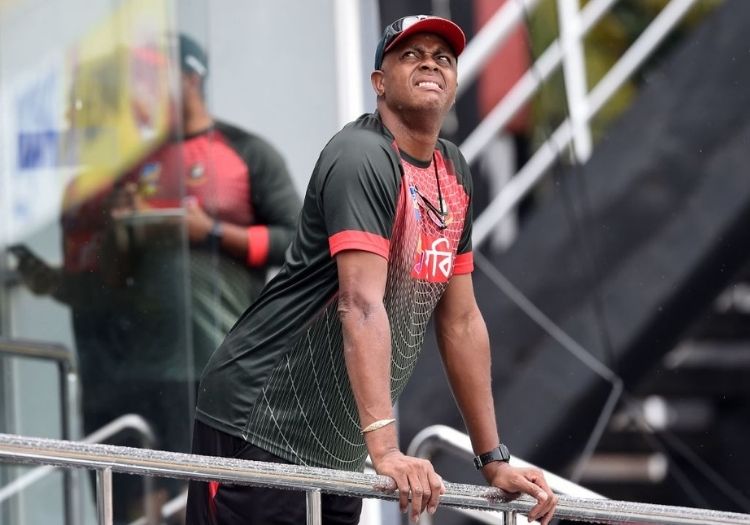
A little more on the prison tours, which took the small team to correctional centres like Tower Street Adult Correctional Centre, Tamarind Farm, St Catherine District, and two juvenile facilities at Stony Hill in St Andrew and Rio Cobre in St Catherine … they served their purpose, based upon the responses of inmates.
When prisoners heard that members of the foundation would pass through, the excitement grew rapidly. If Walsh managed to make the trip it was like getting a reduction in their sentences.
The talent in those institutions was incredible. Many wondered why they never stuck to a straight path and maintained the opportunity to play cricket, football and boxing in freedom. One was even a former amateur boxing champion of Jamaica from Montego Bay.
I shall never forget the things I learned as a ‘free’ man in prison. Many lives were changed afterwards, and Walsh’s contribution was priceless. He deserves only the best.
Too many barefoot primary school athletes
Just under two weeks ago during the Eastern Athletic Championship for primary school students at National Stadium East, it was quite noticeable that many of the children who competed ran barefoot.
It was not a normal barefoot trek too, not one that you would see in deep rural communities where resources are limited. It was on a fairly decent Mundo track that often facilitates good running in particular, and performances.
The talent on display was amazing, with Lyssons Primary School in eastern St Thomas keeping everyone quiet by scoring an overwhelming victory over competitors from other schools, which included Half-Way-Tree Primary, Lawrence Tavern Primary, and St Richard’s Primary.
The domination by Lyssons might have camouflaged the absence of track footwear by some of the lowly-placed schools, but it was not what I had expected at this stage of Jamaica’s athletic development.
Training surfaces are already bad at a vast majority of Jamaica’s institutions of primary learning. The tough soil makeup, many of them grassless, riddled with gravel and stones, causes injuries to athletes that they could avoid if investments were made by the State, from what is creamed off through corruption each year. To compound those challenges, far too many do not have proper running gear in their quest to do the best for their schools, and it gets worse when they have to compete on a track that is foreign in nature to them.
That is why the programme at Lyssons must be singled out for special mention. My count of the bare-footed warriors did not include or involve one single Lyssons athlete, although I could have missed something.
To Lyssons, preparation was the key to success, and it appeared that they had most of what was needed in place at their disposal – grassed surfaces, regular sand training, ice baths, nutrition, proper gear, rehydration fluids (not including bag juice), among other tools of success.
Addressing footwear for other schools, though, remains an issue that must be handled by State officials who are in that area of Jamaica’s growth in sport. It is not as difficult as it may seem to some.
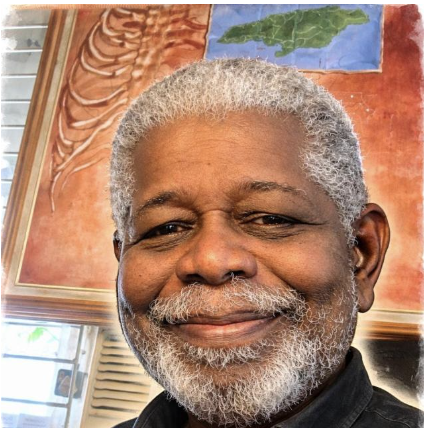
None came close to Dr Aggrey Irons
It appears that not one week is allowed to pass when one of Jamaica’s greats does not quit the race of life and leaves us in sadness.
The latest to make the journey to the unknown is the affable Dr Aggrey Irons, top-notch psychiatrist, lover of sport, musician, and uncertified comedian.
The former St George’s College goalkeeper and Stony Hill, St Andrew resident, could be described in many other ways. He was just about everything … most times turning serious things into jokes and lifting the day of so many who are down and almost out with remarks that change their mood right away.
Sometimes I had to wonder if I should ever take him seriously. While he chaired the Chase Foundation committee that decided the winner of the Courtney Walsh Award for Excellence, he had a way of solving issues by injecting his inimitable style into the proceedings.
Committee members like Dr Walton Small representing ISSA, Mike Fennell from Independence Park Ltd, Billy Heaven from CHASE Fund, and myself representing the Press Association of Jamaica, were often left in awe in respect of his style.
There are countless other stories about this outstanding Jamaican. They, I am sure, will be told soon.
Syndicated from Our Today · originally published .
Legal context · powered by Jurifi
Get the legal angle on this story. Pick a prompt and Jurifi's AI will explain it using Jamaican law.
AI replies are based on Jamaican law via Jurifi. Not legal advice.
Other coverage

Jamaica Magazine-24.05.2026
Jamaica Information Service (Video)Watch
Sitting of the Senate || May 22, 2026
PBC Jamaica (Video)Watch
Floral Tribute for The Most Honourable Edward Phillip George Seaga, ON, PC || May 28, 2026
PBC Jamaica (Video)Watch
Jamaica Magazine 29.05.2026
Jamaica Information Service (Video)Watch
JISTV | Floral Tribute for The Most Honourable Edward Phillip George Seaga, ON, PC
Jamaica Information Service (Video)Watch