Sykes urges ECJ to confront voter apathy with a growth mindset
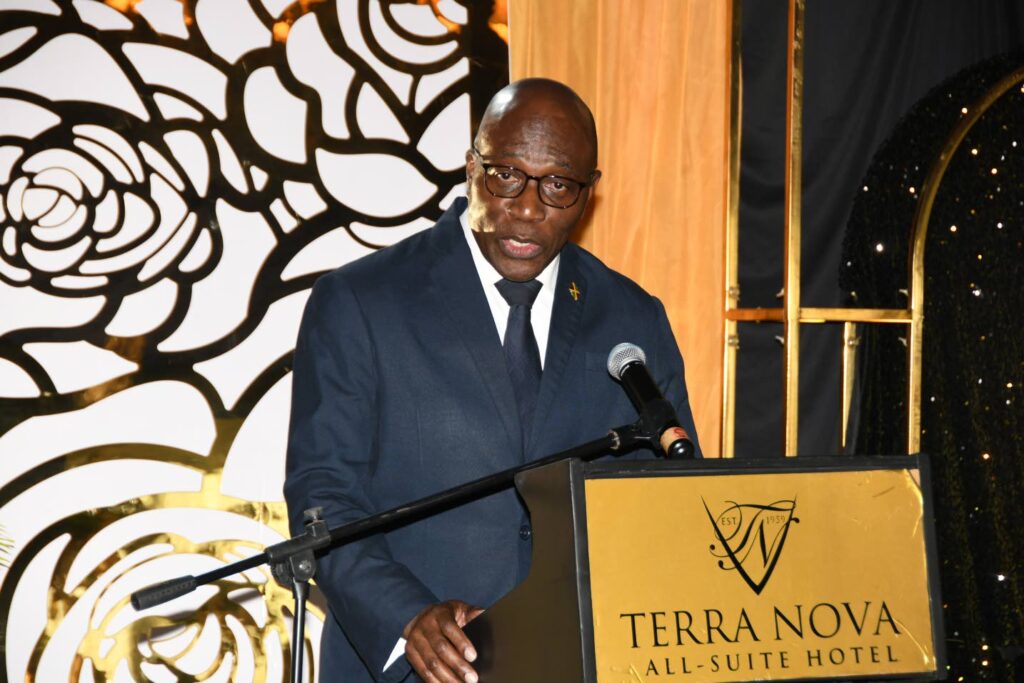
Chief Justice Bryan Sykes is urging the Electoral Commission of Jamaica (ECJ) to broaden its remit beyond protecting the integrity of the ballot and to confront the country's worsening voter apathy, warning that public disengagement is itself a threat to democratic life.
"I place this challenge before the electoral commission. Do not be satisfied with preservation. Commit to evolution, because democracy is not static. It is a living system; and like all living systems, it must grow, or it will decline," Sykes said.
The chief justice was delivering the keynote at the ECJ's Long Service Awards Ceremony, held on Wednesday at the Terra Nova Hotel in St Andrew to recognise staff who have spent years upholding the voting process.
Sykes congratulated the honourees and praised the commission for consistently producing fair, accurate elections. He said Jamaica's ability to deliver clear results on polling day stood out internationally.
"In many parts of the world, elections take days, sometimes longer, to produce definitive results. Uncertainty lingers. Speculation grows. Tensions rise. But in Jamaica, we have consistently demonstrated the capacity to produce clear and credible outcomes on election day," he said.
"It is not a technical achievement, but it is a constitutional strength, reinforcing public confidence, supporting stability. It affirms the rule of law and reassures citizens that the system works, and it reminds us that excellence is not the exclusive result of larger or wealthier nations. It is the product of commitment, and you have shown that commitment. But, and this is the critical point, success, if not carefully understood, can become its own risk," he warned.
Sykes argued that the moment now demands evolution, with the ECJ taking on a mandate that pairs electoral fairness with fresh efforts to win back disillusioned citizens. Borrowing from Professor Carol Dweck's book Mindset, he said the commission should resist resting on its record.
"The success of the electoral commission has earned something invaluable: trust. But trust is not permanent. It does not endure on reputation alone. It must be maintained, renewed, strengthened, protected. And this is where the idea of a growth mindset from Professor [Carol] Dweck's book Mindset becomes relevant," he said.
"A fixed mindset says we have succeeded, therefore we are secure. A growth mindset says because we have succeeded, we must now evolve and continue to evolve. And the electoral commission stands at precisely that moment," he added.
As Jamaicans grow more digitally connected and less patient with cumbersome bureaucracy, Sykes said, the ECJ must lean on technology to draw back voters frustrated with current arrangements.
His remarks land at a time when low turnout dominates discussion among political observers. ECJ figures show that of 2,077,799 registered voters, only 39.5 per cent — 819,749 people — voted in the 2025 General Election, a marginal lift from the 38 per cent recorded in 2020. Among voters under 30, just 21 per cent cast ballots in 2025.
"And so the question before the commission is no longer simply, 'Does the system work?' The question is: 'Is the system prepared for what comes next?' The response must be deliberate, it must be thoughtful, and it must be forward-looking. The electoral process must continue to evolve; not simply to keep pace but to lead. It must explore how technology can expand access, carefully, responsibly, and securely," he said.
Sykes also referenced talks he attended in Mexico, where officials examined ways to lift voter participation. He said making voting more mobile — extending it to nursing homes, hospitals and prisons — deserved serious consideration in Jamaica.
While the ECJ has built local democracy on solid foundations, he said, the country's next chapter rests on bold steps to re-engage those who have tuned out.
"We have all contributed to a system that ensures that when a Jamaican casts a vote, the vote is protected, it is respected, it is meaningful, it is counted. And that is no small achievement. That is the quiet architecture of democracy. And the greatest tribute we can pay to that service is not simply to celebrate it, but to build upon it," Sykes said.
"If the past was about securing the vote, the future must be about strengthening participation. If the past was about independence, the future must be about deepening engagement. If the past was about overcoming challenges, the future must be about anticipating them, and that is the work of a growth mindset," he added.
Syndicated from Jamaica Observer · originally published .