
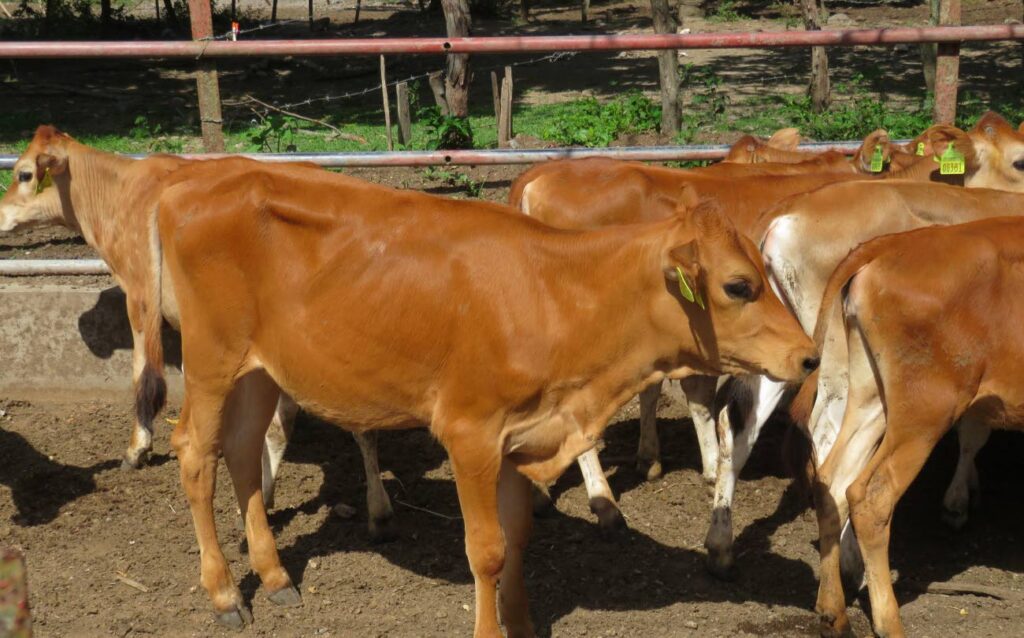
TWCL dairy farmer urges swift approval for imported cattle genetics
A major player in Jamaica’s dairy sector is pressing the Government to move more quickly on upgrading the breeding strength of local dairy cattle, arguing that slow action is holding back milk output and keeping the country tied to imported powder.
Peter McConnell, managing director of Trade Winds Citrus Limited, told the Jamaica Observer in a recent interview that farmers have spent heavily to lift production, but the genetic ceiling of the national herd remains the biggest barrier to expansion.
“Right now about 75 per cent of the milk that Jamaicans consume comes into the island in the form of powder,” McConnell said. “We should not be importing powder if we can produce the real thing.”
Trade Winds Citrus Limited, also known as TWCL, moved into dairy in 2020 when it bought the assets of Jamaica Beverages. The company now turns out about 100,000 litres of fresh milk monthly and sells dairy products under the Tru-Shake, Tru-Milk, Tru-Moo, and Dairy Farmer’s Milk brands.
McConnell said the company has widened its dairy investment, but the operation is still not profitable because the animals are not yielding enough milk. Out of a herd of more than 700 cattle, only roughly 200 are now producing milk.
“We have improved nutrition significantly and that has helped us double production from the national average of five to six litres per cow per day to about 12 litres,” McConnell noted.
He said much of that improvement has come from better feed systems, including planting sorghum, corn, and grass for silage. However, the current production level remains too low for the business to work on a commercial basis.
“Twelve litres is our break-even point. We need to get to 18 litres per cow per day, and the only way we’re going to get there is through better nutrition and better genetics.”
Over the last six years, TWCL has put more than US$5 million into its dairy business, but McConnell said the unit is still losing money.
“I don’t even like to think about what the losses are because it’s too much,” the managing director admitted. “The encouraging thing is that we are seeing improvements, but we are restricted by the genetic capability of the animal. If the animal doesn’t have the capacity to produce more than 12 litres, it won’t produce more than 12,” he added.
McConnell said the practical answer is to allow proven dairy genetics to be brought in from tropical countries where cattle perform under conditions close to Jamaica’s climate.
“We need genetics from countries producing 18 to 24 litres per cow per day under the same environmental conditions that we have. That would be revolutionary for the dairy sector,” he indicated.
Although TWCL is breeding its own replacement animals, McConnell said access to stronger genetic material from overseas would make the improvement in yields happen much faster. His dairy farm is in Bog Walk, St Catherine, where the company keeps its herd of more than 700 cattle.
“We’re doing it on our own and our yields have improved, but it could be a lot better and a lot faster if we can secure improved genetics,” he stated.
His appeal comes while industry interests continue to discuss the direction of the Jamaica Hope breed, which has long been central to local dairy farming. The breed, created from Jersey, Sahiwal, and Friesian cattle, was once viewed as one of the leading dairy breeds in the Caribbean.
McConnell said Jamaica Hope cattle have not seen the steady genetic upgrading needed over the past several decades.
“Fifty years ago, the Jamaica Hope was the jewel of the Caribbean. But the genetic improvement has not continued, and as a result the breed is not as efficient as it once was,” he noted.
He supports work to rebuild the breed, but said the industry cannot depend only on breeding programmes that may take years to bear fruit.
“We should absolutely continue the work to restore the Jamaica Hope to its former glory, but we don’t have that luxury of time.”
McConnell said he has taken the matter to policymakers more than once and is waiting to see whether those discussions lead to action.
“I’ve lobbied the Government and told them what we need. They’ve said they’re working on it, so let’s see how fast they work on it. We need the new genetics, and we need them fast, because there’s only so long that I will continue to absorb losses.”
Even with the financial pressure, McConnell said he still sees strong long-term prospects for Jamaican dairy and for TWCL’s part in reducing the national food import bill.
The company now holds an estimated 65 per cent share of the chilled milk market, but its presence in the shelf-stable tetra-pak category, where imported products are dominant, is only about 10 to 15 per cent.
TWCL also wants, eventually, to branch further into dairy items such as yoghurt, butter, cream, and ice cream. McConnell said, however, that the first task is to grow local milk supply so imported milk powder can be displaced.
“The first goal is to replace the milk powder being used to make milk. Once we achieve that, then we can focus on the other value-added products.”
For McConnell, the fastest way to shift the sector is to raise the productive capacity of the national herd through better breeding.
“If the Government allows the importation of the proper genetics, there would be a dramatic turnaround in the dairy industry,” McConnell said.
Syndicated from Jamaica Observer · originally published .
Legal context · powered by Jurifi
Get the legal angle on this story. Pick a prompt and Jurifi's AI will explain it using Jamaican law.
AI replies are based on Jamaican law via Jurifi. Not legal advice.
Other coverage

Caribbean Roundup: Antigua and Barbuda, Haiti, Jamaica, Saint Lucia, and more
Caribbean Life
Dayton Campbell calls for urgent national action: “For Every Dollar Earned From Agricultural Exports, Jamaica Spends Five Importing Food”
Our Today
Westmoreland ganja farmers sign up to become legal
Jamaica Gleaner
3 Years Later. No AI Plan. No Cybersecurity Law. | Christopher Brown| MP
Jamaica PNP (Video)Watch
OT Equity Analysis | MDS and the difficult business of turning revenue into profit
Our Today