

The University of Technology, Jamaica (UTech Jamaica) has secured the right to stage the World Computer-Assisted Language Learning (WorldCALL) Conference between June 12 and 16, 2028, on its Papine campus — the first time a Caribbean university will present the worldwide gathering.
UTech Jamaica’s Faculty of Education and Liberal Studies (FELS), acting through its Language Teaching and Research Centre (LTRC), will lead the programme, which will run alongside the faculty’s seventh yearly FELS Conference.
WorldCALL is an international professional body for teachers and scholars focused on computer-assisted language learning (CALL). Its conference gathers instructors, researchers, students and industry figures for several days of shared findings, new work and proven approaches in education and language teaching. The association also aims to open pathways for expertise and skills to reach countries with limited access to CALL.
Last month at Papine, UTech Jamaica President Dr Kevin Brown, WorldCALL President Professor Ana Gimeno-Sanz and FELS officials marked the winning bid during a courtesy visit.
“We are so honoured to have been given the opportunity to host this prestigious conference and to promote computer-assisted language learning here,” Brown said.
Pointing to the university’s standing in artificial intelligence (AI), he continued: “We’re going to be the host of the Jamaica National Artificial Intelligence Lab later this year. Hosting the WorldCALL Conference here will present more opportunities for us to do more research on AI, and languages as well.”
Brown said WorldCALL 2028 would draw in both scholarly and classroom viewpoints on language teaching and learning shaped by contemporary digital tools.
After taking part in the just-ended sixth UTech Jamaica FELS Conference, Gimeno-Sanz — who also teaches English language at the Universitat Politècnica de València — voiced confidence that the campus can manage the global meeting.
“I have to say that I was delighted and that everything ran extremely smoothly,” she said of the FELS Conference.
“Yesterday I publicly congratulated the team of people who did such an excellent job of organising it, and this morning we’ve been in discussion in preparation for the big event in June 2028, and I think everything is already under way.”
Gimeno-Sanz explained that WorldCALL deliberately moves its meetings to parts of the world where the field can still take root.
“We organise a conference every five years, and we try to organise it in areas of the world where there isn’t already an established organisation,” she said.
She added that the goal is to draw people from varied regions into educational technology for language learning, and she stressed WorldCALL’s work to build fresh regional networks and to back early-career researchers with scholarships and overseas partnerships.
“One of the missions of WorldCALL is capacity-building. When we met in Chile in 2018, we were able to establish LatinCALL. Hopefully, we’ll be able to set up a CaribbeanCALL organisation,” she said.
She also said the 2028 programme will give heavy weight to artificial intelligence and other new technologies reshaping language teaching worldwide.
O’Neil Madden, a French lecturer at UTech Jamaica and a prominent Caribbean voice in language-learning research, said bringing WorldCALL to the island could spur stronger regional involvement in CALL.
“When I first started attending WorldCALL, I was the only representative from the Caribbean,” he recalled.
“I’m really trying to get more people from across the region to participate in these conferences, and to see what insights we can gain and apply to our own systems.”
Madden also pointed to what he called a major shortfall in computational linguistics that Caribbean academics are well placed to close.
“A lot of the AI models have biases towards dominant languages. Some of them don’t really capture Caribbean reality,” he said.
“There’s a gap between linguistics and technology. It’s now time to strengthen computational linguistics so that we can build our own applications and tools that better capture our realities.”
Tresecka Campbell-Dawes, who heads the Language Teaching and Research Centre at UTech Jamaica, said WorldCALL 2028 gives Jamaica a chance to “plant the seed” for deeper Caribbean cooperation on technology-supported language education.
Dr Nicole Cameron, a lecturer in FELS at UTech Jamaica and co-chair of the WorldCALL 2028 Conference, said organisers have already started work on what she expects to be a landmark gathering. She said the programme will include keynote talks, research paper sessions, workshops, panel discussions, technology demonstrations and networking events.
Syndicated from Jamaica Gleaner · originally published .
Legal context · powered by Jurifi
Get the legal angle on this story. Pick a prompt and Jurifi's AI will explain it using Jamaican law.
AI replies are based on Jamaican law via Jurifi. Not legal advice.
Other coverage

Alliance Francaise Opens New Home at UTech Jamaica Papine Campus, Strengthening Cultural and Educational Ties with France
University of Technology, JamaicaUTech, Jamaica and Miya Water Jamaica Limited Partner to Establish Campus Water Efficiency Project
University of Technology, Jamaica
Top 5 Things Delegates Loved About the 2026 Jamaica Diaspora Conference—and 5 Ways to Make the Next One Even Better
Jamaicans.comBACAT iMac Lab Upgraded with 30 New Desktops Valued at Over $14 Million
University of Technology, Jamaica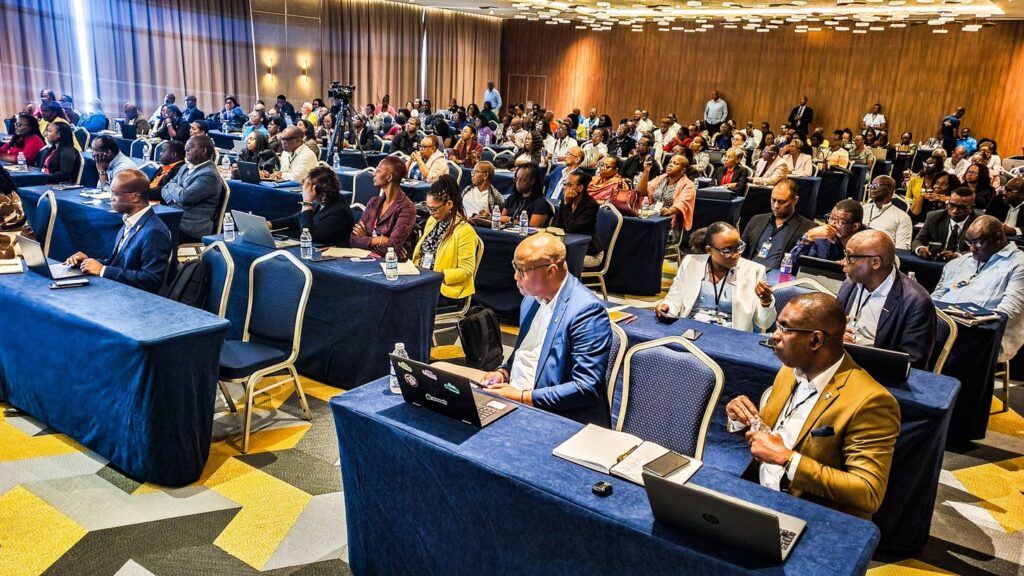
No cost hikes for students amid UWI expansion plans
Jamaica Observer