
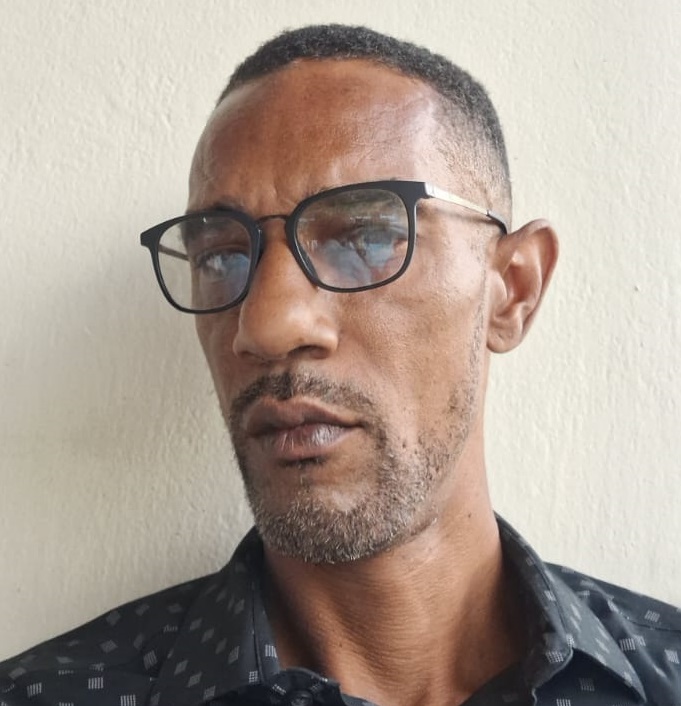
Vivian Thomas Broadens Jamaican Culture Push Through Music, Media And Spoken Word
In dancehall, attention usually gathers around the performers whose songs move through sound systems, whose social media posts spark debate and whose words quickly enter everyday talk. The organisers, negotiators and problem-solvers who keep the business moving often operate far from public view. For many years, Vivian Thomas chose that quieter role.
Thomas, who founded Push A Yute Ent Inc and Urbanvine Media, built much of his career in the less visible corners of Jamaica’s entertainment trade. His work included closing arrangements outside venues after stage shows, handling emergencies late at night and helping to frame media conversations that pushed the local industry to face difficult issues.
He is now becoming more visible as he pursues additional ways to present Jamaican culture. One of his current projects involves poetess Simone Dewar, whose newest release is Thoughts Uncut, a three-track EP.
“I am doing more eclectic projects now that mirror the true nature of Jamaican culture: the spoken word, the rhythms and the invincible spirit of black consciousness,” he said.
Before Thomas was known as a manager, promoter or media strategist, he developed his discipline at King Jammy’s Studio, among dancehall’s most important institutions. He was not the voice in the booth. He worked at the console, shaping recordings, listening closely to frequencies and learning how small changes could turn a track into something with impact.
“That taught me everything,” Thomas said recently. “You learn to hear what doesn’t belong.”
Those lessons later guided more than his studio decisions. Thomas moved away from engineering and created Push A Yute Ent Inc, bringing the same careful approach to artiste development and management. Across the years, he produced for and collaborated with acts such as Black Ryno, Deva Bratt, Mr Peppa, I-Wayne, Mr Lexx, Munga and Supa Hype, entertainers connected to different periods in Jamaica’s popular music story.
His production work with singer Da’Ville brought him Grammy-nominated recognition. Thomas also produced Fyah Pon the Bay with Grammy winner Kabaka Pyramid. In 2018, he produced Lisa Hyper’s Boss Up album. During his time at King Jammy’s Studio, he served as recording engineer on Sizzla’s Get to the Point. He also engineered several songs on Bushman’s album, including the single Fire Pon a Weak Heart.
The recording room was only part of his wider career. Thomas later took his work into Europe, serving as an A&R representative at Star Search Media before signing with Dancing City in Switzerland under Jean Singellos. In that environment, he worked across a scattered mix of promoters, record companies and venues, assisting Jamaican artistes as they dealt with unfamiliar business structures and presenting reggae and dancehall to European listeners in a fuller way than the market’s usual labels allowed.
He also travelled with poets and spoken-word performers, carrying Jamaican performance styles into spaces where audiences on the continent sometimes connected with the feeling of the culture before fully understanding the language.
“Europe taught me systems,” Thomas said. “Jamaica taught me soul. The challenge was learning how to protect one without sacrificing the other.”
That work demanded tact as well as judgement. In European business settings, Thomas said he often had to explain that dancehall would lose its essence if it were cleaned up too much for overseas consumption. As time passed, his name became linked less to celebrity and more to solving problems. Artistes reached out when tours were in trouble, managers sought guidance and careers that had lost direction needed steadying.
Thomas arranged deals for entertainers including Tanto Blacks and helped coordinate European tours for Richie Spice, TOK and Simone “Fruittree” Dewar. Those responsibilities went well beyond travel schedules. They included visa matters, venue disputes, payment issues and the difficult financial realities that come with taking Jamaican music on the road internationally.
As a promoter, Thomas used tools that were central before social media took over: radio pushes, street teams, diaspora relationships and early online marketing channels. He said the purpose remained consistent, to take Jamaican music farther while keeping its identity intact.
Thomas believes the entertainment field does not provide enough structure for the people working out of the spotlight. “Entertainment doesn’t have HR,” he said. “If you’re a manager, marketer or media owner in Jamaica, you’re building the plane while flying it.”
That uncertainty influenced how he sees the business. He has spoken frankly about periods involving debt, partnerships that failed and chances that did not move forward. According to him, labels have often favoured quick hits instead of patient planning, while media outlets have shaped coverage through relationships and access. In that setting, success has depended not only on ability, but also on endurance.
His years in management also carried personal pain. Thomas worked closely with entertainers including Supa Hype and Deva Bratt, and he mentored the late artiste Al’Qual, whose death had a deep effect on him.
Those experiences reinforced firm views about the industry. “Contracts matter more than promises. Information is leverage. Popularity without ownership is temporary,” he said.
Thomas still comes back to the principle he first absorbed while engineering sessions at King Jammy’s. “Strip it down to the signal,” he said. “Cut the noise. Amplify what’s real.”
Syndicated from Jamaica Observer · originally published .
Legal context · powered by Jurifi
Get the legal angle on this story. Pick a prompt and Jurifi's AI will explain it using Jamaican law.
AI replies are based on Jamaican law via Jurifi. Not legal advice.
Other coverage

More than skin deep for Dr Romario Thomas - Absolut Skin founder builds purpose from lived experience, patient care
Jamaica Gleaner
Squash Set For Early Release
Dancehall.com
Chatting With Ayetian | TVJ Smile Jamaica
Television Jamaica (Video)Watch
Dyani And Remus Burrell Link Up For The ‘Journey’
Dancehall.com
Serving Abroad, Investing at Home | Ray of Hope
Television Jamaica (Video)Watch