Whistleblower claims Kennedy Center ‘rushed’ renovations to please Trump
July 9, 2026 Matt Floca Executive Director The John F. Kennedy Center for the Performing Arts 2700 F Street NW Washington, DC 20566 Dear Mr. Floca: I write regarding allegations that the John F. Kennedy Center for the Performing Arts (the “Center”) has mismanaged federally appropriated funds to the detriment of the building. Specifically, I have received allegations that the Kennedy Center has conducted rushed renovation and maintenance work with disregard to its commitments to Congress and the federal contracting standards the Center has long applied to its own procurements. As an ex officio member of the Center’s Board of Trustees and as Ranking Member of the Committee on Environment and Public Works, with jurisdiction over public buildings and the construction, operation, and maintenance of federal facilities, I have a particular responsibility to oversee spending of public funds entrusted to this living memorial. Public funds ought to be spent lawfully, prudently, and in service of the institution, not on the stylistic whims of the current President. A recent whistleblower disclosure raises serious questions on each of these counts. The Kennedy Center is the sole national memorial to President Kennedy. Less than two weeks after his assassination, Congress moved to dedicate the Center in his honor, and the John F. Kennedy Center Act became law on January 23, 1964. 1 Since 1995, the Center’s Board of Trustees has been solely responsible for operating the building, including the expenditure of federal appropriations for its operation, maintenance, and capital repair. 2 In service of proper stewardship of public funds, the Center has long incorporated the requirements of the Federal Acquisition Regulation (“FAR”)—the body of rules governing how federal entities plan, compete, award, and document contracts to protect taxpayers—into its procurement policies. 3 The Government Accountability Office (“GAO”) has repeatedly treated the FAR as the governing standard for the Center’s appropriated-fund contracting, explaining that “[t]he Kennedy Center follows FAR when procuring contracts utilizing appropriated funds,” and that “[i]f the center elects not to follow FAR, it must seek a FAR deviation.” 4 On the rare occasions when GAO has identified departures from that standard—such as its 2006 finding that 1 John F. Kennedy Center Act, Pub. L. No. 88-260, 78 Stat. 4 (Jan. 23, 1964); HABS No. DC-755, at 1. 2 John F. Kennedy Center Act Amendments of 1994, Pub. L. No. 103-279. 3 U.S. Gen. Accounting Office, GAO/GGD-98-56, Kennedy Center: Information on Facility Management Capability (Mar. 1998).
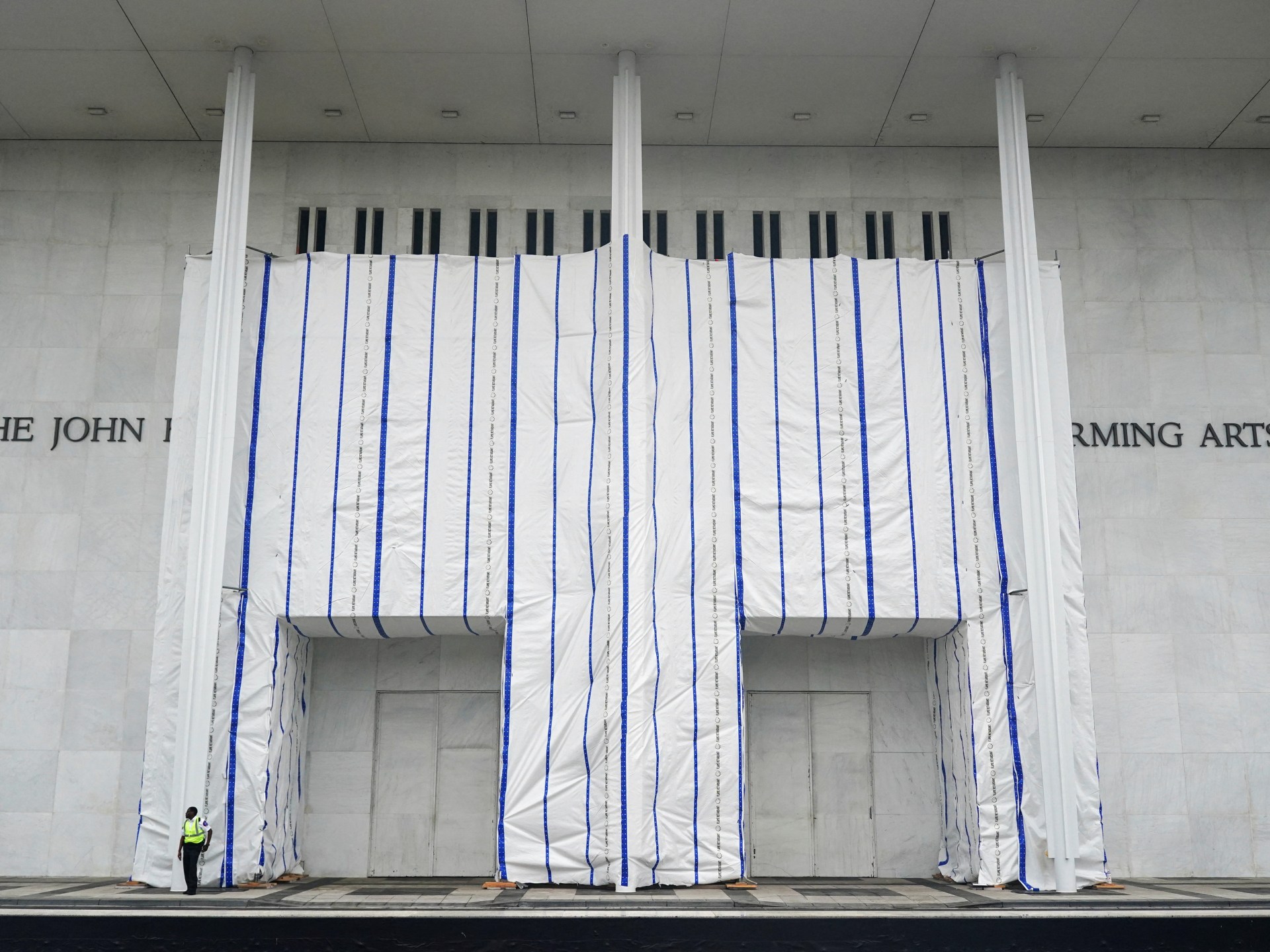
President Trump’s preferred contractor cut corners when repainting the Center’s columns, sticking taxpayers with the repair bill. In August 2025, Cypress Painting Systems (“Cypress”) began painting the building’s columns with no written contract in place. Weeks later, the Center papered the file with a $4.4 million sole-source award, 4 U.S. Gov’t Accountability Office, GAO-06-1025, Kennedy Center: Implementation of the Comprehensive Building Plan Faces Challenges, at 33 n.22 (2006). 5 GAO-06-1025, at 33; U.S. Gov’t Accountability Office, GAO-21-446, Kennedy Center Facilities: Life-Cycle Cost Analysis and Other Capital-Planning Practices Could Help Minimize Long-term Costs, at 15-17 (2021). 6 Letter from David Z. Seide & Dana L. Gold, Government Accountability Project, to Chair Shelley Moore Capito & Ranking Member Sheldon Whitehouse, U.S. Senate Comm. on Env’t & Pub. Works, et al. (June 30, 2026) [hereinafter Disclosure] [attached as Document 1]. 7 John F. Kennedy Center for the Performing Arts, Fiscal Year 2027 Congressional Budget Justification, at 3 [hereinafter FY 2027 Justification]. 8 Id. at 3-4; P.L. 119-21. 9 Disclosure. Page 2 the Center had not obtained a required deviation before using an alternative contracting method, or its 2021 finding that certain procurement files lacked complete documentation—the Center acknowledged the findings and undertook action to correct them. 5 For decades, the FAR has been the measure of the Center’s contracting—adopted by the Center as its own policy and applied by GAO in its oversight. Yet in mid-November 2025, the Center revised its procurement policies to declare itself exempt from the FAR, while leaving in place a promise to “avoid even the appearance of conflict of interest or impropriety.” 6 The Center has also made specific funding promises to Congress, repeated even after President Trump became Chairman. Its Fiscal Year 2027 Congressional Budget Justification commits to “prudently and efficiently utilize the appropriated resources, in accordance with federal rules, regulations, and executive orders.” 7 It pledges to prioritize “life-safety, accessibility, and building infrastructure improvement” and to “reduce and eliminate the backlog of deferred repairs” with the $257 million Congress appropriated for the Center in the One Big Beautiful Bill Act—more than six times the Center’s typical annual federal funding. 8 However, I have obtained information from whistleblowers, detailed below, that calls into question whether the Center’s representations to Congress were made in good faith and whether the Center is capable of upholding its own promises. A protected whistleblower disclosure submitted to me by the Government Accountability Project —conveying the firsthand accounts of multiple former Center project managers, supported by contemporaneous documents and photographs—describes conduct sharply at odds with both the procurement standards the Center has long applied and the representations it has made to Congress. 9 According to the disclosure, beginning in February 2025, after President Trump reconstituted the Center’s Board of Trustees and installed himself as Chairman, Center management worked in unusually close consultation with the White House to rush a series of renovations to meet deadlines tied to the President’s desire to host events at the Center in December 2025, including the ceremony at which President Trump received the so-called “FIFA World Peace Prize.” In the process, longstanding federal contracting controls were set aside, no- bid contracts were awarded, and superficial cosmetic work was performed that staff warned would have to be redone. Among the disclosure’s findings are the following:
naming a different firm, Washington Office Interiors, bypassing the Center’s own Office of Contracting. Washington Office Interiors is a certified SBA 8(a) small disadvantaged business—a status that qualifies it for no-bid set-aside contracts—while Cypress is not. 10 The disclosure indicates Cypress performed and managed the work as Washington Office Interiors’ subcontractor. Furthermore, Cypress substituted a cheaper, shorter-lasting primer for the contract-specified industrial primer—with no change order, approval, or price adjustment. Within months, the repainted steel columns began rusting through the new white paint. Repainting them properly is estimated to cost over $1.5 million. An $8 million no-bid flooring contract went to a firm with no apparent concert-hall experience. Low Country Flooring—a South Carolina company whose portfolio runs to residential and historic preservation work—received a sole-source, five-year, $8 million contract to replace, refinish, and maintain wood flooring in the concert hall and elsewhere. The justification signed by then-Vice President of Operations Matt Floca after the Kennedy Center was renamed declared the firm the “only one responsible source,” yet there is no evidence the contractor had ever installed flooring for a concert-hall stage, with its specialized acoustical and performance demands. When Center staff asked about theater-specific qualifications and performance testing, the contractor’s representatives said those requirements were never part of the scope discussed with Center leadership. Contractor’s cosmetic revamp of the Center’s Reflecting Pool is already rusting and peeling. In order to hit President Trump’s December 2025 deadline, Cypress only conducted a cosmetic sanding and repainting of the Center’s East Plaza Reflecting Pool, which the disclosure indicates may need to be fully rebuilt. The Center’s Reflecting Pool is now unevenly painted and rusting, indicating that old paint was never properly stripped before it was resurfaced. The Center tore out a brand-new bathroom floor because President Trump didn’t like the color. New tile floors had just been installed in the bathrooms of the Presidential boxes—beige in one, white in the other two—when the President toured the building on March 17, 2025. The next morning, Center staff were told the White House disliked the beige tile and wanted it replaced. When staff asked for written confirmation before demolishing brand-new work, Center leadership advised that it had received confirmation from White House leadership. The Center then demolished the brand-new floor and replaced the tile. Management set aside contracting rules to hit the President’s deadlines, telling staff “we’ll deal with the lawsuits later.” To meet deadlines tied to the President’s plans to host events at the Center—including the FIFA World Cup draw on December 5, 2025, where the President received the new FIFA “Peace Prize,” and the Kennedy Center Honors, which he emceed two days later—Center management directed staff to set aside longstanding federal contracting controls, telling them to “do whatever it takes” to get the 10 Compare, e.g., U.S. v. Harper , No. 1:16-cr-00095-KBJ (D.D.C. 2016) (entering judgment on a guilty plea against a former officer and owner of MCC Construction Company (MCC), which conspired with two companies that were eligible to receive federal government contract set asides for small, disadvantaged businesses with the understanding that MCC would perform all of the work); see also, e.g. , United States v. Singh , 195 F. Supp. 3d 25 (D.D.C. 2016); United States v. Apprio et al. , No. 8:25-cr-00174 (D. Md. 2025). Page 3
work done before the December events and that “we’ll deal with the lawsuits later.” Appropriated dollars were channeled into cosmetic, high-visibility work prioritized by the President, including the aforementioned painting of the columns and refinishing the reflecting pool, as well as gilding certain ceilings and mounting President Trump’s name on the side of the building. The Center rewrote its own contracting rules. Perhaps in a post hoc effort to justify the no-bid contracts awarded to facilitate the rushed renovations, in mid-November 2025, the Center revised its procurement policies to exempt itself from the FAR. However, it retained a promise to “avoid even the appearance of conflict of interest or impropriety.” Taken together, these are not isolated lapses but a single pattern that runs counter to everything the Center has told Congress it would do with the public’s money. Instead of pursuing renovations tailored to the building’s actual needs, the Center rushed a series of renovations driven by the President’s aesthetic whims and his desire to star in a series of televised events in December. The Center’s subservience to the President’s desires and its corner-cutting contracting practices have resulted in steel columns that are rusting through fresh paint, a reflecting pool that may have to be torn out and rebuilt, and a brand-new bathroom floor torn out over an offending tile color. This is waste, and it treats a national memorial to President Kennedy as if it were a private renovation project. Accordingly, I request that you provide the following information and documents by July 23 , 2026: 1. Provide complete and substantive responses to the requests set forth in the letter dated November 20, 2025, from Ranking Member Whitehouse, that remain outstanding. 2. Identify, in itemized form, how the $257 million appropriated to the Center under the One Big Beautiful Bill Act has been spent or obligated to date, and provide the current spending plan for the remaining balance. 3. Of the funds expended to date, state how much has gone to life-safety, accessibility, and structural-infrastructure work, and how much to cosmetic or aesthetic work, including column painting, ceiling gilding, reflecting-pool refinishing, and exterior signage. 4. Former Kennedy Center President Richard Grenell stated that the $257 million will finally “address decades of deferred maintenance and repairs.” 11 Please reconcile that statement with the disclosure’s account that appropriated funds were directed to cosmetic work that staff warned would have to be redone. 5. Produce the contract for mounting President Trump’s name on the building’s exterior; state its value and funding source; and identify the dates on which it was awarded, scoped, or authorized; the letters were fabricated and delivered; and the work order to mount them was issued. 11 Statement of Richard Grenell, President, John F. Kennedy Center for the Performing Arts (Feb. 1, 2026), as reported in Devin Dwyer & Lalee Ibssa, Who Controls the Kennedy Center—Trump or Congress?, ABC News (Feb. 11, 2026). Page 4
6. Produce all emails, memoranda, text messages, and other communications—including those to, from, or involving the Center’s Office of the General Counsel—between or among Center employees, Center trustees, and federal officials, concerning the renovation work, contractor selection, procurement standards, or the FAR, from February 7, 2025 (the date the President announced the reconstitution of the Board) through the date in November 2025 on which the Center adopted its revised procurement policy declaring itself exempt from the FAR. 7. Explain how declaring the Center exempt from the FAR is consistent with the Center’s FY 2027 commitment to “prudently and efficiently utilize the appropriated resources, in accordance with federal rules, regulations, and executive orders.” 8. Explain how Cypress began work on or about August 28, 2025, with no written contract in place, identify who authorized that work, and produce all records of the “verbal” authorization the Contracting Officer later described. 9. Produce the change-order, material-substitution, and price-adjustment records for the column painting, and explain how a consumer-grade primer came to be substituted for the contract-specified industrial primer, and who at “Center leadership” approved it. 10. State the cost to the Center of demolishing and replacing the newly installed bathroom tile in the Presidential boxes after the White House objected to its color on March 18, 2025, identify who authorized that work, and explain how demolishing newly completed work to change a color comports with the Center’s pledge to spend appropriated resources prudently. 11. For the $8 million sole-source flooring award to Low Country Flooring, produce the “only one responsible source” justification memorandum and identify what consideration was given to other qualified firms and to the contractor’s experience with concert-hall stage flooring. 12. Identify every contract awarded since February 2025 in which the White House, the Executive Office of the President, or any person acting on the President’s behalf participated in selecting the contractor or directing the work and produce all related communications. 13. The November 17, 2025, decision to exempt the Center from the Federal Acquisition Regulation abandoned the procurement standards the Center had followed throughout its history, yet it was never presented to the Board of Trustees for its knowledge or approval. Explain why a change of this significance was made without the Board, identify who made it, and state by what authority. 14. Explain why the reflecting pool scope of work was limited to cosmetic sanding and repainting despite known underlying structural problems, who made that decision, and whether it was driven by the December deadline. 15. Produce all inspection reports, deficiency reports, and photographs documenting the pool’s condition before and after the 2025 work. Page 5
16. Identify the current staffing of the Center’s facilities, project-management, and contracting offices, including the number of full-time staff in each, and compare those figures with staffing levels in 2019 and in 2024. 17. Identify the project-management professional(s) responsible for overseeing the renovation work described in the disclosure, and for each, describe their qualifications, their reporting line, and the specific authority they held to halt or reject deficient or non- compliant work. State whether any such professional raised objections to the contracting irregularities or substandard work described in the disclosure, and if so, what authority they had to act on those objections and how the Center responded. 18. The Center has stated that Executive Director Floca reviewed the building’s structural needs beginning in 2024 and recommended closure. Reconcile that long-running structural review with the decision to spend appropriated funds, during the same period, on cosmetic work that the disclosure indicates must now be redone. Sincerely, Sheldon Whitehouse United States Senator Ranking Member Committee on Environment and Public Works cc: President Donald J. Trump Chairman, Kennedy Center Board of Trustees Page 6
Source: Original PDF
Syndicated from Jamaica Inquirer · originally published .
Legal context · powered by Jurifi
Get the legal angle on this story. Pick a prompt and Jurifi's AI will explain it using Jamaican law.
AI replies are based on Jamaican law via Jurifi. Not legal advice.