


A quarter-century after Jamaica’s most costly financial crisis, the structural vulnerabilities that enabled it remain inadequately addressed.
In the mid-1990s, Jamaica experienced one of the most devastating financial sector collapses in Caribbean history. The crisis, which engulfed indigenous banks, insurance companies, building societies, and merchant banks, ultimately required the government to mobilise the Financial Sector Adjustment Company, better known as FINSAC, to manage the fallout. The intervention cost the Jamaican state an estimated 40 to 44 per cent of GDP, a fiscal burden whose shadow stretched across more than a decade of debt restructuring and austerity. Twenty-five years on, the anniversary demands more than remembrance. It demands honest reckoning.
The FINSAC episode was not merely a story of reckless lending or poor corporate governance, though both were present in abundance. It was a story of systemic failure across regulation, monetary policy, political economy, and the structural architecture of a small open economy caught between liberalisation and institutional unreadiness. Understanding what actually happened and what remains unresolved matters enormously for how Jamaica and the wider Caribbean build financial institutions capable of weathering the next storm.
The Origins of the Crisis
The conditions for collapse were assembled gradually through the late 1980s and into the early 1990s. Jamaica’s financial sector liberalisation, pursued in line with prevailing Washington Consensus orthodoxy, removed interest rate controls and reduced barriers to entry. Indigenous financial conglomerates, many of them concentrated in the hands of a small number of prominent families, expanded rapidly. They diversified across banking, insurance, real estate, and retail, frequently lending to related parties and financing speculative property acquisitions with short-term deposits.
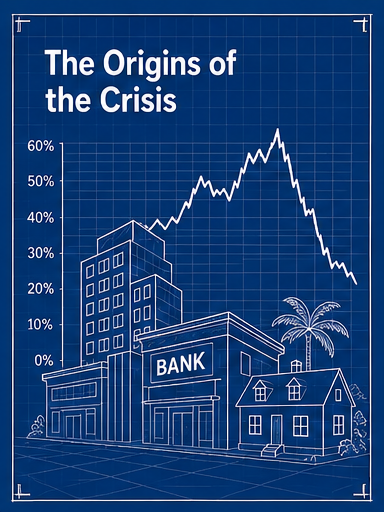
The Bank of Jamaica’s monetary tightening in 1995 and 1996, aimed at defending the exchange rate against speculative pressure, pushed lending rates to extraordinary levels. Borrowers who had assumed manageable debt loads at double-digit rates suddenly faced nominal interest rates that in some cases exceeded 50 per cent. Loan portfolios collapsed. Real estate values, which had underpinned collateral across the system, plunged. By 1996 and 1997, institution after institution was insolvent.
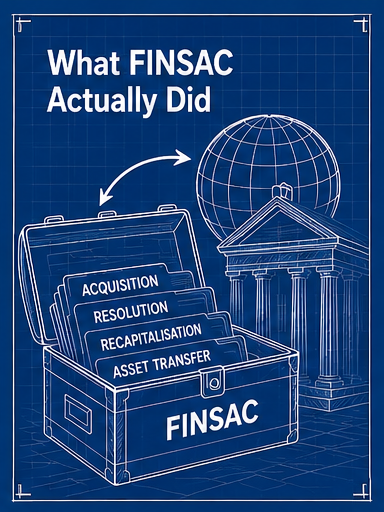
FINSAC was established in January 1997 to perform triage. It acquired non-performing loans, recapitalised institutions, and ultimately facilitated the transfer of the most viable assets to foreign-owned entities. The Jamaican state absorbed losses that were, in relative terms, among the largest of any financial sector intervention globally in that era. Citizens paid the cost through a decade of fiscal adjustment that crowded out social spending and infrastructure investment.
What FINSAC Actually Did
FINSAC’s mandate was to stabilise the system, not to rebuild it on fundamentally different terms. It acquired distressed assets, managed resolutions, and sold on to international institutions, including Canadian banks that would come to dominate Jamaica’s commercial banking landscape. The process was not without controversy. Questions about valuations, the treatment of connected borrowers, and the opaque manner in which losses were allocated to the public balance sheet were never fully resolved to the public’s satisfaction.
The institutional legacy was a banking sector that emerged leaner, more foreign-dominated, and significantly more conservative in its risk appetite. That conservatism has had lasting consequences. Jamaican commercial banks today maintain some of the highest spreads between deposit and lending rates in the region. Credit to the private sector as a share of GDP remains comparatively low. The trauma of the crisis embedded a risk aversion in the domestic financial system that, two and a half decades later, continues to constrain productive lending to small and medium enterprises, agriculture, and the creative economy.
The Regulatory Architecture Then and Now
One of the clearest lessons of the FINSAC crisis was the inadequacy of Jamaica’s prudential regulatory framework. The Bank of Jamaica had neither the tools nor the institutional culture to identify systemic risk accumulating across interconnected conglomerates. Consolidated supervision was largely absent. Related-party exposure limits were routinely circumvented. The Financial Services Commission, which now oversees the non-bank sector, did not yet exist in its current form.
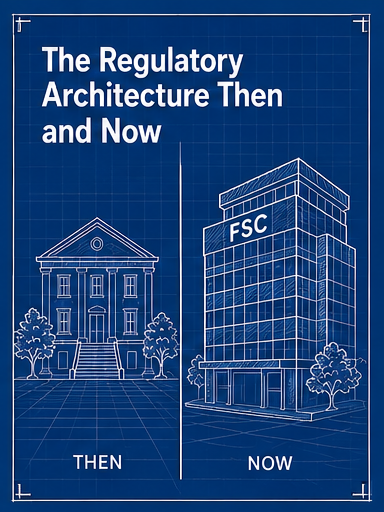
The post-crisis reforms were substantial. The Banking Services Act was overhauled. The FSC was established. Anti-money laundering frameworks were strengthened. The Bank of Jamaica acquired greater supervisory authority over bank holding companies. By regional standards, Jamaica’s regulatory architecture has matured considerably. The introduction of the Basel-aligned capital adequacy frameworks and the gradual adoption of risk-based supervision represent genuine progress.
Yet structural vulnerabilities persist. The financial system remains highly concentrated, with a small number of large conglomerates spanning banking, insurance, pension management, and securities dealing. The interconnections between these entities and the implicit too-big-to-fail assumptions that surround the largest players create systemic risk that the existing regulatory perimeter may not fully capture. A stress event at one of the major conglomerates today would test the resolution frameworks in ways that have never been operationally required.
The Debt Legacy and Fiscal Space
The fiscal cost of FINSAC translated into a sovereign debt trajectory that would take Jamaica two decades to begin reversing. The FINSAC bonds issued by the government to fund the intervention became a significant component of domestic debt, carrying interest costs that crowded out capital expenditure and social programmes throughout the 2000s. Jamaica’s debt-to-GDP ratio, which exceeded 130 per cent at its peak, was in no small part a product of the FINSAC intervention.
The IMF-supported fiscal consolidation programmes of the 2010s, culminating in the Jamaica Debt Exchange and the subsequent Extended Fund Facility arrangements, were in a meaningful sense the completion of work that FINSAC began. Jamaica’s debt ratio has declined materially and the fiscal primary surplus has been maintained with notable consistency. That is a genuine achievement. But it also means that the space for countercyclical fiscal policy remains narrow. The next major external shock, whether from a hurricane, a commodity price spike, or a global financial disruption, will find Jamaica with less room to manoeuvre than a country that had not carried a generation of crisis debt.
What Remains Unresolved
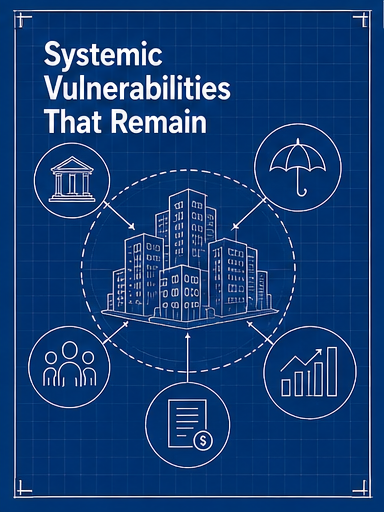
Three structural issues from the FINSAC era remain inadequately addressed a quarter of a century later. The first is the ownership concentration in the financial system and its implications for competition, credit allocation, and systemic risk. The second is the underdevelopment of non-bank financial intermediation. The third is the absence of a robust domestic capital market capable of channelling long-term savings into productive investment.
On ownership concentration, the largest Jamaican financial conglomerates today are more transparent and better capitalised than their predecessors, but they are no less dominant. The incentive structures that produce excessive related-party risk and misaligned lending have not been eliminated by disclosure requirements alone. A more structurally competitive financial sector, one in which smaller institutions can viably serve segments of the market that the large conglomerates deprioritise, remains an unrealised aspiration.
On non-bank intermediation, the credit union sector has grown but remains sub-scale relative to the financing needs of the productive economy. Development Bank of Jamaica programmes have expanded access for small businesses, but the volumes involved remain modest relative to the financing gap. A vibrant private credit market, of the kind that has emerged in more developed economies as an alternative to bank lending, is essentially absent.
On capital markets, the JSE has developed significantly, and the Junior Market in particular has created a valuable pathway for smaller companies to access equity capital. But the bond market remains thin, secondary market liquidity is low, and institutional investor mandates remain heavily weighted toward government securities. The reallocation of long-term savings from sovereign paper toward productive private investment is a transition that has been discussed for years without the structural incentives necessary to drive it.
The Caribbean Dimension
Jamaica was not alone in experiencing financial sector distress in the 1990s. Trinidad and Tobago had its own bank failures earlier in the decade. Barbados experienced significant non-bank sector difficulties. The broader pattern across the region reflected the asymmetry between the pace of financial liberalisation and the development of supervisory capacity.
Regional financial integration remains shallow. There is no meaningful Caribbean secondary market for securities, no cross-border deposit insurance framework, and no resolution mechanism capable of managing the failure of a systemically important regional institution. The Caribbean Development Bank plays a useful role in development financing but is not positioned to perform the lender-of-last-resort or systemic risk management functions that a regional crisis would demand. The FINSAC experience, and the broader regional pattern of the 1990s, made a compelling case for deeper regulatory cooperation. That case has not been acted on with the urgency it deserves.
The Anniversary’s True Obligation
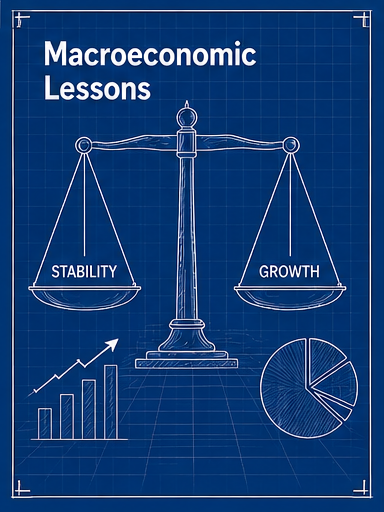
Anniversaries of crises serve a purpose beyond commemoration. They are an opportunity to take stock of institutional progress and to identify honestly where the work remains incomplete. The FINSAC anniversary finds Jamaica in a genuinely stronger fiscal and regulatory position than it occupied in 1997. The reforms implemented in the intervening years have materially reduced the probability of a comparable systemic failure.

But probability is not certainty, and reduced risk is not no risk. The structural features of a small open economy with concentrated financial institutions, shallow capital markets, limited fiscal space, and deep exposure to external shocks have not changed fundamentally. The question is not whether Jamaica has learned from FINSAC, but whether it has learned enough, and whether the lessons are embedded in institutions capable of acting on them when the next test arrives.
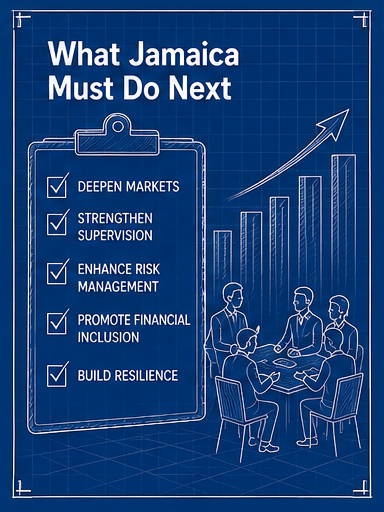
The honest answer, twenty-five years on, is that the work is unfinished. The regulatory architecture is better but not complete. The capital markets are deeper but not deep enough. The fiscal position is improved but not robust. Recognising that is not a counsel of despair. It is the prerequisite for the remaining work.
Ambraee Houslin is a private equity strategist and investment banker at JMMB Group, where he focuses on capital markets origination and structured finance across the Caribbean region. He is a seasoned advisor with experience spanning private placements, mergers and acquisitions, corporate restructuring, and financial modelling for clients across financial services, healthcare, energy, media, and consumer goods. Ambraee is a recognised thought leader on Caribbean capital formation, JSE market development, and diaspora investment, and contributes regularly to public discourse on financial sector policy and corporate finance practice in Jamaica.
The views expressed in this commentary are the author’s own.
Syndicated from Our Today · originally published .
Legal context · powered by Jurifi
Get the legal angle on this story. Pick a prompt and Jurifi's AI will explain it using Jamaican law.
AI replies are based on Jamaican law via Jurifi. Not legal advice.
Other coverage
Dean Jones | Is there still a real estate boom in Jamaica today?
Jamaica GleanerBarita Investments Limited (BIL)-Bank of Jamaica Grants a Licence to Barita Financial Group Limited to Operate as a Financial Holding Company, Strengthening Group Oversight and Future Growth
Jamaica Stock Exchange
Cedric Stephens | Jamaica's traffic crisis is a national risk event
Jamaica Gleaner
Cedric Stephens | Jamaica's traffic crisis is a national risk event
Jamaica Gleaner
The Business Report—June 2, 2026
PBC Jamaica (Video)Watch