
‘There Is Definitely a Crisis’: Bellevue CEO Suzette Buchanan Sounds Alarm on Mental Health in Jamaica
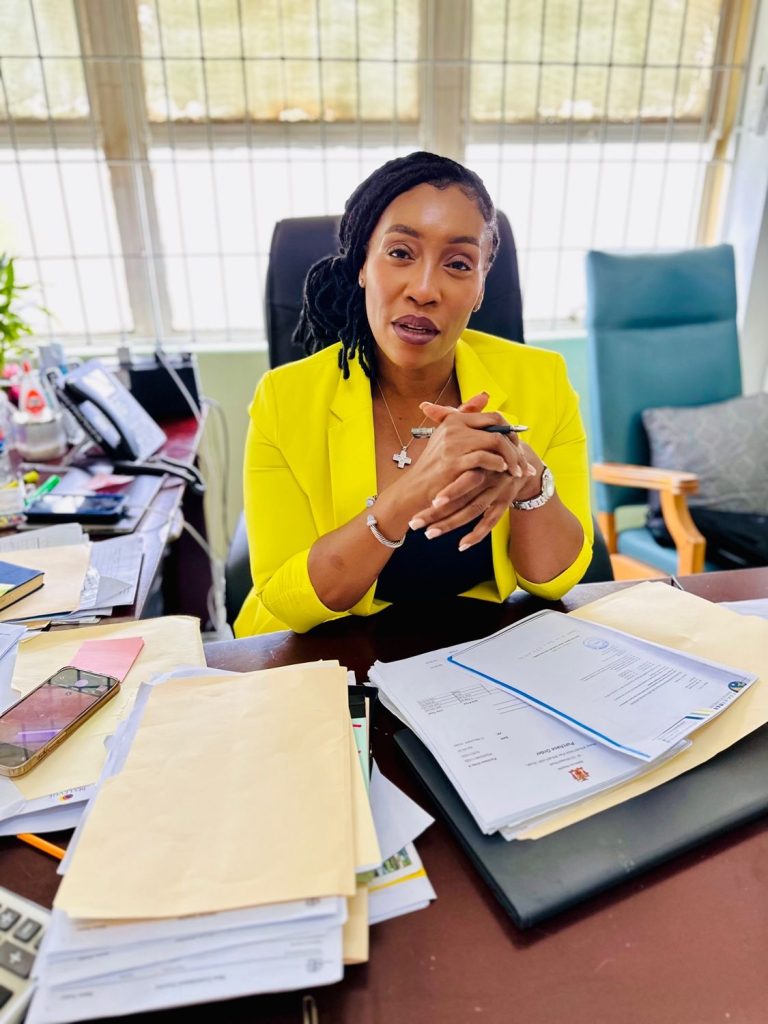
Chief Executive Officer of Bellevue Hospital Suzette Buchanan says Jamaica is facing a mental health crisis and is calling for more sensitivity, education and support for people living with mental health conditions.
Speaking with Jamaicans.com at the 11th Biennial Jamaica Diaspora Conference in Montego Bay, Buchanan said the scale of what she is seeing at Bellevue Hospital, the island’s main psychiatric facility, leaves little doubt that the issue has reached crisis levels.
Buchanan, who has become one of Jamaica’s most visible mental health advocates, said the problem goes far beyond Bellevue’s walls. Stigma, ignorance, late diagnosis and lack of support continue to prevent many Jamaicans from getting the help they need early, often with devastating consequences.
A Looming Crisis
Buchanan did not hesitate when asked whether she considers the situation a national public health crisis.
“Absolutely. Absolutely,” she said. “If you sit in the seat as CEO at Bellevue Hospital and you see the wards being flooded with all of these young people… there is definitely a crisis.”
One of the most troubling realities, she said, is not only the number of young people arriving at Bellevue, but also the number of working professionals ending up in acute care — many of whom might have had very different outcomes with earlier intervention.
“Oftentimes when you hear of a brain drain, we have the tendency to think that people migrating overseas,” she said. “But when I walk on my acute wards and I look at the large group of various professionals that are here hospitalized, and their story could have been different if there was early intervention, there is definitely a crisis.”
For Buchanan, the issue is not abstract. Her advocacy is rooted in her own family’s experience.
A Daughter’s Diagnosis Changed Everything
Buchanan’s own journey into mental health advocacy began years ago when her daughter was diagnosed with a mental health condition.
“Having to face the reality that my daughter is living with a mental health condition and that she is going to require support for the rest of her life, and that support we’re talking about is love and attention, patience and kindness.”
She said that experience changed the direction of her life and pushed her to educate herself and then others about mental health, especially because she now believes there were warning signs she did not understand at the time.
“One of the things that stood out for me is that the things I know now, if I knew it then, probably my daughter’s story would’ve been different,” she said.
According to Buchanan, her daughter became withdrawn, constantly depressed and reluctant to participate in activities. She also noticed changes in her appearance and behaviour, but did not recognise them for what they were.
“There were signs all along,” she said. “But when you’re ignorant … and that’s why I’m big on education. Learn the signs.”
She recalled questioning why her daughter seemed depressed because, in her mind, she had provided everything a child could need.
“I kept saying to myself out of ignorance, ‘Why is this girl depressed? Why she look like that? Because I provide everything for her,’” Buchanan said. “Because I didn’t understand.”
She said the situation worsened after her daughter’s father was shot and killed, which became a trigger. “She went mute,” Buchanan said.
Fighting Stigma and Early Intervention
That personal experience became the foundation of her public advocacy. Buchanan started by simply speaking to people wherever she could — in staff rooms, boardrooms, on park benches and in waiting areas — and has since expanded that work into a wider public education effort.
Once at Bellevue and now with a bigger platform, one of the first things she wanted to address was the level of stigma attached to mental illness in Jamaica.
“We needed persons to understand that a mental health condition, it has no respecter of person, place, or thing,” she said. “It doesn’t matter if you’re rich or you’re poor.”
She described stigma as one of the main barriers preventing people from seeking help and said Jamaica needs a much stronger culture of early detection and support.
“I also felt I had a responsibility to educate Jamaicans so that they understand that early detection is important,” she said.
Buchanan also stressed that mental health conditions should not automatically be viewed as a life sentence of dysfunction or institutionalisation. With the right treatment, medication and social support, she said, many people can go on to live healthy lives.
“I wanted persons to understand that a mental health condition is like living with any other illness and can be controlled with medication, with treatment,” she said.
Hundreds abandoned at Bellevue
One of the most sobering parts of Buchanan’s work is the reality inside Bellevue Hospital.
She said Bellevue currently has about 550 clients and that roughly 400 of them are what she described as social cases — people who have been abandoned by relatives and remain at the hospital for decades.
“Persons that have been abandoned for 30 and 40 years, they only leave Bellevue Hospital through death,” she said.
For Buchanan, those numbers point not only to the severity of some illnesses but also to a lack of public understanding about what it means to live with a mental health condition and how family support can shape outcomes.
A Call to the Diaspora
Buchanan used the interview to make a direct appeal to Jamaicans in the diaspora, asking them to support mental health advocacy and Bellevue’s work not only financially, but also by lending their voices, time and professional expertise.
“There’s a lot of persons that have lived here and their voices carry a little bit more weight,” she said. “It’s not everything require money. Some of us carry a voice of power and influence. So join the advocacy.”
She said there is a pressing need to get more mental health education into schools, churches, workplaces and communities so Jamaicans can recognise the signs of distress earlier and respond with compassion instead of shame or neglect.
“Let’s go into the schools. Let’s talk to the children so that they can go back and talk to their parents,” she said.
Buchanan also pointed to another often overlooked issue: the wellbeing of Bellevue’s staff and caregivers. With roughly 650 employees, many of them nurses working under significant pressure, she said support is also needed for the people providing care.
“Who cares for the caregiver?” she asked.
As a result, she has begun reaching out to overseas partners, including psychiatrists and other professionals, asking them to volunteer even 20 minutes of their time to speak with Bellevue staff or offer support.
“Be Kind to One Another”
Even as she spoke candidly about the scale of the challenge, Buchanan returned repeatedly to one central message: kindness.
Asked what single thing most supports good mental health, her answer was immediate.
“Kindness,” she said. “Be kind to one another. We are unnecessarily unkind. And when you are unkind, it not just affects the person’s mental health, it also takes a toll on your own.”
For Buchanan, kindness is not a soft slogan but a practical public health intervention, one that can help reduce stigma, encourage people to seek help and create the kind of supportive environment that people living with mental illness need to survive and recover.
“Say a kind word. Do a kind deed today,” she said. “It will help your mental health.”
Syndicated from Jamaicans.com · originally published .
Legal context · powered by Jurifi
Get the legal angle on this story. Pick a prompt and Jurifi's AI will explain it using Jamaican law.
AI replies are based on Jamaican law via Jurifi. Not legal advice.
Other coverage

Anatomy of a dream - Sign of hope as Orange district’s Roshann Watson set to pursue MBBS in September
Jamaica GleanerAnatomy of a dream - Sign of hope as Orange district’s Roshann Watson set to pursue MBBS in September
Jamaica Gleaner
Stepson trying to sleep with my daughter
Jamaica Star
Lady G bringing Jamaican culture to NY Festival
Jamaica Star
INDECOM Investigates Double F@tal Police Shooting in Spanish Town Jamaica
Realnews YtWatch