
Diplomatic dilemma: Jamaica’s strategic choice
THE EDITOR, Madam:
Jamaica today finds itself navigating an increasingly complex geopolitical landscape. As competition between the United States and China intensifies, Jamaica must carefully consider not only the economic benefits of international partnerships, but also their long-term strategic consequences.
There is no denying that China has become an important investor in Jamaica. Chinese financing has contributed to major infrastructure projects, including highways, commercial developments, and investments in our ports. These projects have contributed to national development. However, as with any partnership, the question is whether the long-term terms of these agreements adequately safeguard Jamaica’s sovereignty and strategic interests.
Recent comments by the United States’ nominee for ambassador to Jamaica, Kari Lake, underscore Washington’s growing concern over China’s expanding influence in the Caribbean. Her remarks reflect a broader bipartisan US foreign policy that views the Caribbean as strategically important to the security of the Western Hemisphere.
Jamaica remains far more economically intertwined with the United States than with any other country. The US is Jamaica’s trading partner, their principal tourism market, home of one of the largest diaspora communities, and the source of billions of dollars in annual remittances.
Jamaica should reject Chinese investment. However, the country should not become overly dependent on any foreign power, particularly in sectors involving strategic national assets. Agreements involving ports, telecommunications, critical infrastructure, and long-term land concessions deserve careful public scrutiny.
Small states like Jamaica cannot afford to ignore geopolitical realities. Should relations between Washington and Beijing deteriorate further, Jamaica could find itself caught between competing superpowers. Any significant deterioration in the relationship with the United States could have profound consequences.
Jamaica’s diplomacy must be guided by pragmatism rather than ideology. We should continue to attract investment from around the world, including China, but we must also recognise where our greatest long-term national interests lie. Maintaining a strong, constructive relationship with the United States is not simply a matter of foreign policy, it is a matter of economic stability and national security.
Ultimately, Jamaica’s greatest aspiration should be greater self-reliance. We should work toward building the expertise and financial capacity to own, operate, and manage more of our strategic industries ourselves, reducing dependence on foreign governments or corporations wherever possible. Until that day comes, our leaders must negotiate every agreement with one overriding objective: ensuring that the Jamaican people benefit first.
ST AUBYN RICHARDS
Syndicated from Jamaica Gleaner · originally published .
Legal context · powered by Jurifi
Get the legal angle on this story. Pick a prompt and Jurifi's AI will explain it using Jamaican law.
AI replies are based on Jamaican law via Jurifi. Not legal advice.
Other coverage
JAMAICA NOW: China defends relationship with JA | Marks responds to TCN deal | Min wage increase
Jamaica Gleaner (Video)Watch
Kari Lake pledges hard line for Jamaica on China, drugs, and scams
Caribbean Life
Jamaica Magazine - 11.07.2026
Jamaica Information Service (Video)Watch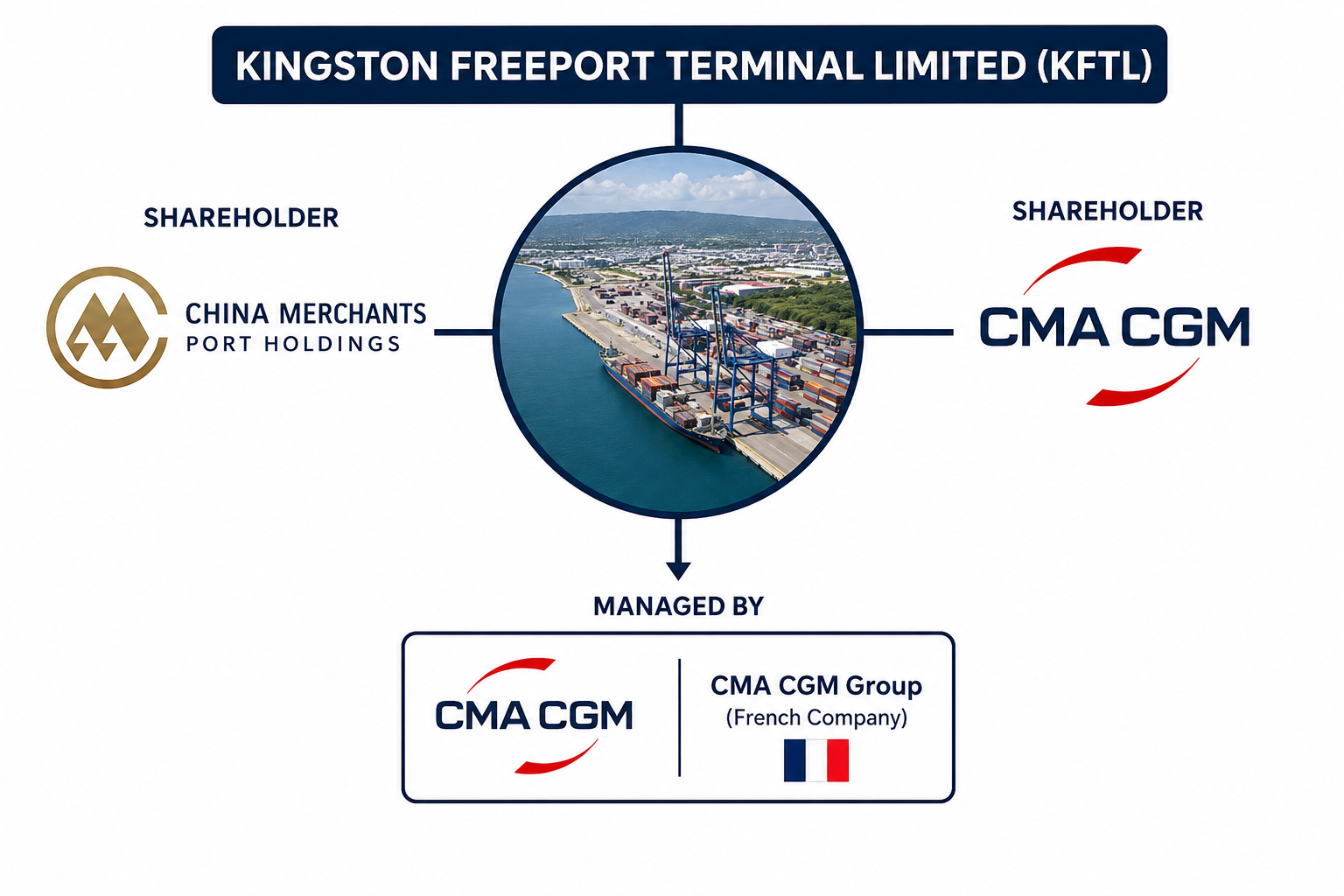
China responds to recent report on Jamaican port security assessment
Our Today
The JSE Micro Market closes the capital gap and will support enterprise growth – Minister Aubyn Hill
Our Today