← All news
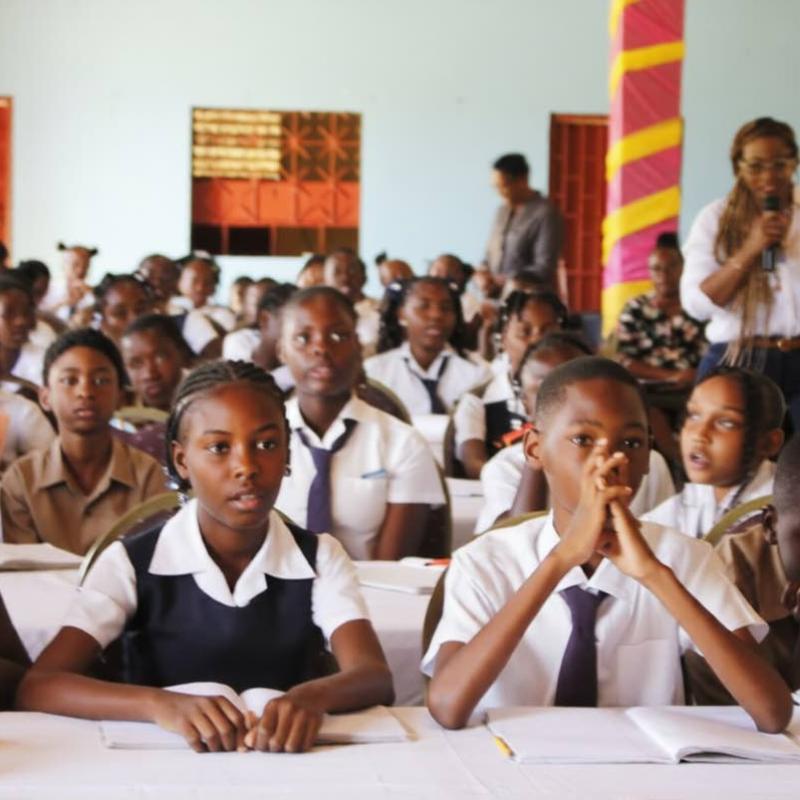
A parent recently contacted me about her daughter who attends a traditional high school in Kingston. The family was advised that the child should repeat the year because she was not performing at the expected level and needed another year to develop the required skills
The announcement that Grenada and St Lucia are taking steps to join four other Caribbean Community (CARICOM) members in their free-movement regime is an important development in advancing CARICOM’s move towards a genuine single market and economy – the CARICOM Single Market and Economy (CSME).Moreover, it further vindicates the 2022 decision by regional leaders to amend the CARICOM treaty to allow for a multitrack approach to project and policy implementation within the Community. It also suggests that fears, harboured in some states, that they might be overwhelmed by the free movement of labour within the Community are largely unfounded
On June 30, 2026, Natricia Duncan, writing in The Guardian in Kingston, reported that a Jamaican delegation will travel to the United Kingdom in September to formally petition King Charles to seek legal guidance on Jamaica’s slavery reparations claim against Britain.According to Duncan, the petition asks the King to request advice from the Judicial Committee of the Privy Council on whether the forced transportation of Africans to Jamaica was lawful, whether it constituted a crime against humanity, and whether Britain is obligated to provide restitution for slavery and its enduring consequences.The report drew a sharp response from Suella Braverman MP, Reform UK’s spokesperson on education, skills and equality. Braverman argued that, if reparations are to be considered, former colonies should compensate Britain for what she described as the investment, effort and contribution that helped lay the foundations for modern democracies
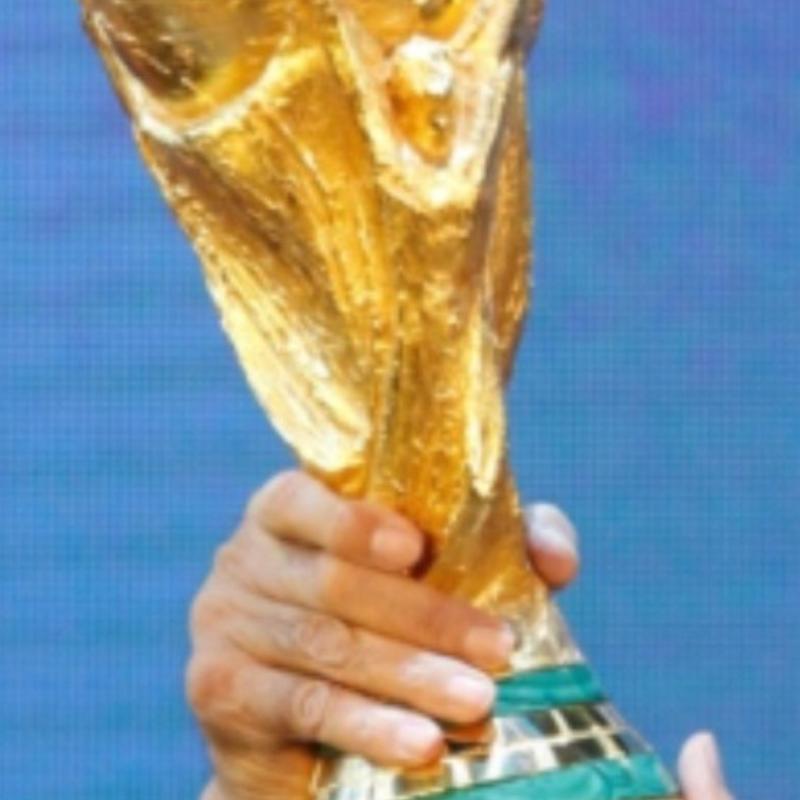
Milan (AP) — The Italian sculptor who designed the FIFA World Cup trophy wanted to capture three sporting emotions in a single spiraling form: the athlete's struggle, the fan's jubilation and the moment of victory.On Sunday, either Spain or Argentina will lift the trophy after the 2026 World Cup final.Here's what to know about the most coveted prize in soccer.THE WORLD CUP TROPHY WAS DESIGNED IN MILANSilvio Gazzaniga designed the trophy in his studio in Milan's Brera neighborhood after FIFA issued an open competition for a new design when Brazil took permanent possession of the original trophy by winning its third World Cup in 1970.The design, now familiar to generations of World Cup fans, features two figures swirling up toward an orb representing the Earth."When he started to design the cup, he was sketching a huge number of drawings and finally started to develop the idea to have the world and this symbol that it is like a two DNA spirals, that are moving up," said Giorgio Gazzaniga, the designer's son who was a teenager at the time.The elder Gazzaniga, a sculptor and trophy designer who died in 2016, worked for GDE Bertoni Srl and created some of the most prestigious trophies in the world, including the UEFA Cup and European Super-Cup.THE PREVIOUS TROPHY WAS STOLEN AND NEVER RECOVEREDThe first World Cup Trophy, introduced for the inaugural tournament in in 1930, depicted the Greek goddess Nike, and was known as the Jules Rimet Trophy for the tournament's founder. FIFA commissioned a replacement after Brazil earned permanent possession of the original after becoming the first nation to win three World Cups.The Jules Rimet Trophy was stolen twice:- First in 1966 while on public display in England, before being recovered by a dog named Pickles beneath a hedge in south London, according to FIFA
The intent was to review the communiqué of the 51st CARICOM Heads of Government Conference held in St Lucia, July 5-8, and reflect on its outcomes. The paragraph on reparations, however, led to a review of the revised ‘Ten-Point Plan for Reparations: a Manifesto for the Coming Enlightenment’
It may not be possible, or practical, to establish a special public-law division of Jamaica’s Supreme Court at this time. Given the court’s current workload and the continuing backlog of cases, we are likely to be told that there are simply too few judges for that to happen.If that is indeed the case, Chief Justice Bryan Sykes should consider asking the government to increase the number of judges to meet the needs of all areas of the judicial system
Major investments in highways, tourism, logistics and public infrastructure have transformed sections of Jamaica. New opportunities are emerging in technology, renewable energy and the creative economy
The City Council has passed our annual budget – a milestone that occurs every year before the first of July. We started this process back in January, and after ensuring that we won’t raise property taxes nor will we raid the Rainy-Day fund, it all came to a head last week
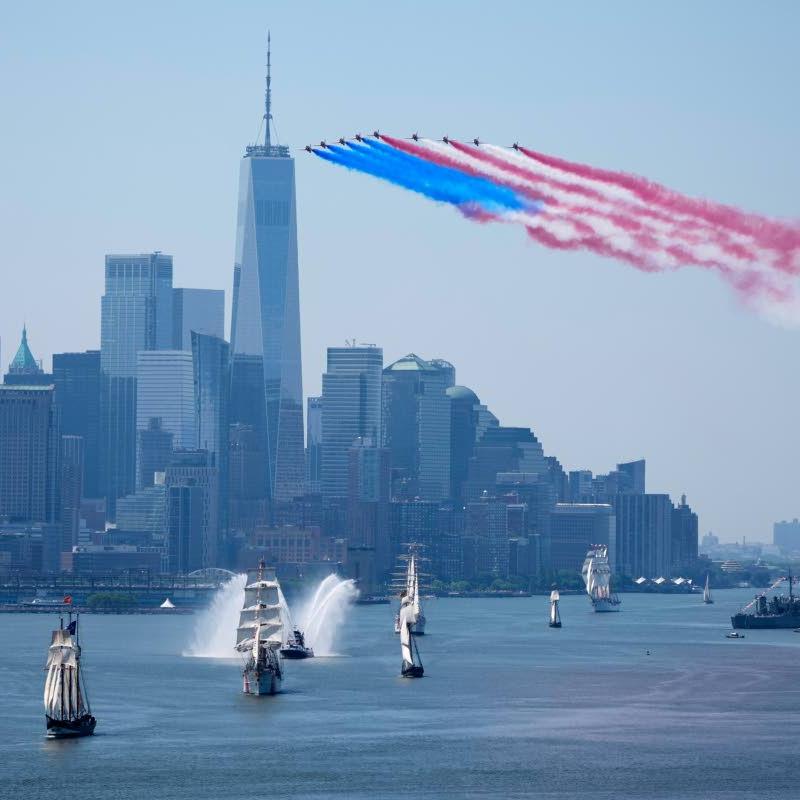
Fifty years ago, in 1976,as the United States marked the 200th anniversary of its independence, the world mostly celebrated with America.Scores of countries sent commemorative gifts to Washington, and in a major global event, 16 historic tall ships, with thousands of sailors from 30 countries, sailed along the New York Harbor in salute to the US. Around the world, with the Cold War still in high gear, newspapers waxed about the United States as a global force for good.“To gauge the real significance of America to the rest of the world one only has to try to imagine the world without it,” the British newspaper said in an editorial marking the bicentennial
Professor Rajendra Ramlogan’s thesis, however impressively framed in law, does not register in any practical sense when applied to the realities of Caribbean governance. The argument – commissioned by whom, one must ask – reads less like an independent legal analysis and more like a document in search of a predetermined conclusion
Football (soccer) is celebrated as “the beautiful game” for its universal appeal, ability to unite people across cultures, and the creativity and skill it demands. But there is an ugly side to the sport that has been exposed during this FIFA Men’s World Cup: racism.One of the most disturbing incidents at this year’s edition of “The Greatest Show on Earth” involved French captain Kylian Mbappé
Members of a leading regional grouping of Caribbean countries have converged around a candidate regarding the much-publicised race for the next United Nations (UN) Secretary-General. Yet this diplomatic moment is not so straightforward
Jamaica’s economy has a persistent low-growth problem. For five decades, growth has remained stuck at roughly one per cent annually, while comparable economies have expanded at two to four per cent
Matthew Samuda is probably well-meaning. But his proposal that the review of wealth declarations by members of Parliament’s Integrity Commission (IC) Oversight Committee be removed from the IC is a bad idea.But worse is the agency to which he suggests these income, assets and liability filings should be sent: the Financial Investigations Division (FID)
This is the hardest time of year for those of us who are concerned with high-school placement. The Ministry of Education oozes self-satisfaction that nine out of ten transitioning students were placed at one of the seven institutions of their ‘choice’
The digital platform economy, often associated with the “gig economy”, has expanded at a rapid pace in many countries across the world over the past decade. It is now well documented that digital platforms now provide opportunities for the connection of millions of people to work in areas including transportation, short-term accommodation, food delivery, tourism services, online tutoring, consulting, software development, and creative industries, to mention but a few
Where did it all begin? In a paper for a workshop, Stephen Francis wrote that, in 1998 at the World Junior Championships in France, he listened as coaches from the US said, “Coaching teenagers is nothing, just baby- sitting. They are growing so fast that it does not require astute coaching skills to get them to improve
The announcement by the mining minister, Floyd Green, that China’s Jiuquan Iron and Steel Company (JISCO) plans to spend US$490 million to modernise and increase capacity at their Alpart alumina refinery is good news for Jamaica.However, it is one that this newspaper welcomes with caution until both Minister Green and JISCO provide further and better particulars on the proposal, given the geopolitical context in which this investment, worth over J$78 billion, would take place. First, the United States under Donald Trump has reasserted the Monroe Doctrine of US hegemony in the Americas
Aaron Prince argues that how we interpret difficulty matters more than hardship itself. In a letter to the editor, he urges resilience, clearer perspective, and wiser steps forward.
Our two out of three dogs needed the doctor at almost the same time. Now they’re home and feeling better
The concerns raised by Kenneth Russell, need to be paid attention to, and tangible solutions put in place on rural development in Jamaica. “..
Suella Braverman, a child of Indian parents from Mauritius and Kenya, yet, like many other ultra‑ambitious British politicians, she has consistently distinguished herself by remarks that are unhelpful to immigrants and to developing countries.Her latest claim is that Britain’s former colonies should pay reparations to Britain. It is a claim that is historically illiterate, morally offensive, and politically revealing.It takes some nerve, in the year 2026, for a British politician to look at the Caribbean’s renewed call for reparations for slavery and conclude that the obligation runs in reverse
On Tuesday June 7, the 2025/2026 Annual Report of the Integrity Commission (IC) was tabled in Parliament. The second table on page 43 advises us that, during the period April 1, 2018 to March 31, 10 members of parliament (MPs) and three senators were referred for prosecution for failure to provide the IC with information as required by law; and that 14 MPs and one senator were referred for investigation of potential illicit enrichment and/or knowingly submitting false information to the IC
This particular soap opera begins with France’s recent round-of-16 match against Paraguay in the FIFA World Cup. The Paraguayan team was needlessly abusive towards the French players and particularly so towards the captain of the French team, Kylian Mbappe
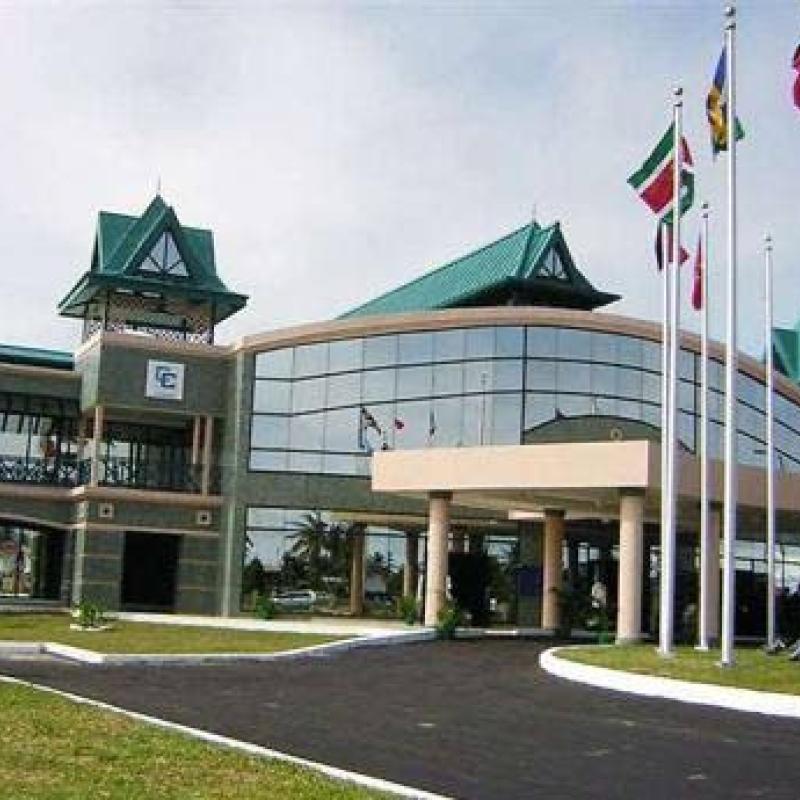
The Caribbean Community’s (CARICOM’s) decision to seek an advisory opinion from the Caribbean Court of Justice (CCJ) on Carla Barnett’s contentious reappointment as its secretary general is a pragmatic move that frees the community to get on with doing the things critical to transforming itself into a genuine single market and economy.Further, by invoking Article 212 of the Revised Treaty of Chaguaramas, seeking an advisory opinion, rather than engaging in an adversarial, contentious proceeding before the court, the community has prevented the possibility of a clawing, knock-down fight – or the appearance thereof – which could pose existential threats to the community.Indeed, it is to Trinidad and Tobago’s credit – the main protagonist in this matter – that it recognised those dangers and had proposed that the community as a whole seek the opinion, rather than Port of Spain mounting a contentious challenge. This way, CARICOM receives institutional insulation.Significantly, Trinidad and Tobago’s prime minister, Kamala Persad-Bissessar, has said that her government will abide by the opinion of CCJ, which, in its original jurisdiction, is the interpreter of the CARICOM treaty and arbiter on community law.The Barnett controversy arose out of a decision by CARICOM’s heads of government, a retreat during their summit in St Kitts and Nevis in February, to appoint the 68-year-old Belizean economist to a second five-year term as secretary general
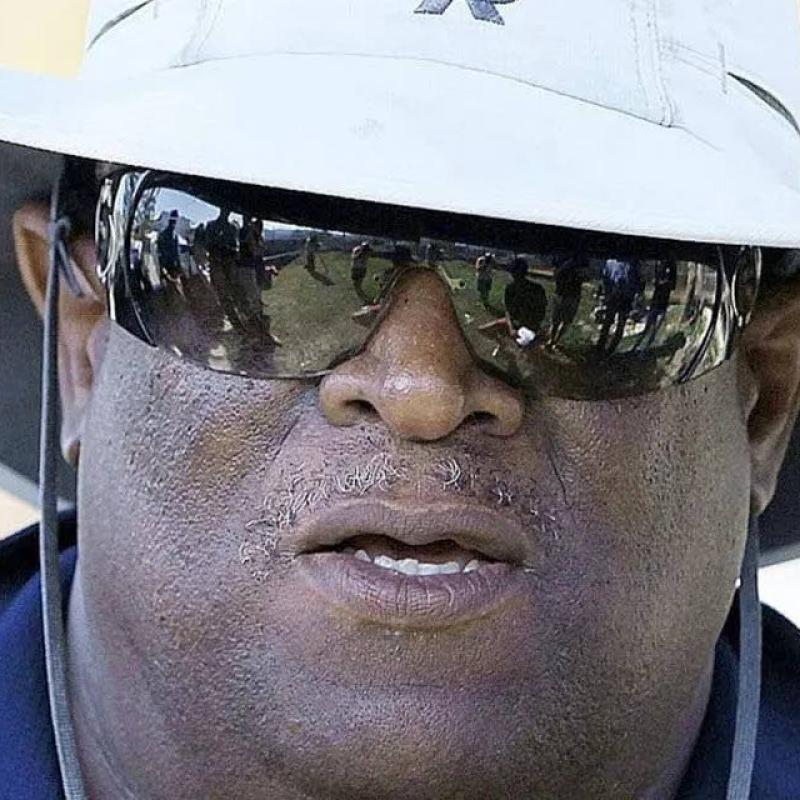
Stephen Francis, the Jamaican athletics coach, fully deserves all the domestic and international tributes that have been paid to him since his death on Saturday at age 64.For Mr Francis’ genius was unquestioned as demonstrated by his role in shaping recent generations of great Jamaican athletes – from Asafa Powell to Shelly-Ann Fraser-Pryce, Elaine Thompson-Herah, and many others in between.Indeed, the tributes of several of his former charges, including some who subsequently went their separate ways – such as Fraser-Pryce and Thompson-Herah – testify to his influence.“Thanks for paving the way – the greatest to ever do it,” said Thompson-Herah, whose 10.54 seconds in the 100 metres stands among the finest performances of the modern era when drug-testing protocols have become increasingly rigorous and sophisticated.“Rest in peace to an ICON,” she posted on social media. “You will surely be missed.”Fraser-Pryce, the greatest female sprinter of all time, surpassing another Jamaican legend of the 1970s and ‘80s, Merlene Ottey, said: “He was not only my coach but a steady source of guidance during some of the most defining moments of my career.“He challenged me to dream beyond my circumstances, demanded excellence in every race, and instilled in me the confidence and resilience that shaped the woman I have become
The month of June passed without much, if any, homage being paid to our first National Hero, Marcus Garvey. The month is significant because Garvey died on June 10, 1940, and suitable acknowledgment is customarily paid to our national heroes on their respective anniversaries.Disturbingly, this milestone passed with muted observances for a man whose life and work shaped not only Jamaica but the global black experience.I may have missed any national observances, including the traditional wreath-laying ceremonies at his monument
The 2026 World Cup has not yet finished, but its first round has concluded. On Friday last, Spain sent their opponents crashing out of the event with a 1–0 victory over Uruguay, one of the few nations to have won this prestigious tournament
We the People of the United States, in Order to form a more perfect Union, establish Justice, insure domestic Tranquility, provide for the common defence, promote the general Welfare, and secure the Blessings of Liberty to ourselves and our Posterity, do ordain and establish this Constitution for the United States of AmericaPreamble of the US ConstitutionOn Saturday, July 4, 2026 the USA celebrated its 250th anniversary of independence. There was at least one article in this newspaper reflecting on the ideals of the US Constitution and the example which it has offered to the world for governance in a republic