


Project STAR, the social and economic transformation initiative that targets under-resourced and underserved communities across Jamaica, will continue beyond its original five-year timeline after independent evaluations confirmed the programme is delivering measurable results and remains faithful to its development model.
The announcement was made by Project STAR Co-Chair Keith Duncan during the project’s Donor Breakfast held at the Terra Nova All-Suite Hotel in Kingston on Thursday, June 25.
Originally scheduled to conclude in 2027, the initiative will now enter a new phase of implementation, backed by continued support from its partners and evidence of impact across education, social protection, economic development, community governance and public safety.
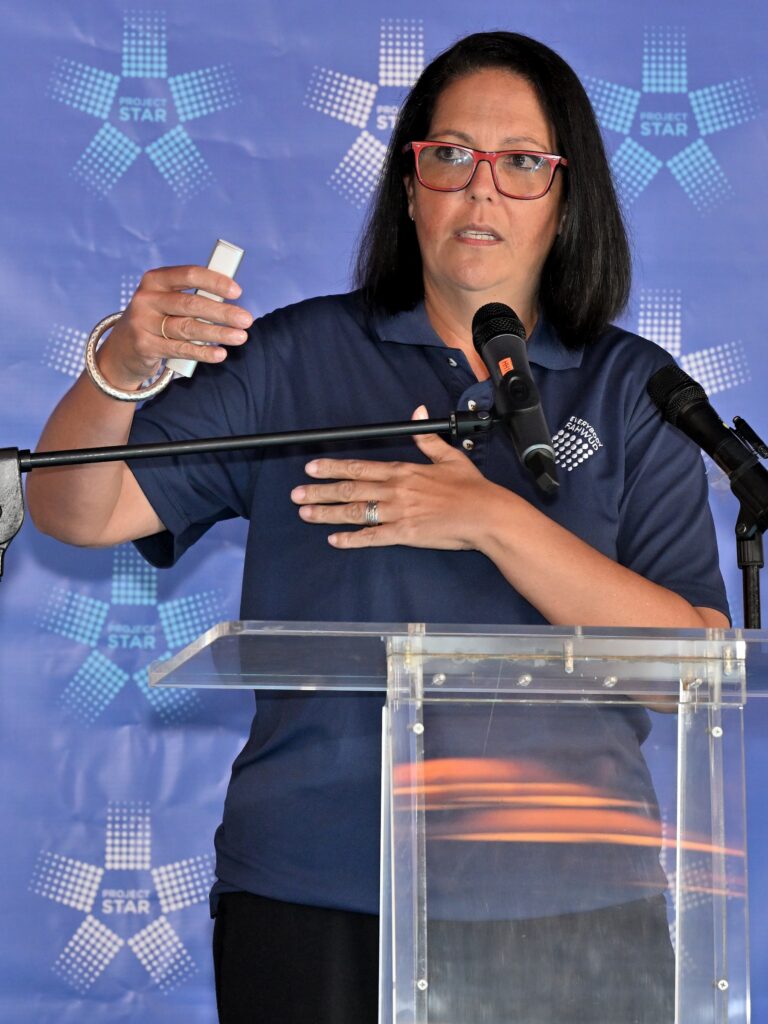
“Project STAR was designed to create lasting transformation in communities that have long faced social and economic challenges. Today, we can confidently say that the evidence supports the work. The communities themselves are demonstrating what is possible when residents are empowered to lead change, our partners remain fully committed, and the results have now been independently validated. For those reasons, Project STAR will continue beyond its original timeline,” Duncan announced.
He said the decision rests on the significant, demonstrable community ownership and leadership that residents have built across all five communities, proof that the model works and that its gains can be sustained well beyond direct intervention.A major independent evaluation along with a research study have since served to independently reinforce this, validating what had already been shown and proven on the ground.
A process evaluation conducted by the Inter-American Development Bank (IDB) found that Project STAR demonstrated strong fidelity to its theory of change, secured broad multisectoral support, successfully reached marginalised communities, and showed early signs of sustained behavioural change. The evaluation concluded that the model is suitable for replication elsewhere in the region.

Meanwhile, the Caribbean Policy Research Institute’s (CAPRI) study, Who Gets Heard, identified Project STAR as the only initiative within Jamaica’s civic ecosystem operating at the International Association for Public Participation’s highest level of citizen engagement – “Empower”. The report highlighted the project’s Community Transformation Action Plans as a model for participatory community decision-making and meaningful youth engagement.
Mr Duncan said that the findings reinforce what programme data has already shown across the initiative’s three core pillars of social protection and inclusion, local economic development, and community-led transformation.
Saffrey Brown, project director, disclosed that since its launch, Project STAR has directly impacted more than 12,000 residents across its five target communities – Rose Gardens, Parade Gardens, Salt Spring, Savanna-La-Mar and May Pen West.
In year 4, under STAR’s education and family development pillar, she said that 388 young people participated in sports and leadership programmes, exceeding targets by 57 per cent, while 395 students benefited from remedial and after-school support. The project also engaged 110 parents through parenting clubs and facilitated PATH approvals for 117 residents.
At Kingston Technical High School, Brown said that 57 per cent of students enrolled in the after-school programme improved their reading performance, with regular participants advancing by one to three grade-equivalent years.
Project STAR has also recorded significant gains in economic resilience. During the fourth year of implementation, Brown stated that 161 entrepreneurs received support through grants and licensing assistance, more than double the programme target. Nearly 1,000 residents completed skills-training programmes through HEART/NSTA Trust and other partners, while 632 persons have secured formal employment since the project began, including 296 placements during the last year alone.
“Through our partnership with Project STAR, the Jamaica Consabulary Force has played a critical role in designing and implementing interventions aimed at establishing safe spaces. Supporting social development initiatives, fostering stronger community relations and promoting social cohesion.
These are not secondary activities to policing. They are central components of effective crime prevention and public safety.
The success witnessed across these communities is not accidental. It demonstrates that security is not solely the responsibility of the police. It is a shared responsibility, requiring an all of society approach,” ACP Shand said.
The project’s impact has also been reflected in crime statistics. Between 2022 and 2025, homicide rates across Project STAR communities declined by 67 per cent, falling from 46 to 15 murders per 100,000 residents. By the end of 2025, the homicide rate in those communities was 37 per cent below the national average.
Brown said the programme’s success has been driven by its commitment to placing residents at the centre of decision-making.
“One of the most important approaches from Project STAR is that sustainable development cannot be imposed on communities; it must be built with them. Our approach of empowering residents, strengthening local leadership and connecting people to opportunities is producing meaningful change, and the independent studies confirm it. The extension of the project gives us the opportunity to deepen those gains, expand reach and ensure that communities can sustain their progress long after direct interventions have ended,” Brown said.
Brown noted that the initiative’s community network model, which provides support for between 12 and 24 months after intensive interventions conclude, will continue to help communities consolidate and sustain their gains as they move toward graduation from the programme.
Syndicated from Our Today · originally published .
Legal context · powered by Jurifi
Get the legal angle on this story. Pick a prompt and Jurifi's AI will explain it using Jamaican law.
AI replies are based on Jamaican law via Jurifi. Not legal advice.