
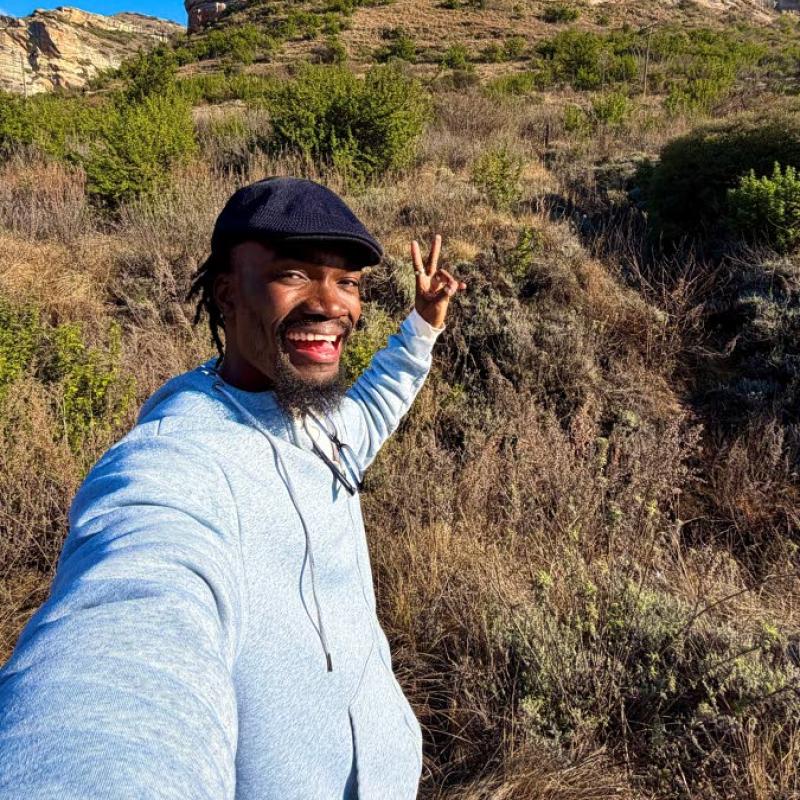
‘They kept saying I looked Nigerian’ Globe-trotting Jamaican’s South African trip ends in airport refuge amid anti-immigrant tensions
WESTERN BUREAU:
For 38 days, South Africa was an adventure for 24-year-old Jamaican digital nomad Kadeem Leslie. In the final week, it became a country he could not wait to leave.
Leslie, a Kingston-born author and entrepreneur who has been travelling the world full-time, arrived in South Africa on May 17, eager to explore a country he had long admired for its history, beauty, and cultural power.
By June 30, however, the young Jamaican had abandoned plans to spend his final night in Johannesburg and instead sought refuge inside the airport, nearly a day before his scheduled departure.
His reason was simple. People had started telling him he looked Nigerian.
“You can’t tell that I’m Jamaican by looking at me, because I look West African,” Leslie told The Sunday Gleaner. “But whenever somebody finds out that I am Jamaican, it’s different. It’s a smile.”
The irony was not lost on him.
Across the world, he said, Jamaicans are often embraced with excitement, their nationality immediately linked to Bob Marley, Usain Bolt, reggae, dancehall and an outsized global cultural identity. But in South Africa, during a tense final week marked by anti-immigrant protests and fear among foreign African nationals, Leslie said his appearance suddenly seemed to matter more than his passport.
“I heard it so many times: ‘Hey bro, you look Nigerian’,” he recalled. “And it wasn’t until that last week that I started realising why people were saying it.”
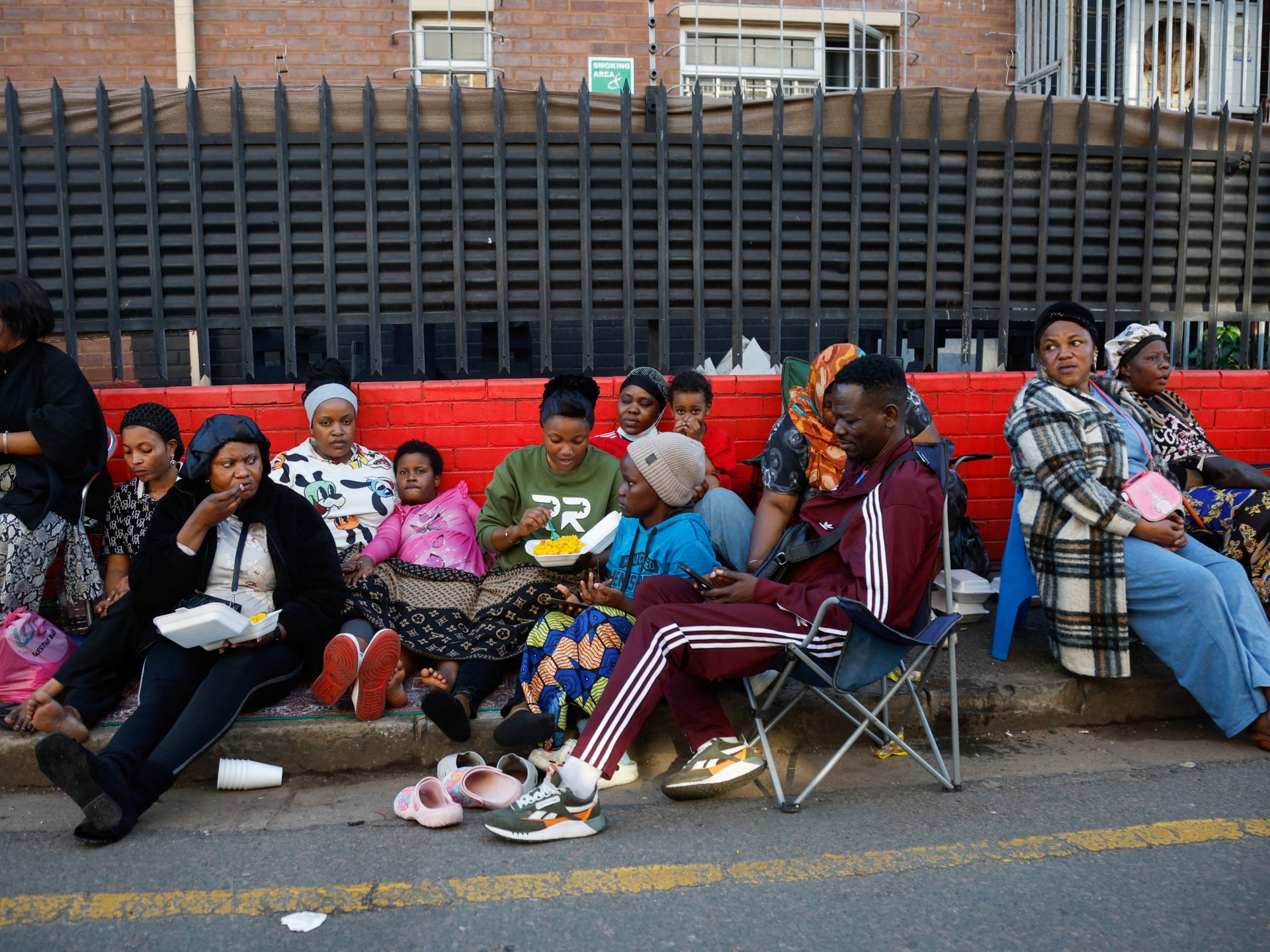
Leslie was in South Africa as the country was bracing for June 30 – an unofficial deadline set by anti-immigrant groups demanding that undocumented migrants leave the country. The South African government rejected the deadline, but the fear it created was real. International media reported marches across several cities, widespread business closures, police deployment, and anxiety among migrants from countries, including Nigeria, Zimbabwe, Malawi, and Ghana.
The tension became personal
For Leslie, the tension became personal, not because anyone had confirmed his nationality, but because many people appeared to be deciding who he was before he opened his mouth.
A former Campion College student from Standpipe in Liguanea, St Andrew, Leslie is no ordinary traveller. He studied at Seton Hall University in New Jersey, earning both bachelor’s and master’s degrees, and said he became financially independent at 24. He is the author of two books, Full Student and Full Money, and said his work in business and real estate allows him to travel from country to country while working remotely.
Before South Africa, he had spent time in Brazil, having lived across South America for several years. After leaving South Africa, he continued to Botswana and Uganda, with Zambia, Zimbabwe, Namibia, Ghana and Madagascar also on his African itinerary.
His South African journey began with wonder.
He travelled through Johannesburg, Soweto, Cape Town, Hout Bay and Sandton. He visited Table Mountain, Lion’s Head and the Apartheid Museum, which left him deeply shaken.
“It was the first time I’ve ever been to a museum where they put your body through the history,” he said, recalling the separate ‘Whites’ and ‘Non-Whites’ entrances used to begin the experience. “I felt like there was a knot in my throat.”
But what disturbed Leslie most was not confined to the museum.
Outside its walls, he said, apartheid’s divisions still appeared to shape daily life in ways that startled him as a Jamaican.
‘White bar’
In one town, while looking for a bar to watch a rugby match, Leslie said two men warned him against entering one establishment, telling him it was known as a ‘white bar’. They directed him instead to another bar nearby, one they described as black-owned and frequented by black patrons.
For Leslie, the casualness of the separation was jarring.
“We’re not used to that in Jamaica,” he said. “We come from ‘Out of Many, One People’.”
He saw the same divide in Hout Bay, an affluent coastal community near Cape Town.
Each morning, he said, black people travelled into the area to work. Each evening, they streamed back out to poorer communities nearby.
One Uber driver, he recalled, put the division bluntly.
“He said to me, ‘Are you going to the black side or the white side?’” Leslie said. “That is such a wild thing to say in 2026.”
As the June 30 deadline drew closer, Leslie said the atmosphere around him changed.
He became increasingly aware that the car he was using carried foreign plates. He said he was stopped by police near the border while travelling through the region and later awakened by officers while sleeping in his car during his road trip.
“I just felt like I was being intimidated,” he said.
He also began picking up warnings from locals.
At one farm where he had stopped to ride horses, Leslie said he was told that people had been visiting farms in search of foreign workers.
“They were actively looking for them,” he said. “This was not just in Cape Town or Johannesburg. I was in the middle of nowhere.”
The experience forced him to change his behaviour.
In Pietermaritzburg, he said, he needed to do laundry but decided against spending two hours in the city. Instead, he packed his dirty clothes and moved on.
“I didn’t want to stop anywhere,” he said. “I didn’t know what I would be walking into.”
Anti-immigrant tensions
Leslie stressed that no one physically attacked him during his stay. Apart from his phone being stolen in Johannesburg, which he does not link to the anti-immigrant tensions, he said much of what frightened him was the accumulation of warnings, stares, police encounters, and the sudden awareness that he could be misidentified.
“I’m very cautious,” he said. “I make decisions like those regularly. I don’t go to certain parts of town. I keep myself safe.”
By June 30, he had made his final decision.
He would go to the airport early.
On the way there, he said Johannesburg felt unusually empty for a weekday.
Businesses were closing early. Flights were being cancelled. Workers at the airport, he said, were shutting down stores ahead of their normal closing time because transportation was uncertain.
“If you’re at the airport, you’re safe,” Leslie said. “That was what was going through my mind. I would rather stay at the airport for a week.”
The airport became his refuge until his flight out the following day.
Still, Leslie does not tell the story with bitterness. Instead, he sees his experience through the lens of economics, race, inequality and identity.
“When times are hard, people look for someone to blame,” he said. “This time around, it has fallen on West Africans.”
He believes South Africa’s deeper wound is inequality, made more complicated by the legacy of apartheid.
“What I saw is that the income inequality gap feels like the racial gap,” he said.
“Coming from Jamaica, that is very jarring. We know that black people can have money. It’s very different in South Africa.”
Even so, Leslie remains committed to travelling.
His father, Jamaican pianist Michael Leslie, knows of his son’s global adventures and, according to Kadeem, naturally worries. But the young traveller said his life is guided by faith.
“We’re Christian,” he said. “There’s no reason for me to walk around the world with fear. Faith isn’t exercised on the couch at home. If you’re having faith, you’re going to have to jump.”
And for all the fear he felt in those final days, Leslie still wants Jamaicans to understand the power of their identity.
At one South African border crossing, he said officials discovered he was Jamaican and called colleagues over.
“They were like, ‘Come here. It’s a Jamaican!’” he recalled. “A crowd had formed. They were saying, ‘No way!’ That’s the type of love that we get.”
His message to Jamaicans is clear.
“We are allowed everywhere in the world,” he said. “We are celebrities everywhere in the world.”
Then he laughed.
“If you want to be loved, go anywhere else.”
Syndicated from Jamaica Gleaner · originally published .
Legal context · powered by Jurifi
Get the legal angle on this story. Pick a prompt and Jurifi's AI will explain it using Jamaican law.
AI replies are based on Jamaican law via Jurifi. Not legal advice.
Other coverage
Migrants in South Africa fear violence ahead of June 30 deadline
Jamaica Inquirer
How a son rescued his father from the rubble of Venezuela’s earthquakes
Jamaica Inquirer
Brazil fan loses car-loan money in bet
Jamaica Star
Delomar apologises to fans in Nicaragua
Jamaica Star
14-year-old Brazil super fan disappointed by World Cup exit
Jamaica Star