
Reporter: Krystol Williams
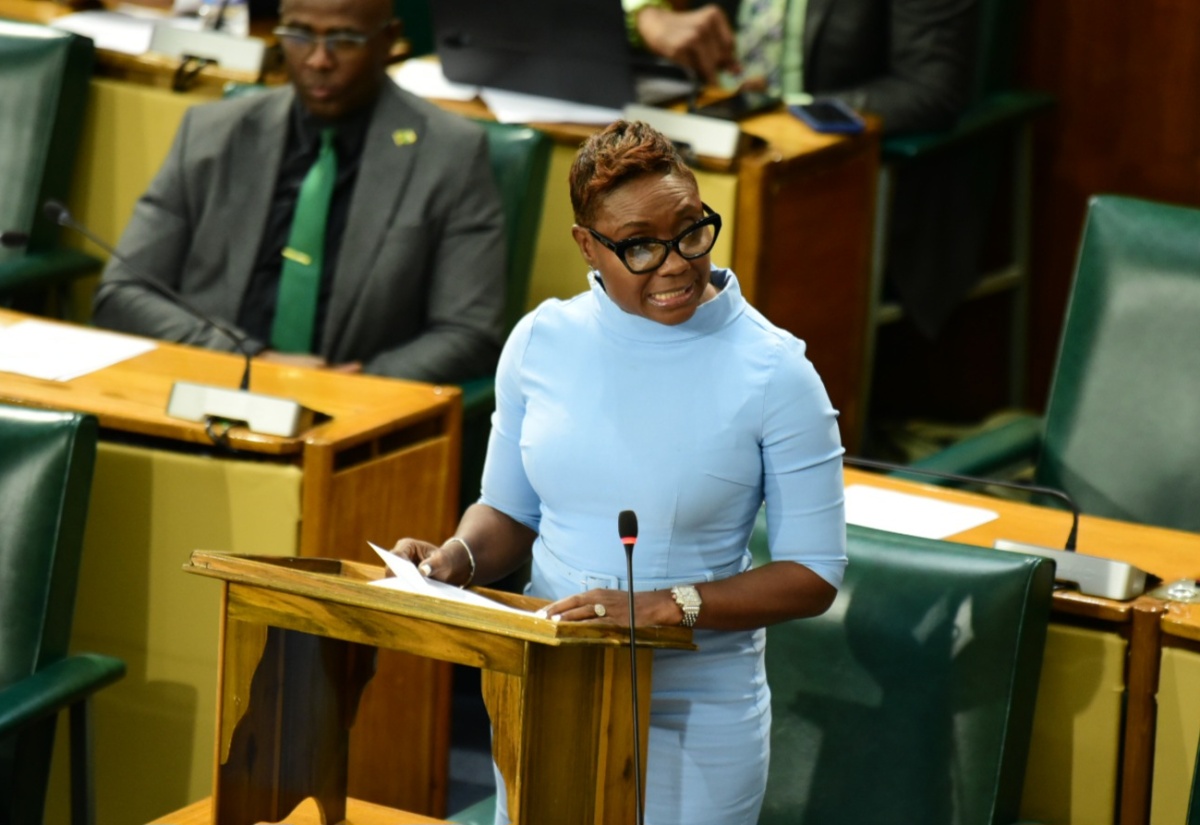
Debate over whether Parliament's internal and external affairs committee meetings should be held on a proactive or reactive basis dominated discussions during Tuesday's sitting of the committee in Gordon House.
Committee Chairperson and Member of Parliament for St Andrew West Rural Juliet Cuthbert-Flynn says both are possible.
The main points to be discussed during sittings of parliament's internal and external affairs committee include foreign policy, national security, and the administration of justice. Member of parliament for St Catherine South and opposition spokesperson on national security Fitz Jackson suggested the committee should address issues of national importance in a fair nonpartisan manner.
“In the past, quite frankly, and I've been here a little while, people usually wonder which side who belong to because of how it operates in a homogeneous way. I would like that to be preserved. I must say, I've seen a bit of deterioration in recent years and it caused the committee to be as effective as it as it ought to be. One of collaboration, one as against one of you know of an adversarial nature.”
Chairperson for the committee Juliet Cuthbert-Flynn agrees making it clear that the matters discussed should be done in one accord. She also suggests that meetings should be held regularly.
On the scheduling of meetings, Deputy Speaker of the House and Member of Parliament for St James Central Heroy Clarke seeks to clarify what would inspire these meetings to be scheduled and conducted.
“Are we waiting on matters to come directly from parliament or do we take matters as we see them to discuss and if so because… what you what we want to do is to set a framework of how we will meet or when we will meet but if we don't have a matter of importance to discuss then it don't necessarily means that we have to and hence the reason I ask Are we reactive or proactive?”
Member of Parliament for St. Ans Southeast and shadow minister of rural and community development, Dr Kenneth Russell believes proactive meetings might be the better approach.
“When you look at the what the standing order provides for, as you said, foreign policy, treaties and other international agreements, national security, and the administration of justice. I would argue that there's always something that we should be looking at. And so, if we're a proactive committee, we should set an agenda that would require us to be holding these things constantly under our review.
Ultimately, Chairwoman Flynn says there can be both.
“It can be both. um because things are always happening or we may feel that as a committee there's something that we need to look at that is of national importance whether it's national security or foreign affairs that we need to look at as a committee as a country to make recommendations and so I think it can be both.”
Syndicated from CVM TV · originally published .
Legal context · powered by Jurifi
Get the legal angle on this story. Pick a prompt and Jurifi's AI will explain it using Jamaican law.
AI replies are based on Jamaican law via Jurifi. Not legal advice.
Other coverage
Internal and External Affairs Committee || July 7, 2026
PBC Jamaica (Video)Watch
Integrity Commission Oversight Committee
PBC Jamaica (Video)Watch
Joint Select Committee on the Child Diversion Act || July 8, 2026
PBC Jamaica (Video)Watch
CALL FOR IC SHIFT - Samuda proposes FID takes over review of MPs’ financial filings
Jamaica Gleaner
SPARK Main Road Launch
Office of the Prime Minister