
Delroy Chuck warns reggae families to make wills as estate battles clog courts
Justice Minister Delroy Chuck is cautioning Jamaicans that family estates are increasingly being thrown into disorder when people die without proper plans in place. He is encouraging citizens to prepare wills and turn to alternative dispute resolution so relatives do not end up locked in bitter “dead lef” fights after a death.
Chuck made the appeal at a regional Alternative Dispute Resolution Policy Development and Estate Planning Forum, held at the Ocean Coral Spring Resort in Trelawny. He said unresolved inheritance matters are adding heavily to the workload of the country’s courts.
“The administrator general comes under the Ministry of Justice and Constitutional Affairs, and I would like to get rid of that department, but the way to get rid of the department is that everybody needs to make a will,” Chuck declared. He added that although the administrator general closes hundreds of matters each year, “but the more they dispose of cases, the more cases come in”.
His comments landed in a Jamaican context where disputes over property and entitlement have long fractured households, frozen estates and kept relatives in court for many years.
Maxine Stowe, the widow of reggae singer Lincoln ‘Sugar’ Minott, also spoke frankly about the problem. Minott died without a will, and Stowe said the issues around his estate reflect the especially difficult nature of Jamaican music legacies.
“Artistes had children across multiple households. Women often served simultaneously as spouse, manager, caretaker, road manager, financier, archivist and emotional stabiliser. Business arrangements were informal and intellectual property was poorly understood for decades,” Stowe explained.
She said Jamaica’s music business has often mixed family, romance, care work and commercial dealings in loose arrangements. Once royalties, recordings and property become valuable, those informal ties can quickly create conflict.
“In our culture, some people inherit blood. Others inherit responsibility. Others inherit the burden of preservation. And often, those three realities do not align,” Stowe said.
Stowe has also been connected to major reggae families, among them the Dodd family behind Studio One. She said the death of Studio One founder Clement ‘Sir Coxsone’ Dodd was followed by difficult questions that many families face.
“Which children? Which house? Which beneficiary? Which will? Which entitlement?” she asked.
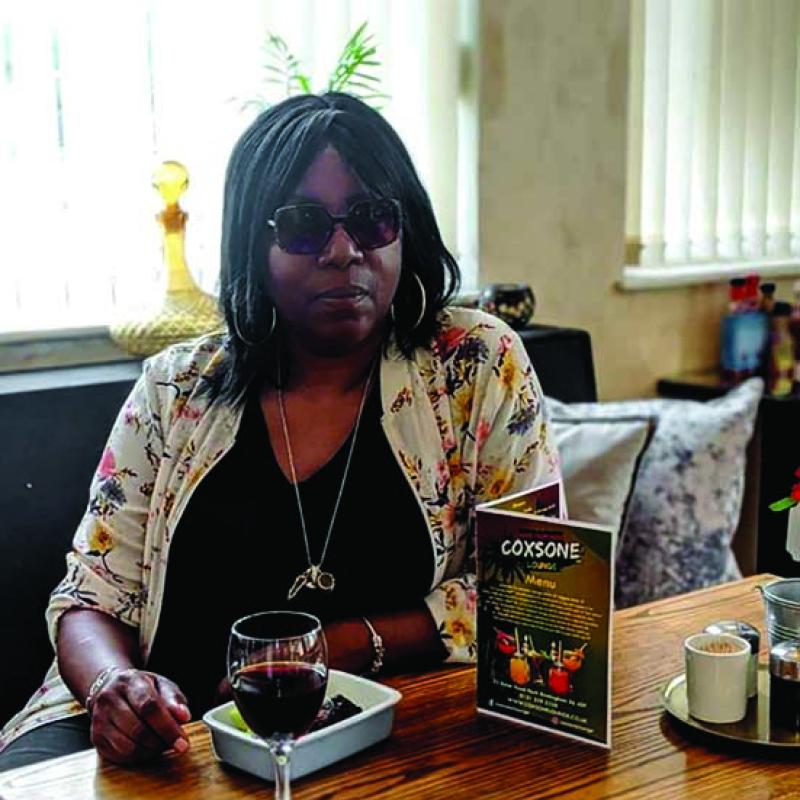
Morna Dodd, Sir Coxsone’s British-born daughter, said she has spent more than 20 years in what she described as a “nightmarish” inheritance dispute, even though her father had made a will before his death in 2004. Sir Coxsone helped shape Jamaican music and built a catalogue of about 6,000 recordings through Jamaica Recording and Publishing Company Limited. His estate has been reported as being worth US$12 million.
Twenty-two years on, the estate has still not been settled. Rival claims from possible heirs have left the matter stalled, and the Administrator General’s Department eventually assumed control. The dispute has moved beyond Jamaica’s courts and into London’s High Court, where Morna Dodd is pursuing what she calls her “rightful inheritance”.
Dodd said she first expected that the good relationship she had with her siblings would make things smoother after her father died, but that did not happen. She also argued that Chuck’s position does not go far enough, because a will by itself does not always stop long-running family battles. “It is who controls the bank account when the principal person dies who is in control,” she said.
Stowe, meanwhile, is still involved in litigation tied to Sugar Minott’s tapes, master recordings, archives and use of his catalogue. “Music estates are not ordinary estates,” she observed. “What exactly is being inherited? Is it merely royalties already collected?”
Her comments point to how complicated reggae assets can become, especially when publishing rights, master recordings and archival material carry value across several generations and legal territories.
Ngeri Livingston, daughter of Bunny Wailer, said several issues have helped create the conflict surrounding her father’s estate. “It’s not about what’s in the will, or trust in our case, it’s about the money trail. Who has access to the money at any given time. Realistically, all of the beneficiaries should have some access to finances, or at the very least, information regarding their inheritances. I can’t blame the government solely,” she reasoned.
Livingston added, however, that “that the slow working ruminations of the justice system doesn't help beneficiaries”. She said estate matters are handled more quickly and openly in First World countries. In her view, Jamaica needs a “logical legal framework”; otherwise, music estates may leave what she sees as the country’s present non-functioning system.
In Jamaica, the Administrator-General’s Department deals with estates where people die without valid wills, with special attention to minors and beneficiaries. The department is now responsible for assets valued at more than $50 billion.
Attempts to obtain a response from the AGD were unsuccessful. The department indicated that correspondence had to go through a designated Access to Information officer and would not be available in time for the article.
Syndicated from Jamaica Gleaner · originally published .
Other coverage

45-y-o mom battling rare cancer not giving up
Jamaica Star
Wife didn’t want me to see her naked
Jamaica Star
Sekklez challenges social media illusions with new single
Jamaica Observer
Dedication & Naming Ceremony The Portia Simpson Miller Building
Office of the Prime Minister
Try Mi Trending But Chaotic Super Cool... Monifa On The Upswing | Entertainment Report
Television Jamaica (Video)Watch