
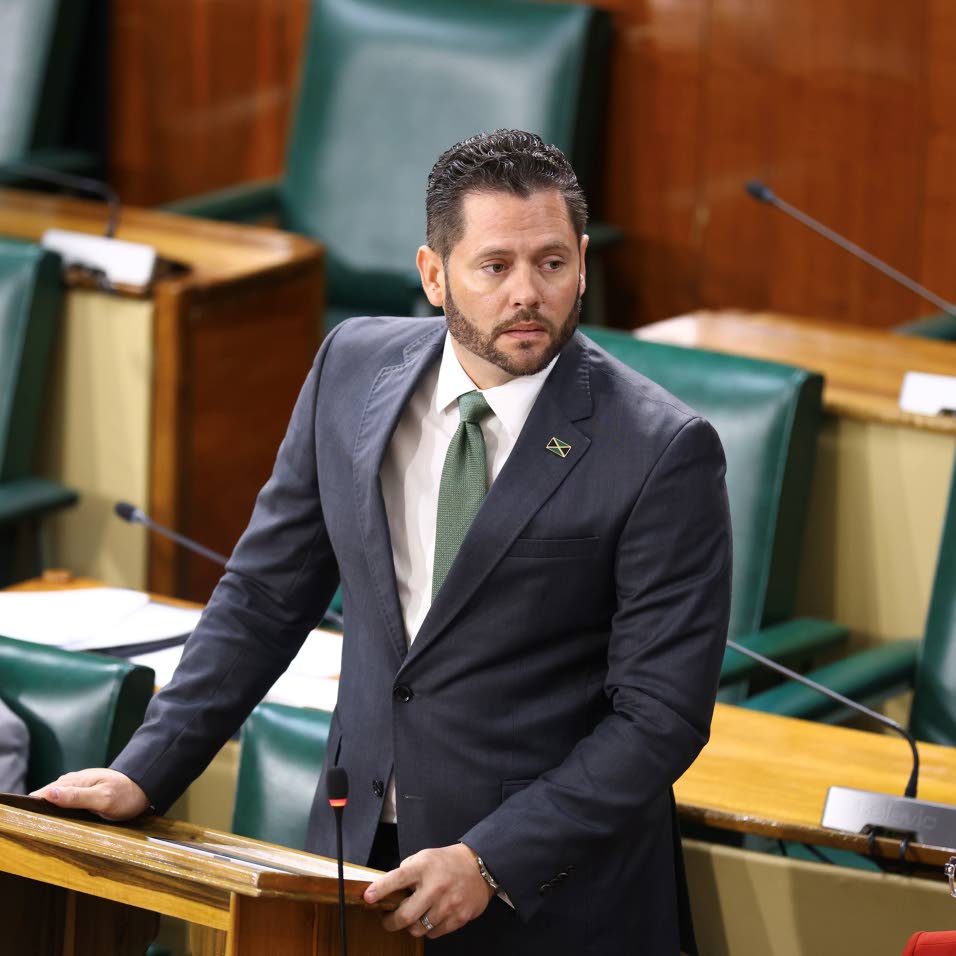
‘Don’t make it permanent’ cautions Tavares-Finson while backing Govt’s decision to withdraw funds from NHT
KINGSTON, Jamaica (AFP) — Government Senator Christian Tavares-Finson, while supporting the Administration’s decision to continue withdrawing billions from the National Housing Trust (NHT) for budgetary support, has cautioned that such draw downs should not be permanent.
Tavares-Finson gave the caution and his “strong support” during the debate in the Senate on Friday on the National Housing Trust (Amendment) (Special Provisions) Bill, 2026 which was subsequently passed without amendment. It paved the way for the government to continue withdrawing $11.4 billion from the NHT for the next five years. The bill was earlier passed in the House of Representatives.
In defending the Government’s decision, Tavares-Finson said “We must approach this issue with honesty and realism”, while arguing that “governments do not operate in ideal circumstances”.
“They govern in the context of competing priorities, fiscal constraints, economic shocks, infrastructure needs, public health demands, education requirements, national security obligations, and the many responsibilities associated with managing a developing nation,” said Tavares-Finson.
He noted that there are occasions when the government must make difficult financial decisions to maintain economic stability and support critical national programmes, stating that, “The reality before us today is that the government has determined that a drawdown from the National Housing Trust is necessary at this particular moment”.
Continuing, the son of the Senate President said, “Whether one agrees fully with that decision or not, we must acknowledge the broader fiscal context in which it has been made. Responsible governance requires balancing immediate national needs with long-term institutional objectives”.
He told his fellow lawmakers that, “As legislators, we must be prepared to recognise that extraordinary circumstances sometimes require extraordinary measures”. He then cautioned that acknowledging necessity does not mean abandoning principle.
“While the government may find it necessary to utilise NHT resources at this time, it must simultaneously commit itself to ensuring that such draw downs do not become a permanent feature of public finance management,” he said.
Tavares-Finson pointed out that the NHT was not established to serve as a recurring source of budgetary support. “Its principal purpose is housing. Its mandate is housing. Its contributors expect it to focus on housing,” he remarked.
“When contributors make their payments each month, they do so with the understanding that their contributions will ultimately strengthen their prospects of owning, improving, or financing a home. Any diversion of those resources must therefore be viewed as exceptional rather than routine,” he added.
He told the Senate that, “The question before us, however, is not whether the NHT is important. The question is whether, in extraordinary circumstances, a responsible government should be allowed to deploy a portion of national resources to protect the economic stability of the country and advance the welfare of all Jamaicans.
“I submit, Mr President that the answer is yes”.
Tavares-Finson argued that the government is not an isolated collection of institutions operating independently of one another. In this regard he said the NHT exists within the wider framework of national development. “Housing cannot flourish in an economy that is unstable. Housing cannot flourish where inflation is uncontrolled. Housing cannot flourish where government finances are weakened and where essential public services are threatened,” he insisted.
According to the lawmaker serving his first term in the Upper House, the government has consistently maintained that the drawdown of NHT resources has been undertaken only in circumstances where the national interest required it and where the economic benefits to Jamaica as a whole outweighed the costs.
“Prime Minister Andrew Holness has pointed out that previous administrations also utilised NHT resources to support broader national objectives, including education reform and fiscal stabilisation,” he said, citing the Jamaica Observer.
Stating that the alternatives should also be examined, Tavares-Finson said, “Those who oppose the drawdown rarely answer a simple question: if these resources are not utilised, where should the government find the funds required to address national priorities?”
He asked further: “Should the government increase income taxes on working Jamaicans? Should it raise General Consumption Tax? Should it increase payroll deductions? Should it impose new burdens on businesses already facing global economic uncertainties?
According to the senator, the Jamaican people elected the government on a mandate of fiscal responsibility, economic prudence, and a commitment not to burden citizens with new taxes unnecessarily. That commitment, he said, has been central to the government’s economic philosophy.
“The choice, therefore, is not between drawing down NHT funds and doing nothing. The real choice is between utilising available national resources responsibly, or imposing additional taxes on workers, homeowners, small businesses, and consumers”.
Tavares-Finson said the drawdown, in this context, represents a less burdensome alternative than broad-based tax increases that would directly affect every Jamaican household. He said it was also important to recognise that the government has not abandoned housing while drawing upon these resources.
“The NHT continues to provide loans, grants, housing solutions, and financing support to contributors. Loan limits have been increased, benefits expanded, and programmes strengthened to assist contributors in accessing housing opportunities. The institution remains operational, financially viable, and capable of fulfilling its mandate,” he said.
The senator also posited that a strong economy ultimately benefits housing contributors themselves, remarking that, “When interest rates remain stable, housing becomes more affordable. When employment grows, more Jamaicans qualify for mortgages. When public finances are strong, government can invest in infrastructure, roads, water systems, and public services that support housing developments. When economic stability is preserved, contributors benefit not only as NHT members but also as workers, entrepreneurs, taxpayers, and citizens”.
Syndicated from Jamaica Observer · originally published .
Legal context · powered by Jurifi
Get the legal angle on this story. Pick a prompt and Jurifi's AI will explain it using Jamaican law.
AI replies are based on Jamaican law via Jurifi. Not legal advice.
Other coverage

JISTV | Sitting of the Senate - June 5, 2026
Jamaica Information Service (Video)Watch
Peter Espeut | Raiding the house money
Jamaica Gleaner
Sitting of the Senate || June 5, 2026
PBC Jamaica (Video)Watch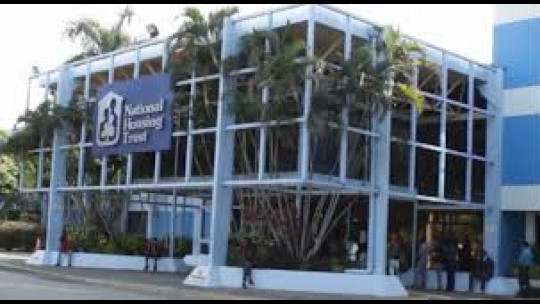
Opposition senator decries Government's latest withdrawal from NHT for budgetary support
Radio Jamaica News Online
PM says unspent relief money will deliver ‘visible, lasting’ benefits
Jamaica Gleaner