
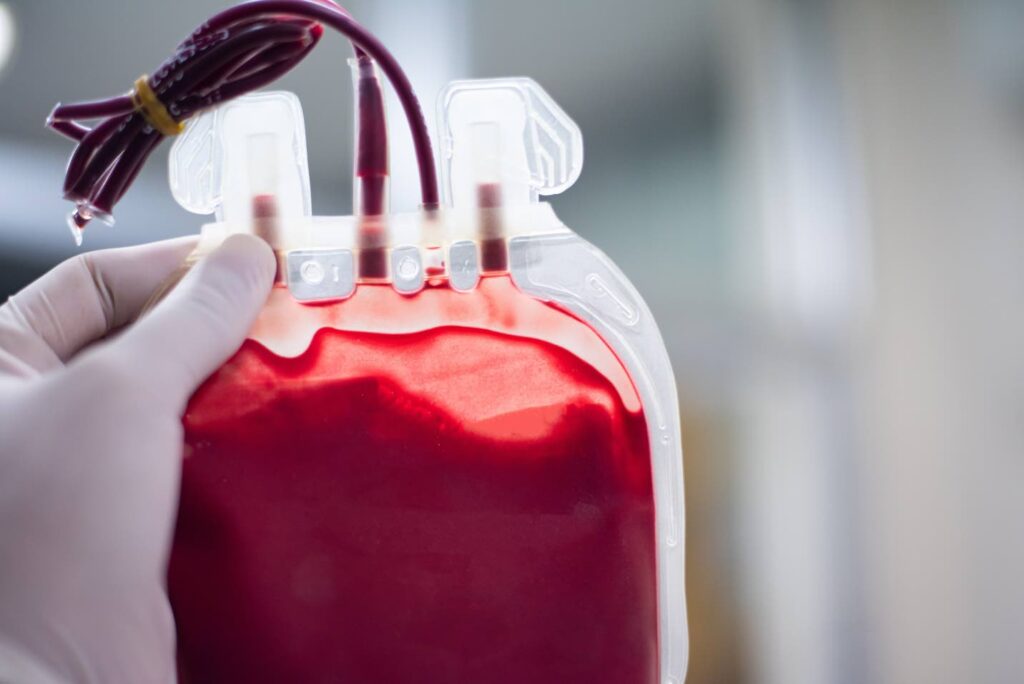
SOME players in Jamaica’s public health sector are expressing concern that problems identified in an audit of the National Blood Transfusion Service (Blood Bank) three years ago have not been addressed and could now be worse.
According to Jamaica Observer sources, the inefficiencies at the Blood Bank are threatening the safety of the public.
The audit report has not been made public by the Ministry of Health and Wellness but the Observer has received access to the document which probed the operations over the period March 26, 2022 to March 25, 2023.
The ministry was responsible for conducting this internal audit with the final report dated September 29, 2023. It was compiled in keeping with the ministry’s annual risk-based plan.
The audit probed whether the Blood Bank had an adequate supply of blood and blood products to meet demand and to verify whether there was an established system in place that determined the annual need for blood.
It also sought to establish whether the process flows for the acquisition of blood and blood products from hospitals, regions and other emergency institutions were adhering to the Caribbean regional standards, and other relevant policies and regulations.
The auditors also set out to ascertain whether requests for blood and blood products were executed promptly and that proper records were being maintained with the necessary standards and other relevant policies and regulations. The probe covered whether the process for the collection, release, storage, and transportation of blood and blood products was also in order.
The auditors found several high-risk problems related to the design and/or implementation of controls for blood banks.
Among the major findings was that 79 blood donors were identified with positive infectious markers, but this was not indicated on process records sheets and did not outline the units of blood to be discarded.
According to the audit report, there were four instances in which “Do not use” was written in pencil across test results and no review was done of the processing records sheet for 995 bags of whole blood collected for the period June 28, 2022 to September 29, 2022.
Additionally, the report highlighted that 911 whole blood units collected over the period June 28 to September 25, 2022 were not tested within 24 hours after collection, resulting in a lapsed time of one to 10 days.
The report stated that incorrect laboratory numbers had been written on 25 request forms and that the inventory system for blood components was not properly maintained by the Blood Bank.
The report further stated that there was no evidence that a physical inventory count was performed daily with 246 daily blood inventory reports not presented for review.
According to the auditors, there were 1,027 cases of pertinent information — such as name of medical officer, their signature, registration number, and blood expiry date — missing from blood request forms.
There were 67 units of blood and blood components which were released without there being any request for them. Requests made by telephone for blood and blood components were not logged. It was revealed that adjustments were made on forms, without any indication which officer made the changes.
It was noted that 3,919 units of blood and blood products were recorded for release, however, 3,533 were verified released, resulting in a variance of 386 units. There was no notation/reason stated on the forms for the unreleased units.
Of 25 standard operating procedures that were reviewed, 22 expired for the period April 1, 2022 to March 31, 2023. It was discovered that one standard operating procedure for blood collection user manual had been in draft phase since September 1, 2018 when it was prepared.
Ten standard operating procedures were not signed, reviewed, and approved by the responsible officers. One document outlining standard operating procedures was prepared on June 18, 2012 and approved on March 23, 2020 by the same officer in a different capacity.
No steering committee was in place to aid in the decision-making of the department, the report highlighted.
According to the report, there was nothing to indicate that standard operating procedures were reviewed every three years as scheduled. Additionally, the reviewing period of that standard operating procedures contradicts the Caribbean regional standard (second edition), which states that the review should be performed annually.
Last week, some peeved workers at the Blood Bank aired their concerns to the Observer, but requested not to be named while others opted to convey their messages through a trade unionist.
They said their decision to go public followed years of frustration after trying unsuccessfully to get the authorities to fix inefficiencies associated with how blood is donated, tested, and disseminated to the public.
Frustration grew following a recent revelation that a baby born with cancer, allegedly contracted syphilis at Victoria Jubilee Hospital in Kingston after undergoing a blood transfusion.
A Blood Bank source argued that problems such as those involving the baby are being caused by people being placed in positions for which they are not qualified.
According to the source, there needs to be a new audit done to determine whether serious flaws flagged in the September 2023 report had been addressed.
“You will recognise that because of the lack of experience in the Quality Control Department, the Blood Bank started to struggle. They should have been implementing strong measures to ensure that the system functions at the highest level. What happens is that people are learning on the job.
“I would recommend a special audit. Somebody needs to be held accountable. You may come to now find that by going back through all the documentation that you have more than one positive unit of blood that may have left the Blood Bank, and we need to find out how widespread the problem is,” the source added.
Last week, the Observer sought to get a response to the concerns from an official at the Blood Bank, but that attempt failed.
Additionally, an attempt to get a comment from Health and Wellness Minister Dr Christopher Tufton also proved futile. Tufton is slated to make his contribution to the 2026/27 Sectoral Debate in the House of Representatives today.
Meanwhile, St Patrice Ennis, general secretary of the Union of Technical, Administrative & Supervisory Personnel (UTASP), which represents some employees at the Blood Bank, told the Observer that for some time the cry from members of staff about the problems at the key facility have fallen on deaf ears.
“For a prolonged period various members of staff have written complaints and expressed concerns about the operating procedures at the Blood Bank and had warned about the potential for the occurrence of this kind of situation,” Ennis said in reference to the allegation that the baby might have been given contaminated blood.
Ennis said he was outraged by the situation involving the baby and pointed out that so far there has been no assurance given by anyone that the process of testing and disseminating blood was free of flaws today.
“While we may know of this incident, we can’t say with certainty that this is isolated. They [staff members] expressed that the procedures were not being followed and the warnings for the potential of such occurrence were ignored. These problems are solvable problems, and that is what makes it frustrating and makes one feel angry. These are problems that can be solved and not at any great expense.
“We know what is to be done and it is just to hold people accountable. Until we start to do that we are going to have recurrences of problems and we are going to seem alarmed only when it reaches the public domain. We are not even sure if after that case which we are talking about, if proper measures have been put in place to correct it. This can affect any one of us,” added Ennis.
The National Blood Transfusion Service, also known as the Blood Bank, in Kingston. (Photo: Garfield Robinson)
ENNIS… for a prolonged period various members of staff have written complaints and expressed concerns about the operating procedures at the Blood Bank and had warned about the potential for the occurrence of this kind of situation
Syndicated from Jamaica Observer · originally published .
Legal context · powered by Jurifi
Get the legal angle on this story. Pick a prompt and Jurifi's AI will explain it using Jamaican law.
AI replies are based on Jamaican law via Jurifi. Not legal advice.
Other coverage

Donate Blood Today
MOH — Ministry of Health and Wellness (Video)Watch
Donate Blood Today #YoureSomebodysType
MOH — Ministry of Health and Wellness (Video)Watch
Donate Blood for a child in need
MOH — Ministry of Health and Wellness (Video)Watch
JIS News - 18.05.2026
Jamaica Information Service (Video)Watch
Blood Bank reevaluating donor recruitment process; to establish Life Savers Club
Jamaica Inquirer