

You meet many bankers who seem to have the answers and predict trends. Many have an MBA from an ivy league university, worked a few years at a blue chip financial institution and get paid extremely well. The famous author Tom Wolfe called them “Masters of the Universe”.
But they lack experience, they have not lived through epochs that have redefined financial services.
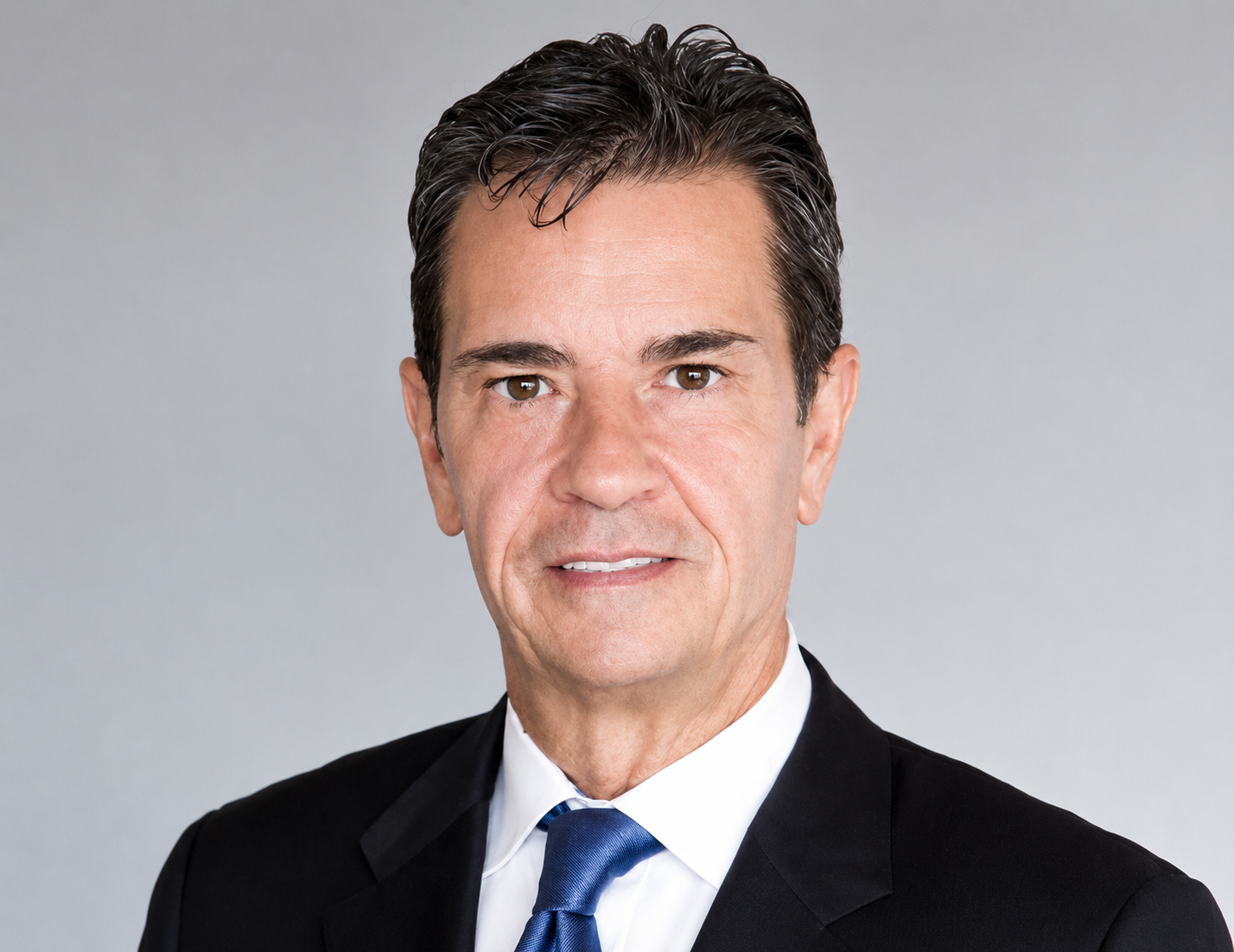
Born in London, Steve Donovan is the Obi-Wan Kenobi of financial services, a man dedicated to the profession who has seen historical events impact modern banking. The Gulf War, the dotcom bubble, 9/11, the rise of the internet crypto, the end of the Soviet Union, Britain pulling out of the European Union, the global financial meltdown of 2008, the ascent of the tiger economies, China takes its place as a world power, COVID .He has seen the tech tech giants Alphabet, Amazon, Meta, Nvidia usurp the old order and now rule the world.
He has spent 35 years in financial services working in Hong Kong, Singapore, New York, Dubai, countries in Asia, Latin America and the Middle East. Donovan has a global perspective because he has lived it
For the last nineteen years he has been with CitiGroup and manages its Latin America Services business.

Our Today sat down with the Citi senior executive Steve Donovan for an interview at Citi’s offices in Kingston, Jamaica where he outlined Citi’s plans for the region.
“What we are trying to do is standardise, simplify and digitise everything we did in Latin America. Everything was being done differently-different technologies, different products. We asked ourselves, how can we bring stabilisation to the fore. We took the decision to simplify our operations and we figured out we could do that by digitising end-to-end everything we were doing. We were doing so many bespoke and customised practices that involved lots of hands, lots of paper. We asked ourselves, what does a digital bank look like? We want to be recognised by the industry, we want the recognition of being the digital bank of Latin America. Yes there is now AI but there is always going to be something
“We did a number of things. First and foremost we asked, what do we do? Where do we do it? Why do we do it and with whom do we do it with?
“I brought the 4W mantra to this as I had done in the Middle East. Let’s understand the core applications that clients use and that we use and begin layering that. What does “Great” look like with end-to-end digitalisation. From the moment a client engages with us, what does that look like? How do we onboard clients? How do we service clients? We decided to discontinue things we historically have done and we have being doing that in Jamaica . We said we are no longer in the business of cheque issuance and cheque clearance. We are not in the business of cash. We don’t want to store cash, we don’t want to transport cash. We don’t want to have a liability in cash. We don’t need branches. Why do we need them? We want things to be completely digital.
“So we made those decisions and we didn’t lose any accounts, we didn’t lose any business. In fact we are doing great everywhere. We took that across our global network.”
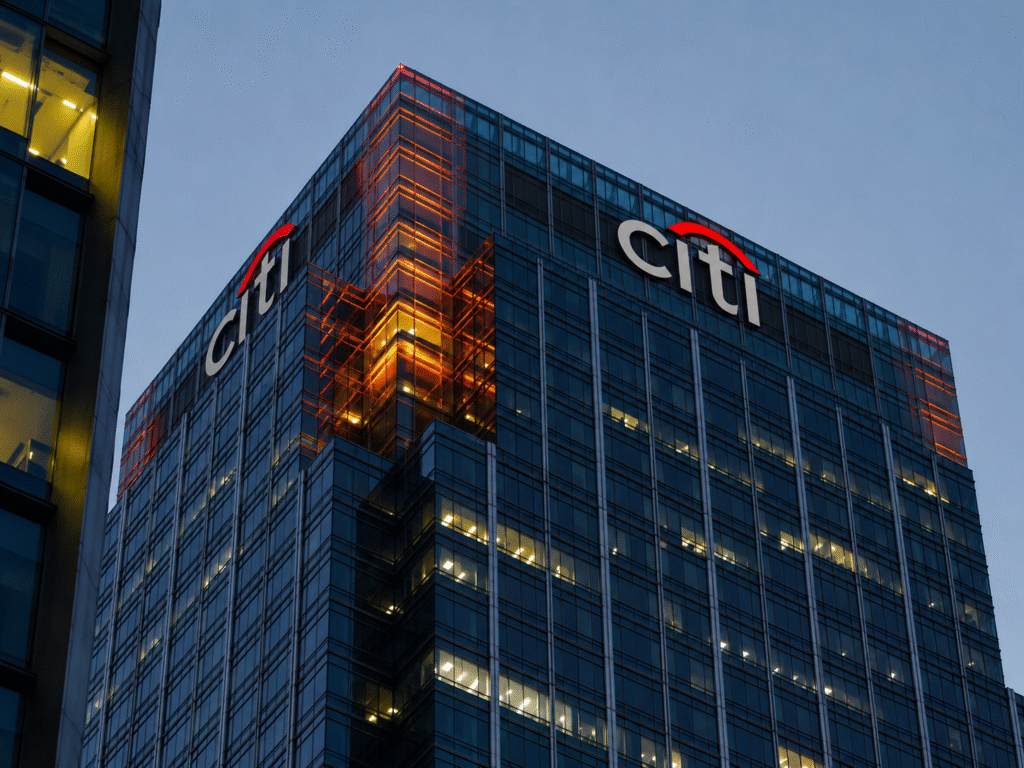
Fundamental change in the way operations are carried out is never easy. Culture, entrenchment, personnel have all got to be contended with. Donovan says the organisation has bought into this move, into digital adoption. Citi is all about business unusual in order to be extremely effective and quicker.
Donovan continued: “We need to drive modernisation of financial services hence why we drive digital policies. Citi has a big voice in Latin America and we have been at the forefront to driving digital adaption. We have made it clear that we need a system that is accessible and drives a higher grade of participation. That is going to move the informal economy into something a lot more formal-somewhere in the middle. We have had a lot of success in adoption in what is called “informal payment schemes” in a number of countries. It is hugely successful in Argentina, Brazil and Mexico.
“We have been leading the discussion on Open Banking and we want more transparency, more competitiveness. It’s about access, participation, security. The more you can bring the informal into a form of formal, the more deposits you can bring into the system. The more deposits you bring in, the more loans you are availing . The more loans you are availing, you are then funding economic activity and growth. The crux of the matter is inclusion, so everything we are doing is set up to accommodate that. We don’t want to be all things to all people, we never set out to do that. We want clients to come onto the Citi platform and access proprietary products and services. We are connected to all the regional and global clearing houses. We have alliances with other third parties. So come on and we will conduct the orchestra -I t may be others playing different parts but we want to enable that. We want to be connecting that ever expanding eco-system. As a part of that connectivity, we are being more inclusive, bringing more and more people in and that to me has been an overarching personal theme I’ve had which is going to outlive me in this region for sure.We are now seeing massive progress.”
Steve Donovan has clearly thought about what Citi is looking to accomplish and it is not just about market share. To him, one must be cognisant of how one contributes to communities and countries. What he points out is that Citi are guests in the countries they operate in. It is a North American headquartered financial services company that operates in 95 countries around the world. That means it is a guest in 94 countries.
“We are guests in Jamaica and in all of the 19 countries we have a presence in Latin America. So what does that mean? We are here because of the good will and acceptance of the people of Jamaica who have given us an opportunity and afforded us a licence to operate in the country to serve clients. But we have to do so much more than that. We have a responsibility to fuel economic growth. We want to put money into Jamaica. We have to create local employment opportunities. We have to do our bit to be visible in communities. That means doing community work and projects that Eva (Eva Lewis, Citi Jamaica Country Manager ) and the team lead. It’s not all about making money. We owe the countries much more than that, but more over it is about driving change, driving inclusion.
“I have been a massive proponent of all forms of inclusion but financial inclusion in particular because Latin America is the second largest region in the world in terms of its informal economy. Nearly 70 per cent of Latin America is informal in nature. We need to drive modernisation of financial services
Citi Latin America Services division brings in in excess of US$20 billion as a business line. Citi has a presence in 19 countries in the Latin American region and is 2X the size of its nearest competitor in terms of footprint. It has been in some Latin American countries for over 100 years and has been in Jamaica for 66 years.
“We are not passing tourists. We come and we stay. We are structured around large countries and clusters of countries. For instance, we are in Argentina, Paraguay and Uruguay -that’s one cluster we call “The South Cone”. Then we have “ The Andean Cone” which houses Chile, Ecuador, Peru and Colombia . We have The Central America and Caribbean as another cone. Our two largest clusters are managed separately which are Brazil and Mexico.
“In Latin America which I manage, we have a leading industry position in every single one of our businesses. In our Trade business we vie, going between Number One and Number Two.
Listening to Steve Donovan, what comes across is that he has a thorough understanding of the mission and Citi’s place in the region. He is shepearding the next evolution of financial services in the Latin American and Caribbean region with the understanding that inclusion should be at the forefront. Don’t be fooled by his easy going manner and London charm-he is a man of purpose and conviction.
Steve Donovan has a big portfolio, overseeing depository, Agency & Trust, payments business, trade business (letters of credit, stand-by performance bonds through to the more sophisticated sides of the balance sheet.) working capital management solutions as well as financing suppliers and distribution.
The Services division also works with large export agencies around the world. It helps clients source funding for longer tenor transactional flows. This could be for infrastructure projects such as the development of airports, refurbishment of existing airports, shipping and so forth.
This represents 50 per cent of Citigroup’s top line revenue in Latin America.
Citigroup has five core principal business lines namely, Services, Markets, U.S. Consumer Banking, Wealth Management, Banking ( It recently combined Investment Banking with Corporate Banking and Commercial Banking thus creating a vertical business line) a Citi is the largest card issuer in North America and it’s branded cards operation forms an important business line.
Syndicated from Our Today · originally published .
Legal context · powered by Jurifi
Get the legal angle on this story. Pick a prompt and Jurifi's AI will explain it using Jamaican law.
AI replies are based on Jamaican law via Jurifi. Not legal advice.
Other coverage

JSE GREEN BOND LAUNCH - 2024
Jamaica Stock Exchange (Video)Watch
CVM Lead Story Prime: June 10, 2026 | @CVMTVNews
CVM TV News (Video)Watch
Economy and Production Committee || June 10, 2026
PBC Jamaica (Video)Watch
CVM Lead Story: June 11, 2026 | @CVMTVNews
CVM TV News (Video)Watch
CVM Lead Story | @CVMTVNews
CVM TV News (Video)Watch