

A week ago, Andy Burnham, Labour’s new leader, became Britain’s seventh prime minister in a decade, the amount of time Andrew Holness, who is still in office, has held the job in Jamaica.
In fact, 10 Downing Street has seen five of those occupants in four years, including Boris Johnson, the Tory leader, who moved out in September 2022. Mr Johnson’s successor, Liz Truss, lasted only 49 days, the shortest premiership in British history. Ms Truss’ tenure became untenable after bond markets revolted over her tax-slashing mini-budget, which threatened to widen fiscal gaps and increase borrowing costs.
From a distance, British politics seem to scream instability. Party leaders, especially when in government, seemingly have little margin for error – political or economic. MPs stand ready to unsheath their long knives at signs of a leader’s loss of popularity, which might cost the next election.
Keir Starmer couldn’t escape Labour’s Macbeth, Brutus, or Albinus after the party’s defeat in local elections and his missteps on the economy and aspects of domestic and global politics.
Mr Johnson, one the architects of Brexit, Britain’s retreat from membership of the European Union (EU), may, in the end, have paid the price for his mendacity, irresponsibility, indiscipline and blame-shifting. Further, post-Brexit Tory leaders also bore the consequence of Britons’ remorse over leaving the EU, which analysts say, after 10 years, caused the UK economy to be eight per cent smaller than it would have been if Britain had stayed in the EU. The uncoupling hasn’t delivered the benefits voters were promised.
POSSIBLE TAKEAWAY
One possible takeaway from the revolving door at Number 10 is that the British system holds its leaders accountable if they fail at political and economic deliverables; if, like Ms Truss, they display comical incompetence; or, like Mr Johnson, they appear encrusted in moral turpitude.
This may indeed be part of the reason for topsy-turviness in British politics. But while the perceived failings of individual leaders may be the proximate cause of the instability, it doesn’t tell the whole story.
For the rapid turnover of British leadership and the forces that unleashed Brexit are more symptoms and symbols of a deeper malaise which British politics has failed to acknowledge and come to terms with.
While Britain still occupies a seat among the world’s major nations, the UK, fundamentally, is a declining, de-industrialised mid-tier power, where real living standards are falling. Brexit exacerbated a pre-existing problem.
In the 1880s, in the early period of the new industrial revolution, Britain, with its slew of colonies in the Africa, the Caribbean and Asia, accounted for 43 per cent of world manufactured exports, as was pointed out in a 2014 working paper by a pair of Cambridge and Oxford economic researchers, Michael Kitson and Jonathan Richie. Germany accounted for 16 per cent. Six per cent of the world’s manufactured exports came from the United States.
“By 1913, the UK’s share of world manufactured exports had fallen to 32 per cent, whereas the USA’s share had increased to 14 per cent and Germany’s share had increased to 20 per cent,” Messrs Kitson and Richie wrote.
Several factors were behind the decline. Among them was the rapidly increasing productivity of other countries, aided by investment in new technologies and innovation
As Messrs Kitson and Richie explained: “In the 1870s, capital per worker in UK manufacturing was approximately 10 per cent higher than in the USA and 30 per cent higher than in Germany. But, by 1900, the position had changed and US manufacturing was 90 per cent more capital-intensive than British manufacturing and German manufacturing had caught up with the UK …”
SURPASSED BRITAIN
Put another way, America and Germany had surpassed Britain in production technologies and other elements of total factor productivity (TFP). Their workers produced more units within a given period than Britons.
Today, the competitive threat for Britain is not the United States and Europe, but China and other countries in Asia.
Up to the 1970s, manufacturing consistently accounted for between a fifth and a third of the UK’s GDP. Since the 1980s, the sector has declined. Its output now hovers at around nine per cent of GDP. Britain’s northern industrial belt has been hollowed out. The financial sector and pockets of new technology industries have concentrated in London and the country’s southeast, deepening geographic wealth and economic divide.
The old factory communities are a fertile recruiting ground for disillusioned Britons, including many who voted for Brexit and are angry at immigrants. They are ready to dismantle the perceived status quo by throwing the supposed bums out.
It has not helped that growth in labour productivity in the UK has slowed. After the Second World War up to the mid-1970s, the UK’s annual average productivity increased by 3.6 per cent. Over the next 30 years, the average was 2.1 per cent. Between 2008 and 2009, the financial crisis and 2019,labour productivity declined further, to an annual average of 0.2 per cent.
Policymakers in the UK have consistently talked about the need for investing in manufacturing. The roadblock has been in deciding by whom, and how, and whether the UK can ever again be competitive with China and other emerging economies.
In his first speech as prime minister, Mr Burnham spoke of “re-industrialising Britain, using public procurement to back British industry” and promised to later this year unveil “a 10-year plan, laying out a path from where we are now to where I believe we all want Britain to be”.
Which sounds very much like a return to an industrial policy.
Syndicated from Jamaica Gleaner · originally published .
Legal context · powered by Jurifi
Get the legal angle on this story. Pick a prompt and Jurifi's AI will explain it using Jamaican law.
AI replies are based on Jamaican law via Jurifi. Not legal advice.
Other coverage
St Andrew records most Category 1 crimes in Jamaica, says PIOJ
Jamaica Observer
Nearly $10 billion in property lost to fires in 2025, says PIOJ
Jamaica Observer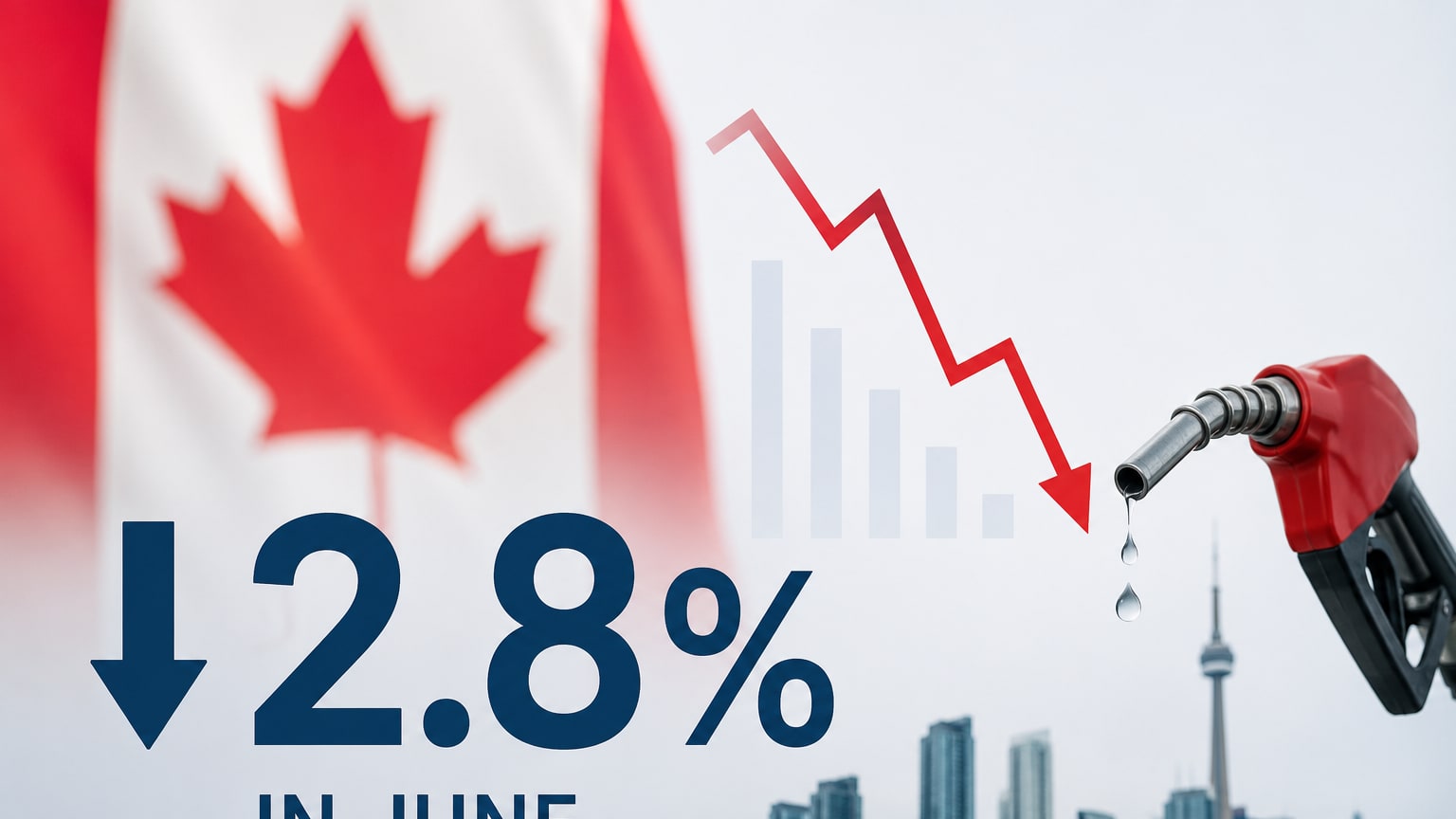
Lower gas prices pushes down Canada’s inflation rate to 2.8% in June
Our Today
Jamaica News Today July 25, 2026 /Real News Media TV
Realnews YtWatch
OT Equity Analysis | Citigroup Inc. (NYSE: C)
Our Today