
JCF Agricultural Protection Branch cuts farm crime reports by over half in first year
Jamaica’s Agricultural Protection Branch (APB) has cut reported agricultural crime by more than half in its first year, senior officers said on the Constabulary Communication Network’s Force for Good podcast, framing praedial larceny as organised crime that funds gangs and threatens the rural economy.
Commanding officer Senior Superintendent Oral Pascoe and Area 5 APB head Inspector Robert Robinson said the branch sits under strategic operations but works across all 19 geographic zones, embedding teams in divisions so arrests are credited locally while HQ in Kingston retains central command. Area 5, for example, covers St. Catherine’s north and south divisions and St. Thomas, working daily with station personnel.
Pascoe traced the unit’s roots to about 2015, when then-DSP Kevin Francis led roughly seven officers with two vehicles from the Ministry of Agriculture and Fisheries. Later parish-based teams in Clarendon, St. Elizabeth, Manchester and elsewhere focused on the five or six divisions that generated 60 to 70 per cent of reports, but that model fell short. A policy rolled out in 2025 placed APB teams in each police area after white- and green-paper planning with the ministry.
Robinson said cattle and livestock theft is often gang-directed, with proceeds financing wider crime. At the APB launch, Deputy Commissioner Warren Clarke called praedial larceny a clear threat beyond petty theft. Pascoe noted agriculture and fisheries contribute about 7 to 8 per cent of Jamaica’s US$26–27 billion GDP and support close to 300,000 farmers and fishers. He cited losses of 60–70 cattle at about $250,000 a head and a single goat valued at $1.5 million.
Enforcement now leans on the Fisheries Act 2018, December 2024 Agricultural Produce Act amendments on the receipt-book system, and recent Praedial Prevention Act changes that raised fines and sentences. Officers said reports ran about 700–800 a year in 2022–2023; in the first six months after the APB’s 2025 launch the count fell sharply, and recent figures of 146 reports point to a 50–60 per cent decline. More than $9 million in produce has been returned to farmers, with roughly 1,300 arrests and 480 convictions in the first half of this year.
Cattle tagging has climbed from about 1,500 animals a month to 6,000–7,000. Teams check abattoirs day and night for licences and stamped meat, use body cameras and JamaicaEye, and monitor roads around the clock against bush slaughter and night movement of stolen carcasses. About 8,000 tickets have been issued this year. The APB also works with the Marine Division and the National Fisheries Authority against meat-for-guns trafficking, and can search for agricultural produce without a warrant under relevant statutes.
Syndicated from JCF — Jamaica Constabulary Force (Video) · originally published .
Legal context · powered by Jurifi
Get the legal angle on this story. Pick a prompt and Jurifi's AI will explain it using Jamaican law.
AI replies are based on Jamaican law via Jurifi. Not legal advice.
Other coverage

Pickleball is more than a sport for the Dinkaholics
Jamaica Gleaner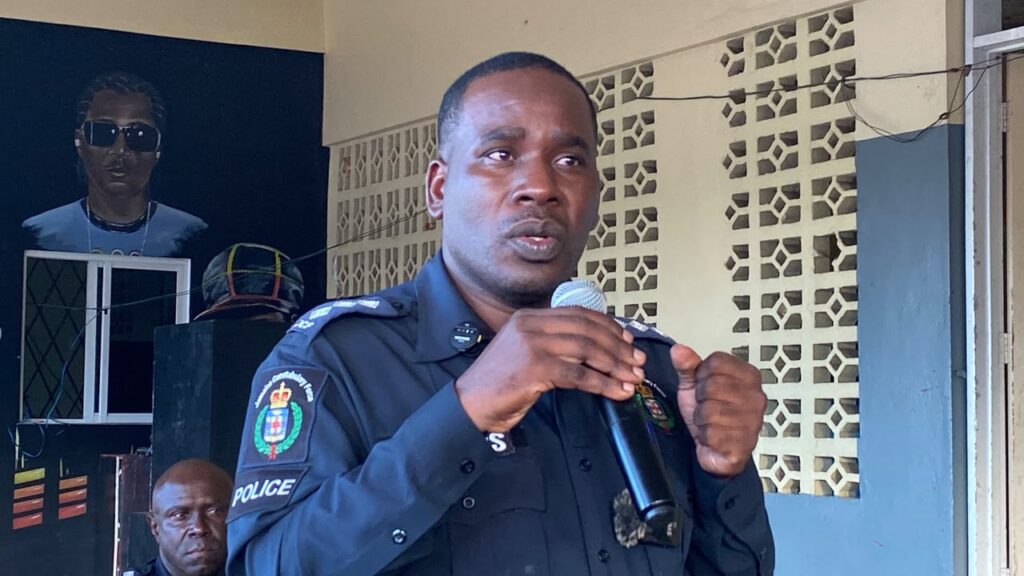
Heat on for scammers infesting Manchester, says Dennis
Jamaica Observer
Opening of the Caenwood SPARK Road, Hope Bay, Portland
Office of the Prime Minister
Cabbies caught red-handed
Jamaica Observer
Sean Major-Campbell | Be an agent of truth and peace
Jamaica Gleaner