
Lewin presses faster police body-camera rollout as $1b solidarity programme lags
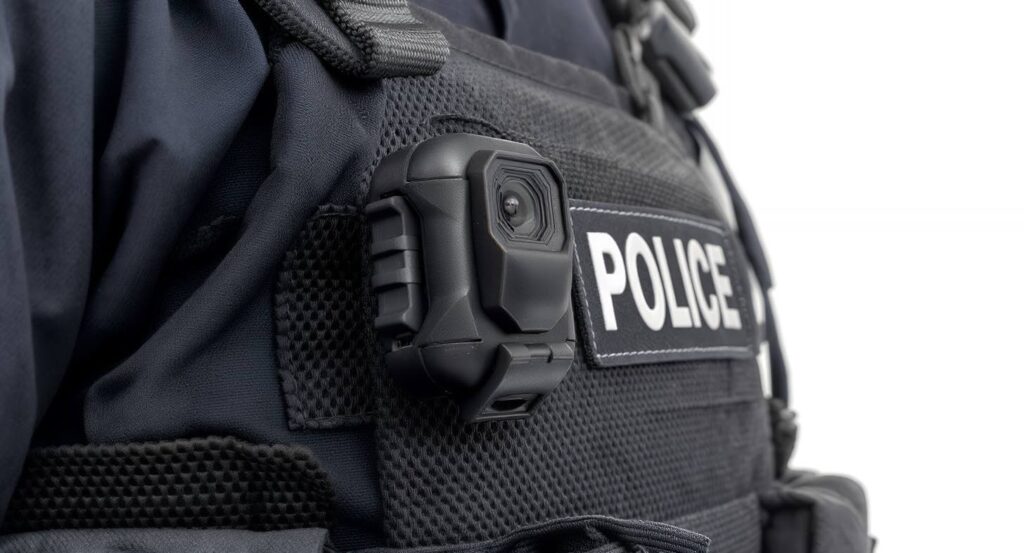
Former Police Commissioner Rear Admiral Hardley Lewin has rejected explanations for the slow use of body-worn cameras by the Jamaica Constabulary Force, saying the technology is essential for planned police operations where transparency is most needed.
Lewin was speaking Wednesday at a Jamaicans for Justice policy round table on body cameras at the Courtleigh Hotel in New Kingston. He was responding to moderator George Davis, who raised the Government's $2 billion national security spend, including funds for police equipment.
The former head of both the JCF and the Jamaica Defence Force said he supported major investment in policing, but argued that crime prevention should remain the first duty of law enforcement. He said public-space CCTV, including JamaicaEye, should have received stronger attention because cameras can deter crime before police are forced to respond.
Lewin said body cameras should be prioritised for planned and special operations, especially where officers may confront armed criminals. He criticised reasons given for delays, including concerns about stealth operations and attaching devices to uniforms, saying the repeated explanations amounted to moving the goalposts.
He also defended INDECOM's call for wider camera use amid rising fatal police shootings, saying investigators are left with little to test when only police accounts remain and the person shot is dead. Lewin said officers who lawfully use deadly force also benefit from clear evidence, because otherwise they may remain under suspicion despite acting within policy.
In a separate matter before Parliament's Public Administration and Appropriations Committee on Wednesday, officials disclosed that only 23 per cent of the Government's $1 billion Solidarity Programme had been spent nearly a year after it was announced in June 2025.
Acting Permanent Secretary in the Labour and Social Security Ministry Deonne Jennings said more than 18,000 people applied, 11,521 were approved, and payments totalled about $230.42 million. Roughly $769.58 million remained unused, with some approved beneficiaries still not collecting payments and the deadline extended to June 30, 2026.
St. Catherine South Eastern MP Dr Alfred Dawes and PAAC chairman Peter Bunting questioned why needy Jamaicans were excluded while funds sat idle. Jennings said the programme was aimed at people outside existing support systems such as PATH, the National Insurance Scheme and the social pension, while St. Mary Central MP Omar Newell said some vulnerable people trying to improve their circumstances may still need short-term help.
Syndicated from Realnews Yt · originally published .
Legal context · powered by Jurifi
Get the legal angle on this story. Pick a prompt and Jurifi's AI will explain it using Jamaican law.
AI replies are based on Jamaican law via Jurifi. Not legal advice.
Other coverage
Indecom suggests rethink of body camera deployment in police force
Jamaica Observer
Women who want to have children: ‘Help us!’
Jamaica Observer
‘This cannot continue’
Jamaica Observer
‘A list in someone’s head is not a disaster plan’
Jamaica Observer
PAAC to question SLB and Education Ministry over support for poor students
Jamaica Observer