
Omar Wright | Every drop counts: How Jamaicans can help secure our water future
If you have turned on your tap recently and felt the pressure drop or noticed your water bill climbing in the heat of what is shaping up to be one of Jamaica’s hottest years in recent memory, you are not alone.
Across the country, communities are feeling the strain. And on World Environment Day, observed globally on June 5, this year’s rallying call is “Now for Climate”. Jamaica is being called to confront a challenge that is both environmental and deeply personal: the future of our water.
A NATION UNDER PRESSURE
The numbers tell a sobering story. As recently as February 2026, the National Water Commission (NWC) warned that 133 of its 612 water supply systems were already being affected by reduced inflows, with rainfall across the island running significantly below normal for the early rainy season. By late May, drought conditions were impacting 27 water supply systems, affecting nearly 25,000 customers, primarily in St Catherine, Clarendon, and the north-east region of Jamaica.
Climate scientists and water experts have long warned that Small Island Developing States like Jamaica face some of the most acute risks from climate change. Shifting rainfall patterns, prolonged droughts, and hotter temperatures are not distant threats; they are the lived reality of Jamaicans today. Drought and shifting patterns of rainfall are already exacerbating serious challenges including aging water infrastructure, population growth, and environmental degradation of our watersheds.
The government is advancing long-term solutions; including the Rio Cobre Water Supply Project, expected to deliver approximately 15 million imperial gallons of water per day upon completion; and the Western Water Resilience Project, with construction scheduled to begin in mid-2026. But infrastructure takes time. What can protect us right now is a change in how each of us uses water every day.
WHAT YOU CAN DO AT HOME – STARTING TODAY
According to the Jamaica Information Service, a typical Jamaican household uses between 3,000 and 5,000 gallons of treated water per month, and studies show that approximately 10 per cent of that is wasted through leaks alone. The good news: household water consumption can be reduced by as much as 30 per cent through simple conservation and the right fixtures.
Here is how to start:
1. FIX LEAKS IMMEDIATELY
A dripping tap or a running toilet can waste thousands of gallons a month without you even noticing. Walk through your home today and check every tap, toilet, and pipe joint. That quiet hiss behind the wall or the slow drip from the kitchen sink is money, and a precious resource, going down the drain.
2. HARVEST THE RAIN
Installing a simple guttering system to direct rainwater into a drum or tank costs far less than the long-term expense of water restrictions. Harvested rainwater can be used to water your garden, wash your car, mop your floors, and flush toilets, reducing your dependence on the NWC supply. Rainwater harvesting also helps control flooding and runoff on your property.
3. UPGRADE YOUR FIXTURES
Water-efficient taps, low-flush toilets, and water-saving shower heads can dramatically cut consumption without any sacrifice in comfort. The JN Foundation’s Water Project Jamaica has been working to make these technologies more widely known to Jamaican homeowners and small developers. To learn more visit waterprojectja.com.
4. RETHINK HOW YOU WATER YOUR GARDEN
Outdoor water use is often overlooked but significant. Water your plants in the early morning or evening when evaporation is lowest. Consider drip irrigation systems that deliver water directly to roots rather than spraying it into hot air. Auto shut-off nozzles on hoses prevent the all-too-common problem of a hose left running while attention wanders.
5. SIMPLE DAILY HABITS THAT ADD UP:
- Turn off the tap while brushing your teeth or soaping your hands.
- Take shorter showers – every minute less saves up to two gallons.
- Run your washing machine only when fully loaded.
- When boiling food, use only as much water as necessary and let it cool for use on plants.
- Cover your storage tanks to prevent evaporation and contamination.
JAMAICA’S SIGNAL TO THE WORLD
This year, the United Nations’ World Environment Day carries a message that could not be timelier for Jamaica. The global rallying call #NowForClimate is a recognition that the planet is already sending us signals: rising seas, record heatwaves, shifting rainfall, and prolonged droughts. The question is: What signal do we send back?
As a Small Island Developing State, Jamaica sits on the front line of the climate crisis. We did not create the bulk of the carbon emissions driving global warming, but we are among the first to feel its consequences in our depleted rivers, our stressed aquifers, and our empty taps. The global community must do more. But here at home, we also have agency. Every Jamaican household that fixes a leak, catches the rain, or swaps a wasteful tap for a water-efficient one is sending a signal: we are ready to adapt, and we refuse to wait.
The JN Foundation’s Water Project Jamaica puts it plainly: the goal is to increase efficiency in the use of water by Jamaican homes, improve the reliability of water supply, and enhance Jamaica’s water security and climate resilience. That vision begins not in a government office or a commission boardroom, it begins at your kitchen tap. You can quite literally be saving the world from your kitchen sink!
For resources on water-efficient fixtures, and rainwater harvesting, visit waterprojectja.com
- Omar Wright is a development practitioner with expertise in planning, designing, monitoring and executing community development projects. As Programme Lead at the JN Foundation, he spearheads initiatives that enhance resilience and sustainability across Jamaica. A Chevening Scholar, he holds a Master’s in international development management and has played a key role in national projects addressing climate adaptation to include the Water Project Jamaica. Email feedback to [email protected] and [email protected]. ONLINE ONLY COMMENTARY.
Syndicated from Jamaica Gleaner · originally published .
Legal context · powered by Jurifi
Get the legal angle on this story. Pick a prompt and Jurifi's AI will explain it using Jamaican law.
AI replies are based on Jamaican law via Jurifi. Not legal advice.
Other coverage
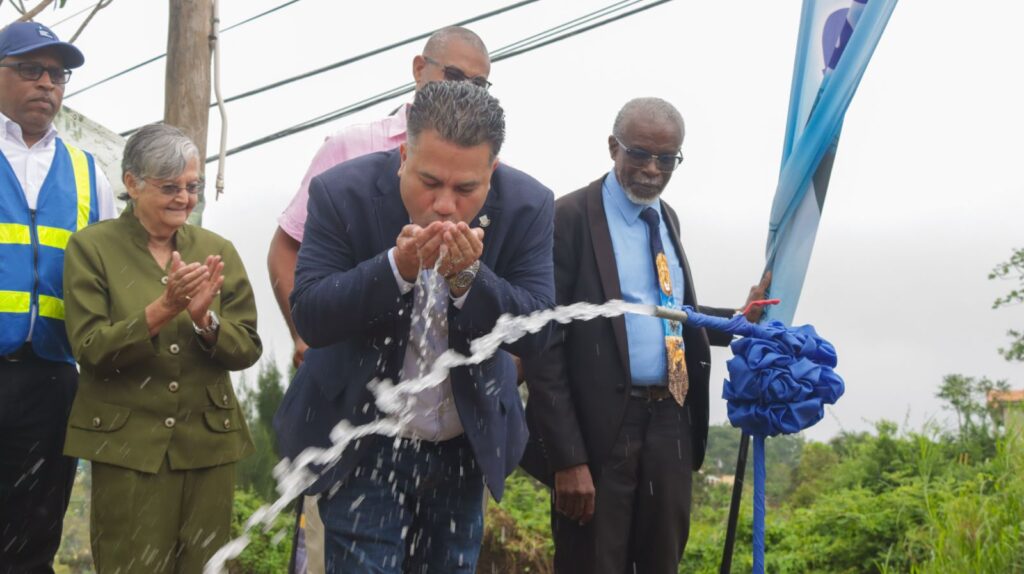
5,000 Manchester residents to benefit from $123m water infrastructure upgrade
Jamaica Observer
Water Security, Climate Resilience and Environmental Protection for a Sustainable Jamaica
Jamaica Information Service (Video)Watch
Jamaica Magazine - 06.06.2026
Jamaica Information Service (Video)Watch
Ground broken for $140 Million Stepney Rainwater Catchment Tank
Our Today
UTech, Jamaica and NWC Certify First Cohort of Leak Detection Technologists Under Non-Revenue Water (NRW) Management Partnership
University of Technology, Jamaica