

Radio Jamaica News Online
Jamaican medical student in Cuba holds strain amid country's fuel crisis
3 min read
00:00
00:00
00:00
A Jamaican medical student in Cuba, responding to Beyond the Headlines host Dionne Jackson Miller
By Kimone Witter
A first-year Jamaican medical student in Cuba says she will be pushing hard to complete her studies despite the severe hardships that the chronic fuel shortage has caused.
The student, who requested anonymity, says her mental strength is being tested daily, trying to adapt to the changing environment.
Speaking on Radio Jamaica's Beyond the Headlines on Tuesday, the medical student said people in Cuba have been enduring between 12 to 20 hours of power outages daily, frequent internet blackouts, and limited transportation.
"The institutions have placed us at hospitals, clinics nearby and they have transferred us to different schools which are closer, due to [limited] transportation. In regards to food here, chicken is becoming extremely rare to find and the prices are sky high and it's difficult. It's kind of hard to stay focused at times, but that's the situation right now," she shared.
The student said she now has a 30-minute walk to and from school and reduced teaching sessions.
Asked whether she believed students were still able to get the necessary teaching and learning required at this stage, she said that was difficult to answer.
"I would say yes and no. Why yes? Because they have put out the effort to relocate us. We're still having classes, having conferences and they have tried to incorporate the days that we don't go to school with clinical practices at a family doctor close by us. But why I'm saying no as well is because everything just feels a bit more rushed," she admitted.
Protests erupted across Havana two weeks ago after Cuba's energy minister revealed that the country had completely run out of diesel and fuel oil amid the US blockade that has strangled the island of fuel.
The first-year medical student has described her period of study in Cuba, so far, as frightening and an uphill battle. But she is maintaining a positive outlook.
"It's a very scary situation to be in as well because it's like being in the unknown. We don't know what is going to happen. We don't know if this is the best of it. We don't know if it is going to get worse, if it's going to get better anytime soon. So it's very hard. I find myself sometimes thinking about leaving. But I just try to stay positive and just keep studying, keep pushing and just trying to do my best through it all."
The CARICOM Council for Foreign and Community Relations (COFCOR) has expressed its profound concern regarding the ongoing and intensifying economic, commercial, and financial measures imposed on Cuba.
In a statement Wednesday, COFCOR said the mounting hardships facing the Cuban people are also seriously impacting CARICOM nationals studying and living in Cuba.
It says these measures compound the trade and economic embargo imposed on Cuba for over six decades, which has had a deleterious effect on the lives and livelihoods of the Cuban people.
COFCOR says it unequivocally affirms Cuba's sovereign right to import and receive fuel, and condemns the obstruction of energy supplies to Cuba, which has precipitated a grave humanitarian crisis.
The regional body is also reaffirming that Cuba poses no threat to any nation and that the continued application of unilateral coercive measures constitutes an unjustifiable violation of human rights, the principles of free trade, and the fundamental norms governing relations among sovereign states.
COFCOR says the governments of Guyana and Trinidad and Tobago have reserved their positions on the foregoing statement.
comments powered by Disqus
Syndicated from Radio Jamaica News Online · originally published .
Legal context · powered by Jurifi
Get the legal angle on this story. Pick a prompt and Jurifi's AI will explain it using Jamaican law.
AI replies are based on Jamaican law via Jurifi. Not legal advice.
Other coverage

PNP calls on Jamaican gov't to lead Caribbean push for dialogue on Cuba crisis
Jamaica Gleaner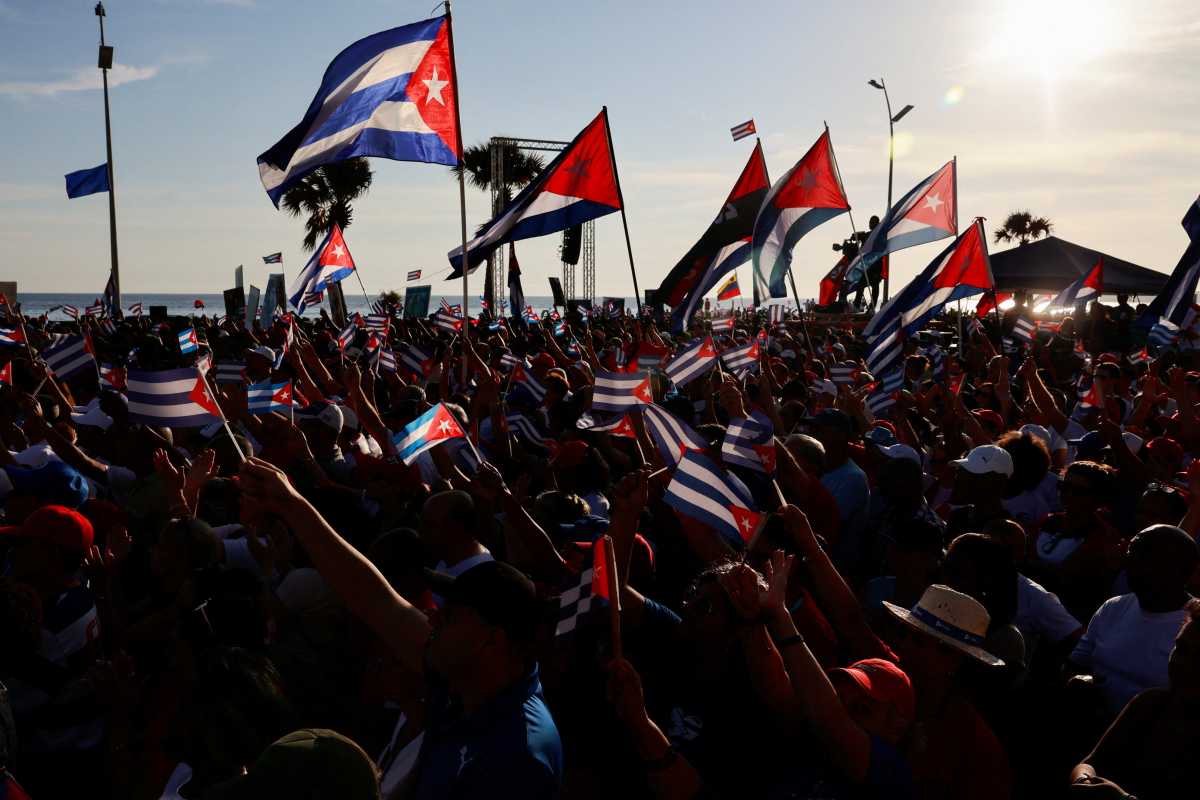
CARICOM condemns US threats against Cuba
Caribbean Life
NCDA Blames Tobacco Industry Marketing for Rise in Vaping | Midday News
Television Jamaica (Video)Watch
HARSH REALITY - Jamaican medical students in Cuba plead for help amid deepening crisis
Jamaica Gleaner
The Caribbean Is Now At The Center Of The Most Dangerous US-Cuba Confrontation In Decades
Jamaica Inquirer