
Juror kneels in prayer during Kingston murder trial as Senate clashes over third-country nationals
A female juror dropped to her knees and prayed inside the Home Circuit Court in Kingston on Friday, halting proceedings at the close of the day in the murder trial of six policemen, despite repeated efforts by the trial judge to stop her.
Sergeant Simroy Mott, Corporal Donovan Fullerton, and Constables Andrew Smith, Sheldon Richards, Oral Andy Rose, and Richard Lynch are on trial over the January 12, 2013 shooting deaths of Matthew Lee, Ucliffe Dyer, and Demarc Allen. The men were killed by police during an alleged shootout on Acadia Drive in St. Andrew, near the intersection with Evans Avenue. Fullerton also faces a charge of making a false statement to the Independent Commission of Investigations.
Trial judge Sonya Bertram Linton was discharging the seven-member jury when the woman stood with papers in hand and said she needed to pray in the courtroom. The judge told her that was not permitted, but the juror appeared determined to remain until she had prayed. Defence counsel watched in silence while prosecutor Kathy Ann Pack asked the judge to hear the juror's explanation in private rather than in open court. A registrar relayed messages between them. The juror then announced she was going down on her knees, read a quiet prayer from the papers for several minutes, thanked the judge, and left. Linton said she understood the juror took her religious obligations seriously. Weeks earlier, the same judge had reprimanded the accused officers for praying in the courtroom outside trial hours. Defence lawyers Arthur Grant, Katherine Jacobs, and John Jacobs represent the accused. An INDECOM officer who had testified that he investigated more than 100 cases for the commission was in court when the incident occurred.
Separately, a music producer described in proceedings as 14 years old was acquitted of rape over allegations dating to 2020 after the trial judge upheld a no-case submission from King's Counsel Peter Champagnie and attorney Patrice Riley. The defence argued the complainant was not a witness of truth, citing cross-examination evidence that her court testimony did not match what she told police. She said she was raped yet accepted food from the accused afterward, and within 15 minutes of leaving his room she messaged him about a letter she had left behind. She could not explain the inconsistencies and admitted she did not tell friends who were on the premises because she did not want harm to come to him. The accused maintained they had a consensual sexual relationship that her boyfriend discovered. The Supreme Court hearing lasted five days.
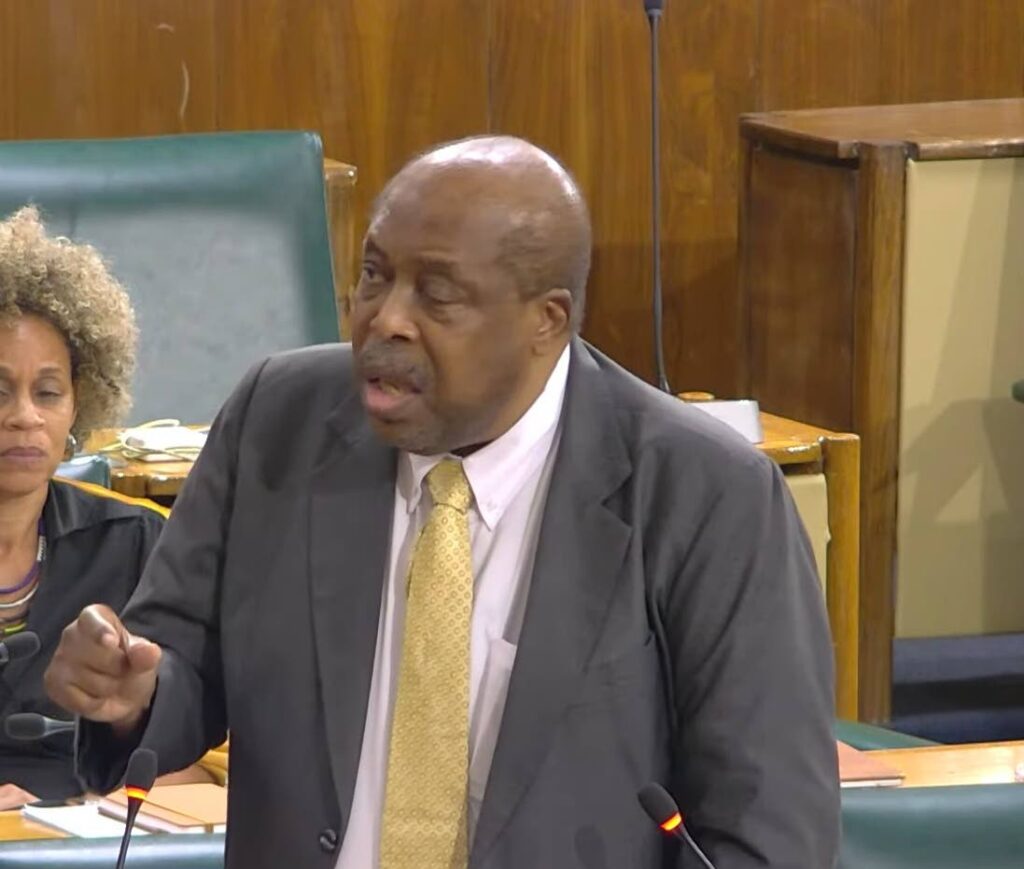
In the Senate on Friday, debate on the Civil Aviation Amendment Bill briefly turned heated when opposition Senator Lambert Brown accused the government of agreeing under the third-country nationals arrangement to receive people whom United States Secretary of State Marco Rubio had publicly described in harsh terms. Senate President Tom Tavares-Finson repeatedly interrupted Brown, cut his microphone, and sought to record in Hansard that Brown was asserting the government planned to bring pedophiles, criminals, and rapists to Jamaica. The clash followed Brown's comparison between the administration's quick move on aviation safety and what he called its long delay in bringing an occupational safety and health bill to Parliament, a line of argument that drew a successful point of order from government Senator Sharon Golden Campbell. Brown insisted he was citing Rubio's own remarks, saying, "I am saying here that in choosing to bring the TCNs, you are choosing what Rubio said, despicable pedophiles who they want to get away from America." Tavares-Finson rejected that framing and ended Brown's contribution. Rubio had made the referenced comments during a United States cabinet meeting in April while defending agreements to transfer removed migrants to willing third countries, without naming Jamaica or stating that every person transferred would fit those categories. The exchange comes amid debate over a recent memorandum of understanding between Jamaica and the United States. National Security Minister Dr. Horace Chang said last week that Jamaica agreed to receive no more than 25 third-country nationals at two-week intervals and to pause the arrangement whenever more than 10 individuals remain on the island. Chang has rejected characterising them as deportees, saying they are third-country nationals whose home countries cannot or will not take them back, and that Jamaica will not accept convicts. He said each proposed transfer must pass health screening, identity verification, criminal record checks, and National Intelligence Bureau clearance, and that anyone with criminal antecedents would be refused on national security grounds.
Syndicated from Realnews Yt · originally published .
Legal context · powered by Jurifi
Get the legal angle on this story. Pick a prompt and Jurifi's AI will explain it using Jamaican law.
AI replies are based on Jamaican law via Jurifi. Not legal advice.
Other coverage
Lambert Brown slams TCN agreement
Jamaica Observer
GoodHeart | Kenya Wagstaffe finds sense of belonging in Jamaica
Jamaica Gleaner
What happened when this Kingston mom returned home with former conjoined twin?!
Jamaica Star (Video)Watch
Vindicated after death
Jamaica Gleaner
My mother-in-law says husband using me for green card
Jamaica Star