
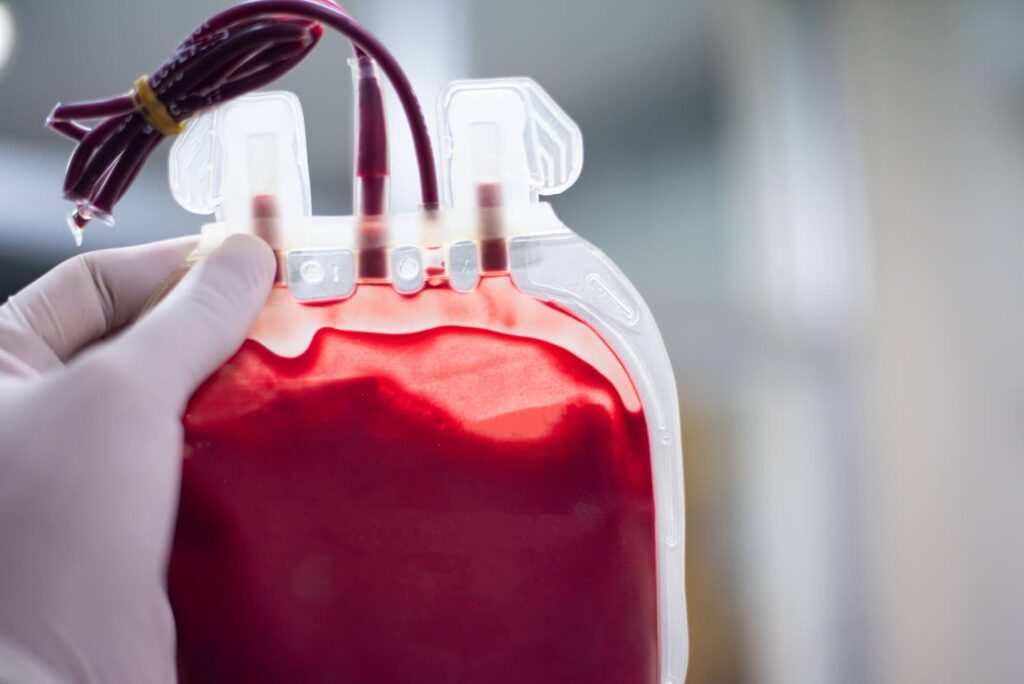
Since 1998, Herwin Smart has quietly donated blood 109 times, in most cases to complete strangers. Why? Not for recognition or merit, but because he believes saving a life is worth more than any good deed.
Now, in light of World Blood Donor Day — observed this year under the theme ‘One Drop of Humanity. Give Blood. Save Lives’— he is urging Jamaicans to donate as hospitals continue to experience a growing demand for blood to support emergency care and life-saving medical procedures.
Approximately 60,000 units of blood are needed annually to support Jamaica’s population, a target the country has not been able to achieve due to a lack of donations.
The son of a nurse, Smart said, growing up he was exposed to the inner workings of the medical sector. Unlike the average child, he said he was never afraid of the prick of a needle. He recalled that as a child, the thought of donating blood always excited him, and so it was no surprise that as an adult, he became a frequent donor.
“I felt the need to make a contribution to humanity, and rather than just money, I thought donating blood would be something that is just beyond material, but life-saving, so I’ve religiously tried to give blood every 12 weeks each year. The only times I might have missed such an opportunity are if I’m not feeling well because you can’t give blood when you’re not well,” he told the Jamaica Observer.
He said his first donation came naturally, not out of force but out of willingness. He said blood donation eventually became a habit he could not shake, joking that he became addicted to saving lives.
“The irony is that I always wanted it to remain anonymous, so even when I was awarded Blood Donor of the Year [in the 1990s], I never went to the ceremony because I said that’s not why I do it. But in recent times, the blood bank or blood collection centres are indicating that people will not want to donate unless they know of persons who do it, so although I was hesitant to let people know, because I want others to carry on that message and for me to be an example, I’m making myself known now. I never really wanted the fanfare, but if this can get at least one person to say, ‘If he can do it, then I can do it’, well, so be it,” said Smart.
In his 28 years as a blood donor, he has helped many strangers in need or whose family members needed blood for critical surgeries, and has even signed up to participate in blood donation drives. He recalled one interaction when a stranger showed up to his office, begging him to donate blood to his brother — a task he willingly accepted to help save a life.
While he often donates to charitable causes, Smart said giving his blood comes easier than giving his money because he understands the value and impact a single donation can make.
“Blood will save a life. You know, they always say give a man a loaf and he will have a meal for the day, or give a man a fish and he’ll have a meal for the day, but teach him how to fish and he’ll have a meal for the rest of his life. Now, if you give somebody money, it’s short-lived. Give somebody the opportunity to live,” said Smart.
“Sometimes I don’t even know if my blood has saved a gunman or a murderer or a rapist or whatever, but if life is about forgiveness, sometimes you save a life and somebody changes. I don’t know, but at least I believe that giving blood is greater than just giving money because money is fleeting, life is not. Life can lead to further opportunities. Of course, money can lead to other things, but I believe life is more valuable than money,” he told the Sunday Observer.
With this belief, he said he makes it his mission to ensure that he is in good health and eligible to donate blood, often indulging in iron-rich food or iron supplements leading up to his donations. Diagnosed with high blood pressure, he said his blood donations have also helped him with his own health.
According to medical experts, a temporary loss of blood volume can cause a slight drop in blood pressure. Studies have also indicated that frequent, regular blood donation can result in more meaningful, long-term reductions in blood pressure, particularly for individuals with hypertension. However, medical experts do not recommend it as a primary treatment or substitute for managing hypertension.
While he acknowledged that many people refrain from donating due to their fear of needles, he urged them to move past that fear, stressing that donating blood in good health is unlikely to cause harm. He further noted that many people only give blood when someone close to them is in need, and discouraged the practice.
“At the end of the day, if you really believe that you want to do something for…Jamaica or for your fellow human beings, give blood. You don’t just have to give money. Follow the same logic I have. Don’t bother with the ‘Oh, it must be a $100,000 donation,’ because sometimes people donate to causes or charity and somebody embezzles the money. You can’t embezzle blood. Blood is blood,” he said, adding “…You can’t do anything but save a life.
“You might donate a pair of shoes, but all of these are material, and yes, life can be ended in an instant, but a pair of shoes, if you donate it, the heel can drop off tomorrow. You can give somebody clothes, and it doesn’t last but life — we have a life expectancy now in the mid 70s — so you give somebody an opportunity for life as opposed to something that the only value it has is that it’s money. You can’t put a value on life,” Smart stressed.
Persons may be eligible to donate blood if they: are between 16 and 60 years old and weigh more than 110 pounds, have high blood pressure that is under control, and are generally healthy and feeling well at the time of donation.
You can donate blood in Jamaica at any of the 11 islandwide collection centres managed by the National Blood Transfusion Service, including the main blood bank in Kingston and major regional public hospitals.
SMART…I believe that giving blood is greater than just giving money because money is fleeting, life is not
Syndicated from Jamaica Observer · originally published .
Legal context · powered by Jurifi
Get the legal angle on this story. Pick a prompt and Jurifi's AI will explain it using Jamaican law.
AI replies are based on Jamaican law via Jurifi. Not legal advice.
Other coverage

Young Blood Donors from Excelsior Community College
MOH — Ministry of Health and Wellness (Video)Watch
Launch of Ministry Of Health & Wellness Community Arranged Response Efforts (CARE) Fund
MOH — Ministry of Health and Wellness (Video)Watch
Official Funeral Service for the Honourable Hugh Cecil Edmund Hart, OJ
Andrew Holness (Video)Watch
Become a voluntary blood donor today #BloodDonorWeek
MOH — Ministry of Health and Wellness (Video)Watch
Mighty Sparrow celebrates 90th birthday | SportsMax Zone
SportsMax (Video)Watch