
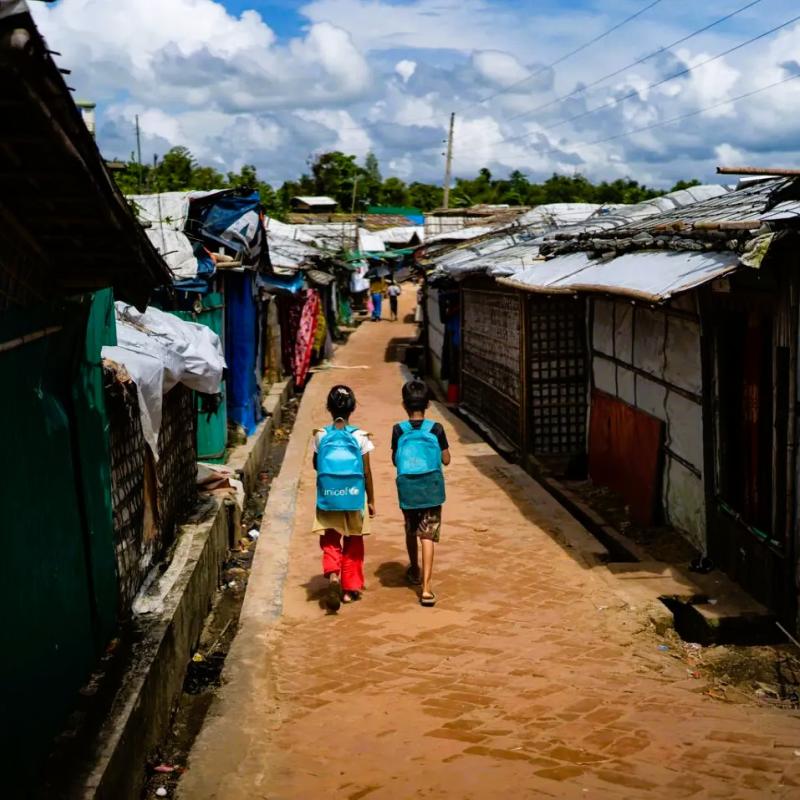
Letter of the Day | Lessons from Cox's Bazar and test of Jamaican conscience
THE EDITOR, Madam:
The June 13 Gleaner editorial, Lessons from Cox's Bazar, deserves commendation for elevating a discussion that is too often (cynically) reduced to questions of border control, administrative convenience, by, I dare say, the billionaire-aligned expediency of the current Jamaican State.
The plight of the Rohingya is indeed a stark reminder of the human consequences of statelessness. It is also a timely warning to the Caribbean. As the editorial correctly notes, the humanitarian crisis unfolding in Haiti is already generating migration pressures that are being felt across the region, including in Jamaica.
What impressed me most was the editorial's refusal to embrace a false choice between sovereignty and humanity. A nation has every right to manage its borders and to regulate immigration. Equally, a civilised society has a duty to ensure that vulnerable human beings are treated with dignity, fairness, and due process. These principles are not mutually exclusive; they are complementary.
For several years, I have written publicly concerning the treatment of Haitian migrants arriving on Jamaican shores. My concern has never been that Jamaica should simply open its borders without limit. Rather, it has been that decisions affecting desperate people should be made transparently, lawfully, and with full regard for our obligations under international humanitarian principles.
The deeper issue is one of historical memory.
The Caribbean is populated largely by descendants of people who experienced forced displacement, involuntary migration, legal exclusion, and profound vulnerability. Whether through slavery, indentureship, political persecution, or economic desperation, our collective history is intimately connected to the experience of people seeking refuge and opportunity far from home.
That history does not require us to abandon prudence. It does, however, require us to resist indifference.
The editorial also rightly highlights the inadequacy of existing regional arrangements. Haiti's crisis is not solely Haiti's burden. It is a Caribbean challenge requiring a Caribbean response. CARICOM governments should therefore move beyond dodgy ad hoc reactions and work towards coherent regional frameworks for refugee assessment, asylum procedures, temporary protection measures, and burden-sharing arrangements that are humane, lawful, and practical.
Ultimately, the lesson from Cox's Bazar is not merely about Bangladesh or Myanmar. It is about the choices societies make when confronted by vulnerable strangers.
Do we see only a problem to be managed, or do we also see fellow human beings?
The answer to that question will say much about the kind of nation Jamaica aspires to be and the kind of ‘melanated’ Caribbean civilisation we hope to build.
DENNIS MINOTT
Syndicated from Jamaica Gleaner · originally published .
Legal context · powered by Jurifi
Get the legal angle on this story. Pick a prompt and Jurifi's AI will explain it using Jamaican law.
AI replies are based on Jamaican law via Jurifi. Not legal advice.
Other coverage

207 People Have Been Killed In US Military Boat Strikes In The Caribbean And Pacific Waters
Jamaica Inquirer
Sunday Sips with HG Helps | A weird World Cup, wickedness in Cuba, Chuck and human rights, and killed by a car out of control
Our Today
Caribbean Dilemma – Growing Older Before Growing Rich
Jamaica Inquirer
Jamaica’s tourism product is shrinking and we must do much better – Purkiss
Our Today
Pamela Redwood | Misery Patients? A dangerous distraction from the real crisis in healthcare
Our Today